

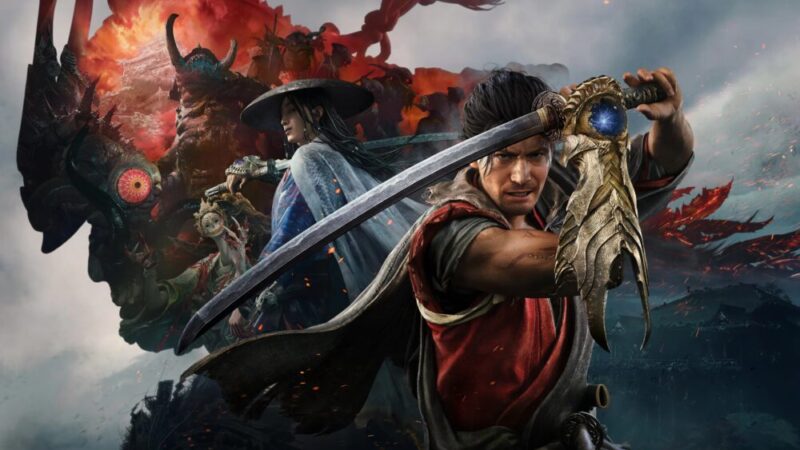
I don’t have much of a connection to the original Onimusha games from the PS2 era, but I did play them briefly. While that was many years ago, I did review the more recent remaster of Onimusha 2: Samurai’s Destiny, and felt that it had plenty to offer both new and existing fans amongst modern-day action titles.
Capcom’s decision to bring back the Onimusha franchise after 20 years is a largely successful one, backed by stellar combat, an engaging narrative and some solid performance across the board. While it offers a challenge that’s not quite as brutal as a FromSoftware or Souls-like game, its more linear, refined approach delivers the best of both worlds: frenetic, memorable encounters propelled by a more cinematic storyline.
Onimusha: Way of the Sword is quite simply the best game in the franchise thus far, one of the best action-adventure games in recent memory, and one of the best games of 2026.
The Tale of a Warrior
Right off the bat, it’s worth noting that Onimusha: Way of the Sword is a standalone entry, making it a perfect starting point for fans and newcomers alike. Players step into the shoes of Miyamoto Musashi, a real-life swordsman from Japan’s Edo period, although this particular version of him is largely fictionalised.
The Onimusha franchise does, however, have a long history of borrowing the likeness of real-life actors to help portray these characters, and here, they have chosen the legendary late Japanese actor, Toshiro Mifune, to help portray Musashi. Fun fact: Mifune actually played the role of Musashi in a trilogy of films in the 50s. They even borrowed his likeness for the Onimusha anime miniseries on Netflix from 2023, which is also based on Musashi, though unrelated to Way of the Sword. Crazy.
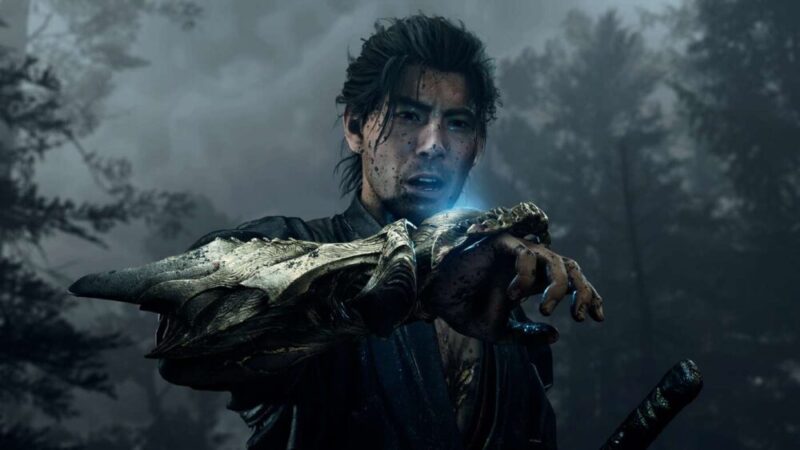
Here, we see a dramatised version of Musashi caught up in the battle against the Genma, a demonic plague that has destroyed most of Japan. Early on, Musashi is bested by these demons and taken to the underworld, where he is given the special Oni Gauntlet, which can be used to capture and harness the souls of said demons once defeated.
Without spoiling too much, the premise sees Musashi returning to a dilapidated Edo-era Kyoto to not only help rid it of the Genma, but also find out just how they returned in the first place. The Way of the Sword is generally entertaining thanks to some cinematic moments and gorgeously crafted cutscenes, but it can wear a little thin at times due to its open-world setting that, in places, slows the narrative down to a crawl.
It does eventually kick off again, but this ultimately means the pacing can feel a little off throughout. I know we talk about the length of a game as being inherently tied to its value, but I feel as though condensing this 20-hour story into a slightly shorter 15 hours would have made all the difference.
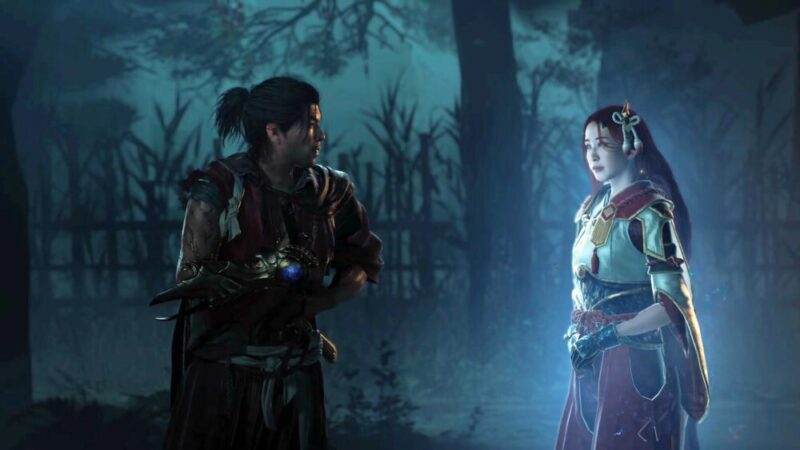
Either way, Mushai is a really interesting protagonist who juggles the concepts of purpose, responsibility, and ultimately redemption quite well, and his motivations and ambitions only build throughout the narrative. The only gripe I have with Musashi and the decent cast of supporting characters is the English voice acting. There’s emotion in the delivery, but the pitch-perfect British accent coming from each of these characters just feels awkward and out of place. Thankfully, Onimusha: Way of the Sword provides full lip-syncing for the Japanese voice track, which is not only better in comparison, but fantastic in its own right.
The Art of Combat
Thankfully, combat is incredible. I would actually go one step further and say it’s the most satisfying combat I’ve experienced in a game in recent memory. Musashi has access to all the standard attacks and abilities you would think were available, including a light (one-handed) and heavy (two-handed) attack, along with a dodge and parry. He even gets a bow for long-range attacks and even some special Oni weapons which recharge by collecting the souls of fallen demons.
All of this comes together so well in a couple of ways. One, if you decide to play this as a straightforward action experience and mash combinations here and there, the weight of the sword combined with Musashi’s movements feels awesome. Swords clash with sparks, and there are even a few cinematic encounters that occur when you and an enemy attack at the same time, causing you to either mash the attack button or attack with an alternate move. But secondly, it’s the ability to execute moves like perfect parries and dodges, each of which comes with its own advantages and disadvantages.
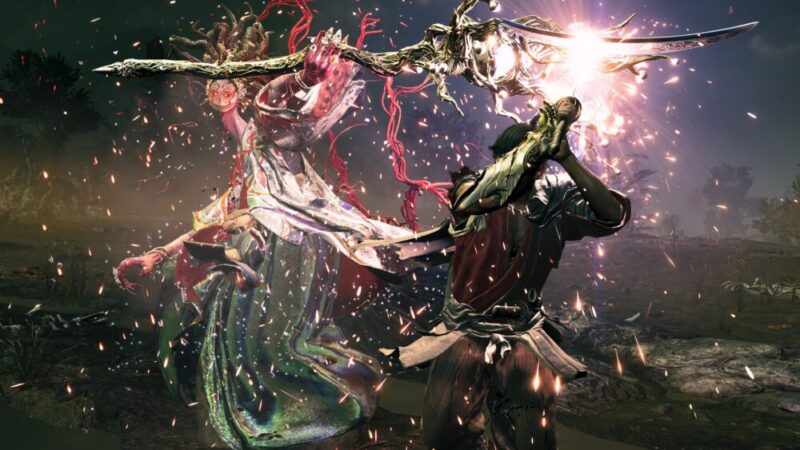
For example, if you press the attack button right before an enemy’s attack lands, Musashi will quickly disappear and reappear to the side of an enemy, slashing them with a near-devastating attack, depending on the enemy. Even in boss battles, it can deal a significant amount of damage. Dodging works in the same way, but the window for these moves feels so small that your timing essentially has to be perfect.
Way of the Sword is not so difficult that you’ll be slaughtered for missing these windows, but it’s a feeling you’ll want to chase throughout the entire experience, which only builds as you come to grips with its mechanics.
Parrying is generally important, though, no matter if you aim for standard or perfect parries, as these will always build your Blazing Meter. This meter simply builds to the point that, once full, it turns Musashi’s blade blue and grants him stronger attacks, while causing enemies to drop additional Blue Souls, which are needed to use your increasing assortment of unlockable Oni weapons.
Both Musashi and his enemies will also have red Stamina/Posture bars, shown below the yellow health bar. While Musashi won’t lose stamina for attacking, he will lose stamina for blocking too many consecutive attacks, meaning you can also gain the upper hand by attacking enemies to the point where their posture is broken, leaving them in a stunned state and open to a devastating finishing attack.
The combat itself feels consistent enough, but I will say that most of the standard enemies that litter Kyoto’s streets feel wasted. They simply take too long to even attack you and barely block any of your moves, making them feel more like target practice. Of course, when you are swarmed by a handful of them, this changes, but it’s never that frequent.
This does contrast the more epic boss battles, which feel much tougher, leading to a difficulty spike that, even if it doesn’t feel impossible, still feels quite severe. I will admit that the game’s difficulty does build over time, but the opening hours can feel way too forgiving in comparison.
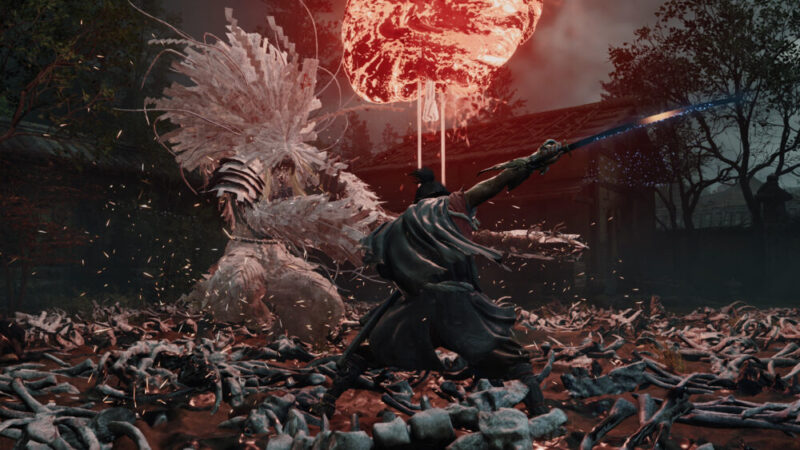
Combat is not only well-polished and satisfying, but constantly rewarding too. Musashi can hold L2 on PS2 or the Left Trigger to collect Souls of varying colours. While the aforementioned Blue Souls will allow you to use your Oni weapons, Red Souls can be collected to help Musashi upgrade his sword, clothing and Oni Gauntlet at local Spirit Mirrors, or checkpoints, which are also used to rest and fast travel. These upgrades feel relatively straightforward, but they are bolstered by the more specific skill-based abilities, which can be unlocked by collecting Oni and Power Stones, found while exploring and defeating enemies.
The open world of Kyoto expands as you progress, allowing you to explore new areas, but some of the missions can result in more mundane activities like fetch quests. You will have to go and close these rifts around the city, which essentially look like glowing red orbs that are letting demons into Kyoto, but I found myself really churning through them in the later stages of the story just to get things moving.
I don’t think Onimusha: Way of the Sword presents players with anything that’s relatively new, but it all comes together in such a way that feels equally engaging and satisfying. The way that Musashi flinches as swords clash, or the way that enemies fall in half after the perfect parry or counterattack is just sublime.
Look the Part
Onimusha: Way of the Sword runs quite well on the PS5 Pro, but also offers both Quality and Performance modes for base consoles, the former of which targets 30 to 40 FPS in 4K, while the latter targets 60 FPS in Performance mode with an upscaled 4K resolution. This will even include PSSR enhancements on the PS5 Pro.
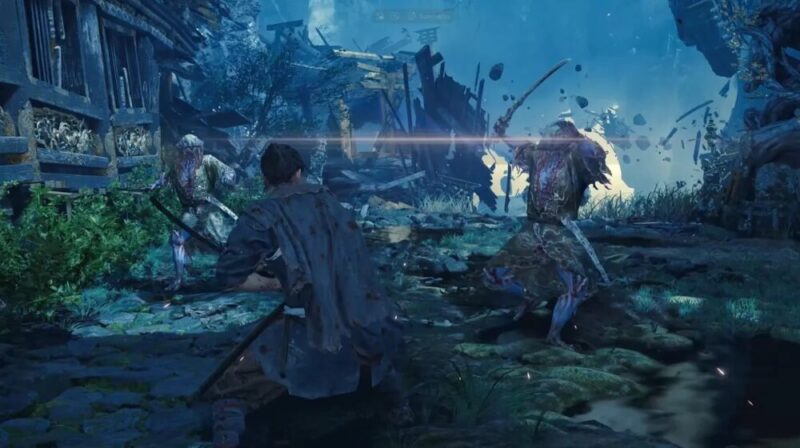
I would always recommend the Performance mode for a game like this, given most of the combat is based on reaction and timing. That being said, it also looks incredibly clean, even if Kyoto can look and feel a little bland and grey at times. I guess it is being overrun by demons.
No matter how you cut it, Capcom’s RE Engine is still smashing it, and it’s a wonder they’re able to use it for so many varied experiences, as they’ve been on an incredible run this year alone.
Final Thoughts
Onimusha: Way of the Sword presents a decent story that’s held up by its absolutely stellar combat. It’s incredibly deep, satisfying, and occasionally challenging, and I commend it for balancing all these elements so beautifully.
As a result, I’m able to look past most of the game’s admittedly smaller flaws, as I could not wait to get back out there to start hacking and slashing all over again in one of 2026’s best games.


FOUR AND A HALF STARS (OUT OF FIVE)
Highlights: Sublime combat; Solid Japanese voice acting; Great performance
Lowlights: Open-world segments stunt pacing; English voice acting feels awkward
Developer: Capcom
Publisher: Capcom
Platforms: PlayStation 5, Xbox Series X/S, Windows PC, Nintendo Switch 2
Available: Now
Review conducted on PlayStation 5 Pro with a code provided by the publisher.
Featured header image also provided by the publisher.
