

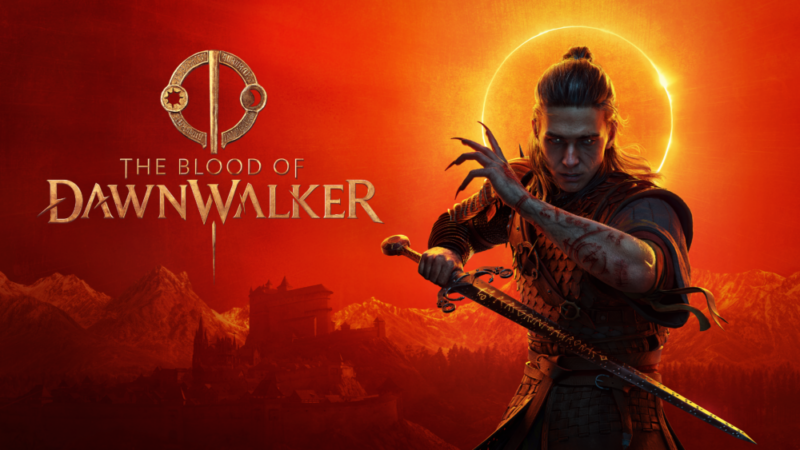
The first game from brand-new studio Rebel Wolves is a massive single-player RPG that features heavy development from the team that worked at CD Projekt Red on a little indie game called The Witcher 3: The Wild Hunt. An incredibly ambitious open-world action RPG, The Blood of Dawnwalker is an ambitious debut with teeth, though the bite isn’t always clean
There is a heavy, atmospheric dread that permeates every corner of The Blood of Dawnwalker, something I noted back in July when I went hands-on with its opening hours. Four months and roughly fifty hours later, that dread has only deepened. The debut from Rebel Wolves arrives as one of 2026’s most anticipated new IPs, trading Andrzej Sapkowski’s established lore from The Witcher for a completely original dark fantasy world.
What we get is a bold, blood-soaked evolution of the open-world RPG formula; one that offers some of the year’s most memorable narrative highs, even when its combat and structure occasionally struggle to keep pace.
The Duality of the Dawnwalker
The game centres on Coen, a village everyman caught in a curse that leaves him human by day and vampire by night. His mission is deeply personal: save his family from the tyrannical vampire ruler who turned him, all while navigating a kingdom where class politics and supernatural horror sit side by side uncomfortably. It is an immediately compelling setup, and one that feels less like a spiritual successor to Geralt’s adventures and more like its own creature entirely.
Much like my preview, I was struck by how deliberately ordinary Coen feels. He is not a chosen hero or a seasoned monster hunter; he is a regular guy thrown into extraordinary circumstances. That grounding matters. When the sun is up, you are navigating medieval politics, investigation, and the everyday tension of a village living under vampiric taxation.
The kingdom of Vale is under the control of a master vampire who extracts coin and ritual blood sacrifices from villagers to ensure their continued “protection.” These daytime sequences feel like a completely different game to what happens after dark.

By night, Coen becomes a vampire, and the experience shifts into something more traditionally supernatural. You can drain enemies of blood, teleport short distances with a dash and scale walls. There are other abilities that you can develop, and I will leave those for you to discover on your own. The R2/RT dash functions as a quick transport, while Coen’s eyes take on an unmistakable glow.
Your clothing even changes to reflect your current form, offering perks tailored to each state. It is an interesting and somewhat original mechanic that ties directly into the narrative, and I found the vampire side of the equation more fun overall thanks to the added story opportunities and NPC reactions.
The two forms are not just cosmetic. As a human, you fight with conventional weapons and special moves unlocked through shrine skill trees. As a vampire, you rely on claws and a separate set of abilities, biting and sucking blood for regeneration, blinding enemies, and using witchcraft to control crowds. Coen feels vulnerable in both states until the stronger abilities come online, which require finding scripts to unlock them as purchase options at shrines.
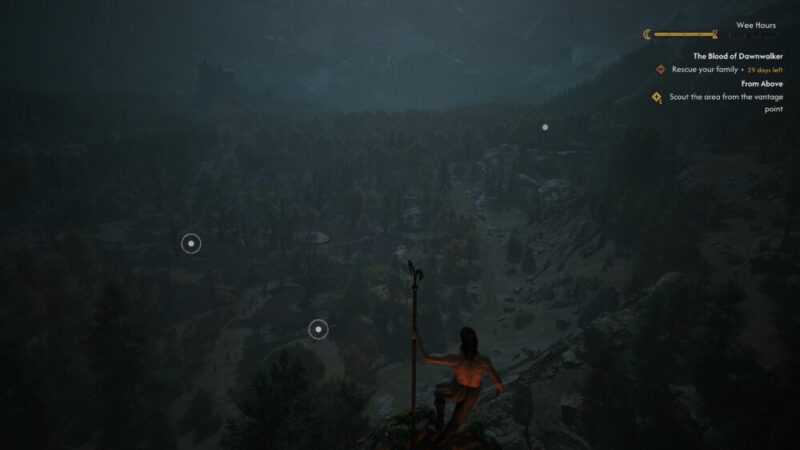
Your time is evenly split between the two forms, and that interplay works well even if the weapons themselves sometimes feel functionally similar across both modes.
A World That Won’t Wait
The prologue hours rely on cutscenes to do a lot of the heavy lifting in setting up the world and where we are dropped into it, though they are a clear highlight. Once Coen is unleashed upon Vale Sangora’s open world, the pace becomes more player-driven. Those early narrative beats are essential; feeling Coen’s pain in those horrific opening moments establishes the emotional stakes that carry the rest of the journey.
The protagonist, antagonist, game world and lore are covered in great depth across these first three to four hours, ensuring a solid foundation before the training wheels come off.
One of the most ambitious elements (and the one I was most curious about after my preview) is the 30-day in-game clock. Coen has thirty days to save his family, with each day and night broken into time segments. The clock is not always ticking, but completing missions or upgrading skills consumes segments from that pool.
It is very original and far preferable to a literal ticking clock, though it introduces a constant low-level anxiety. A mission might demand several time segments as you run past it, and you are left wondering: am I missing one of the game’s best questlines? A crucial NPC? Beneficial loot? You can’t know in a single playthrough, which does serve replayability, but in a game this long, the uncertainty can feel more punishing than provocative.
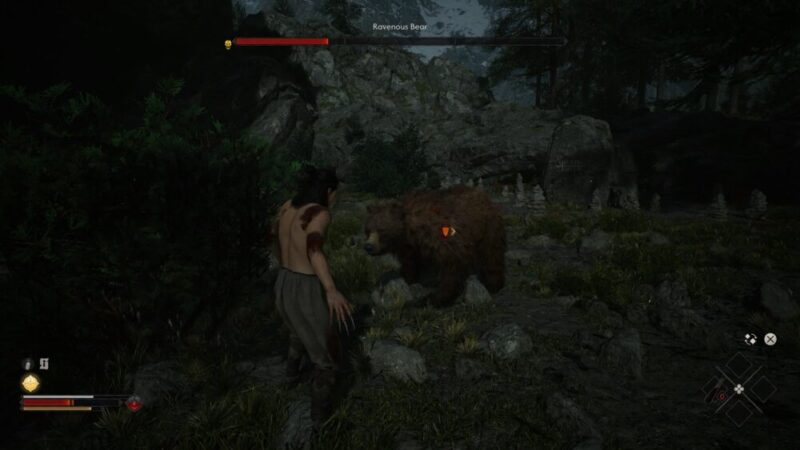
What makes the system work, at least partially, is that every side mission has genuine weight. Your choices are permanent, and the game never lets you forget it. Perhaps the best example is when a shivering text prompt reading “give in to the hunger” appears during dialogue with an NPC. The result is irreversible. Knowing your decisions are final and filter into other aspects of the story enhances the stakes and creates an environment of constant assessment.
After the prologue, you can follow any questline that interests you in preparation for the endgame battle, or try your luck before the thirty days expire. It is non-linear in a way that respects player agency, even when that agency comes with uncomfortable consequences.
Combat and Survival
The combat is where some of that early confidence wavers. During one-on-one battles, it works well. Parrying feels clean, and the attack-and-dodge rhythm is satisfying against a single focus target.
Add more than one opponent, however, and the difficulty increases almost unfairly. Blocks and dodges fight against the camera angle and multiple enemies swinging from different directions. The game throws a heap of special abilities into the mix with crowd control – blinding enemies, sucking blood for health, witchcraft area effects – and these provide a wide array of tactical options.
Even then, the core directional combat could use more finesse to truly realise its potential. You can hack and slash if preferred, though stamina depletes rapidly in that model, forcing you back into the more deliberate systems whether you like it or not.
When an enemy goes to strike, a directional button shows you which direction they are going to strike from; you can block this by using the directional button and then switch up how you are attacking by pressing the directional button, which seems like an interesting mechanic for hardcore players who will want to take their time to perfect this technique.
The Vale Sangora Question
In my preview build, played on a high-end PC, Dawnwalker was visually stunning. Unreal Engine 5 rendered Vale Sangora as a masterclass in gothic art direction: rain-slicked cobblestones, looming silhouettes, a sense of history etched into the mud. The final PlayStation 5 build I reviewed is more complicated.
It must be noted that a day-one patch is planned to deliver a performance mode that targets 60 FPS, so I do not want to be overly critical of being capped at forty frames or below during the review period. A significant patch was also implemented when I was about thirty hours in; I did not notice dramatic differences despite its size, outside of some improved stability.
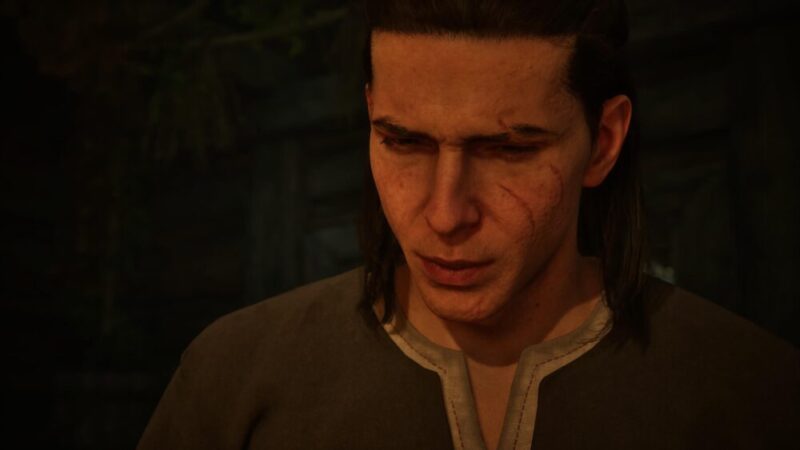
Some of the facial animations need polishing, particularly for prominent NPCs. There are rendering challenges that see regular pop-in and occasional body parts clipping through doors. This is only a small annoyance and complaint, but for most of the time, the game was fine. I am eager to see how the day-one patch and performance mode assist the experience, as the two modes currently on offer – Quality and Balanced I couldn’t see much of a difference on the PS5 Pro.
Final Thoughts
The Blood of Dawnwalker has been on my most anticipated of 2026 list since I had that first four hours of hands-on experience in July, and in many ways it delivers on that promise. The story is among the best of any single-player game this year; it is bookended by powerful moments even if the middle stretch varies depending on your pacing and path.
That being said, it really is up to you what you want to do; you can go straight to the castle and have the final battle (however, I really don’t recommend this as you won’t get that full experience). The blend of politics and human duties by day, Coen’s portrayal of a village everyman- not gruff, not overpowered, just a man trying to save his family.
It gives the narrative an emotional authenticity that many open-world games lack. This all changes at nighttime when the vampire abilities kick in. They are exciting, the world is lived-in, and the sounds are visceral. Stumbling across random occurrences and missions always enhances the feeling of a breathing open world similar to the one that made The Witcher 3 so memorable.
Your enjoyment will depend on your connection to that solid story, your tolerance for the combat’s crowd-control limitations, and how you respond to the time-segment pressure. There is something genuinely special here; it may just need a few updates to realise its best form. Even so, I am really excited that this game and fine level of single-player storytelling still exists, and so much care has been crafted into each main mission, side mission and character; I am excited to dive in further when the day-one patch arrives.
The Blood of Dawnwalker represents a bold new step forward for a fresh studio, clearly making a statement with a world enriched in deep lore, filled with memorable characters and a story you won’t soon forget.


FOUR STARS (OUT OF FIVE)
Highlights: Vampire vs human interplay works well; Interesting and engaging story with permanent, weighty choices; DNA from The Witcher 3 in questing and narrative ambition
Lowlights: Combat can be limiting in hordes, though special abilities help; Time segments create uncertainty that may frustrate as much as intrigue; Graphical output and rendering need the promised day-one patch
Developer: Rebel Wolves
Publisher: Bandai Namco Entertainment
Platforms: PlayStation 5, Xbox Series X/S, and PC.
Available: September 3
A copy of The Blood of Dawnwalker was provided by the publisher for the purposes of this review.
The header image is supplied by the publisher; the screenshots have been captured via in-game footage.
