

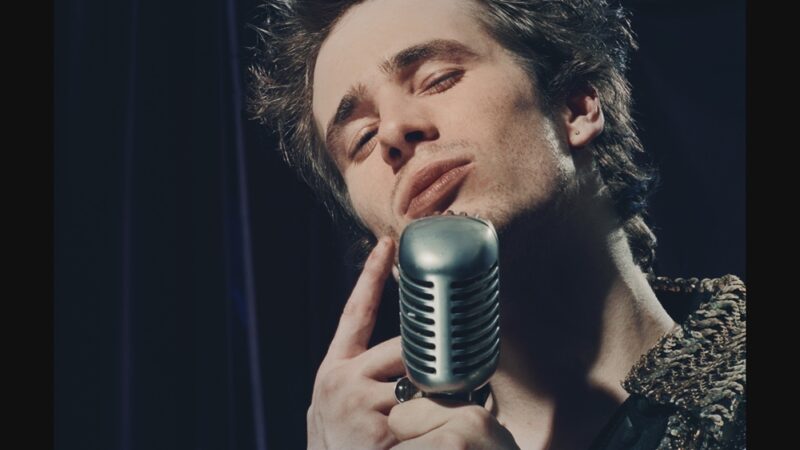
Access can be a dangerous crutch in documentary filmmaking – all the unseen footage and unheard audio in the world won’t save a story that doesn’t know what to do with it. Amy Berg’s It’s Never Over, Jeff Buckley, however, understands that access is only the starting point. What she builds from it is something far more affecting: an intimate, emotionally layered portrait that feels less like a retrospective and more like a conversation with a ghost.
At a glance, Jeff Buckley is a figure many think they already understand – the voice behind “Hallelujah,” the artist who died too young, the myth frozen in time. Berg gently dismantles that shorthand. What emerges is a far richer, more contradictory person: fiercely sensitive, deeply curious, occasionally restless, and far more grounded in his relationships than his mythology might suggest.
The film’s most striking decision is to centre Buckley through the women who knew him best. His mother, Mary, along with former partners and close friends, become the emotional spine of the documentary. Their recollections don’t feel curated for legacy-building; they’re messy, loving, sometimes aching. In their voices, Buckley isn’t a legend – he’s a son, a partner, a complicated human being trying to find his place. That perspective reshapes the narrative entirely, anchoring the film in something more personal than the usual rise-and-fall structure.
Berg is careful not to sand down the edges. Buckley is presented with warmth, but not reverence to the point of distortion. If anything, the film’s honesty makes his loss land harder. This wasn’t a figure undone by excess or spectacle; it was someone still evolving, still searching, still tethered to the people around him. The absence feels less like the end of a story and more like a life abruptly interrupted mid-sentence.
Musically, the documentary hums with the quiet power of Grace, the only studio album released during his lifetime – a record that looms large not just in reputation but in the way those around him speak about it. Hearing how deeply it resonated, even among peers like David Bowie, reinforces what the film keeps circling: Buckley’s talent wasn’t just impressive, it was transformative.
Visually, Berg avoids letting the archival-heavy structure feel static. Restored footage is given new life, while subtle, expressive animation fills in emotional gaps rather than factual ones. It’s a delicate touch – never showy, but enough to keep the film from slipping into the familiar rhythms of talking-head nostalgia.
Where the documentary ultimately hits hardest is in its restraint. Buckley’s death – an accidental drowning at just 30 – is handled without sensationalism. Instead, Berg leans into the lingering impact, particularly in a devastating moment involving a final voicemail to his mother. It’s the kind of scene that could easily feel manipulative in lesser hands, but here it lands with quiet, overwhelming sincerity.
It’s Never Over, Jeff Buckley doesn’t try to solve its subject. If anything, it embraces the idea that some people remain unknowable, even to those who loved them most. What it offers instead is proximity – to the music, to the relationships, to the fragments of a life that continue to echo long after it ended.
For longtime admirers, it deepens an already profound connection. For newcomers, it’s a gateway – not just into Buckley’s catalogue, but into the emotional gravity that surrounds it. Either way, the film leaves you with the same lingering sensation his music does: something beautiful, unresolved, and impossible to replicate.


FOUR STARS (OUT OF FIVE)
It’s Never Over, Jeff Buckley is now screening in Australian theatres.
