
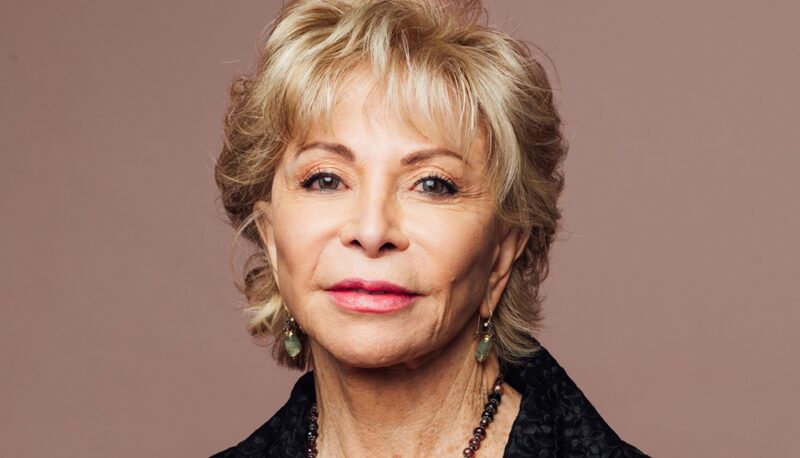
Few novels arrive with the sense of destiny that surrounds The House of the Spirits. For Isabel Allende, it began not as a grand literary ambition, but as something far more intimate: a letter written on January 8th to her dying grandfather. More than four decades later, that deeply personal act of remembrance has evolved again – this time into a sweeping television series that reinterprets her landmark debut for a new generation.
The transition from page to screen is not new territory for Allende. A 1995 film adaptation – directed by Bille August and starring Meryl Streep and Jeremy Irons – offered one interpretation of the sprawling saga. But the new series, with its extended format and renewed cultural lens, has allowed the story to breathe in ways previously impossible.
“It’s always a surprise,” Allende reflects, acknowledging the distance between author and adaptation. Where the novel once felt like an extension of her own family history, the series now offers her the rare experience of seeing it as an audience might. “For me, it’s the story of my family,” she says – yet on screen, it becomes something shared, refracted through other creative voices.
That act of reinterpretation is central to the series’ success. Spanning generations of the Trueba family – through love, violence, and political upheaval – the story unfolds against a backdrop of immense social change. With its blend of the intimate and the epic, it carries echoes of literary traditions shaped by writers like Gabriel García Márquez, whose influence helped define the language of magical realism that Allende made her own.
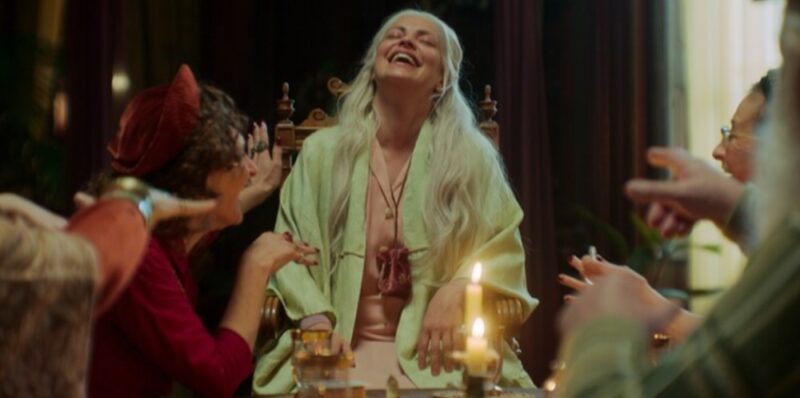
And yet, as she points out, magical realism poses a unique challenge on screen. “It doesn’t work the same way,” she explains. “In a book, the reader imagines it. On screen, it can look artificial.” Where the earlier film avoided such elements altogether – famously abandoning details like Clara’s green hair – the series finds subtle, inventive solutions. Fleeting visual cues and tonal shifts evoke the uncanny without tipping into spectacle, preserving the spirit of the novel while adapting it to a visual medium.
If the technical challenges are significant, the cultural ones are just as crucial – and here, the new adaptation marks a meaningful shift. Allende speaks with particular enthusiasm about the series’ more authentic Latino perspective, a departure from the Eurocentric casting of earlier versions. “It’s wonderful to see it now with a more Latino, authentic flavour,” she says, underscoring how representation reshapes not just the visuals, but the emotional truth of the story.
That truth remains strikingly relevant. First published in 1982, the novel emerged from Allende’s own experience of exile following political upheaval in Chile. Its themes – patriarchy, class division, systemic violence – were rooted in the realities of Latin America in the 20th century. But as Allende observes, they continue to resonate globally. “There is something universal there,” she reflects. “Family, power, oppression = these cycles repeat.”
The series arrives at a moment when those cycles feel newly visible. Across the world, political polarisation, rising authoritarianism, and ongoing struggles for equality echo the tensions embedded in the Trueba family’s story. For Allende, this timing feels almost serendipitous. “Stories tap into something in the air,” she says. “It’s just luck—but it happens.”
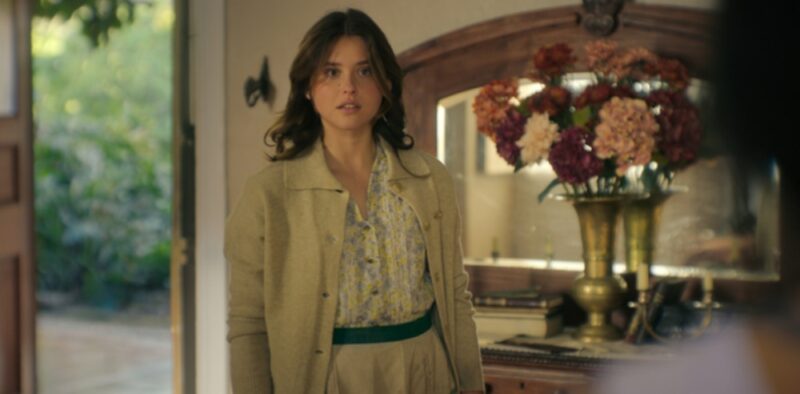
At its heart, however, The House of the Spirits endures not because of its politics alone, but because of its characters – particularly its women. Clara, Blanca, and Alba stand as pillars of resilience within a patriarchal world, embodying a strength that Allende continues to witness in real life through her humanitarian work. Their presence grounds the story, balancing its brutality with moments of tenderness, humour, and hope.
For Allende, seeing them brought to life again is both a creative and personal revelation. The series preserves not just a narrative, but a lineage – of family, of history, of memory itself. “I feel they’re not lost,” she says of the figures who inspired her characters. “They’re still there.”
In that sense, the adaptation becomes more than a retelling. It is an act of continuity – one that bridges generations of readers and viewers, reconnecting them with a story that has already proven its ability to endure. From a letter written in grief to a global literary phenomenon, and now to a richly realised television saga, The House of the Spirits continues to evolve – shaped, as always, by the hands that carry it forward.
The House of the Spirits will premiere on Prime Video on April 29th, 2026.
*Image credit: Buzzfeed News, Taylor Miller Photography.
Related Posts:
- Interview: Alfonso Herrera and Nicole Wallace on inhabiting the pain and…
- Kangaroo Islands Spirits has released the world's first gin using 100%…
- Isabel LaRosa adds Sydney show to debut Australia Tour
- Ten years of changing the frame: Melbourne Women in Film Festival…
- Margot Robbie announced as Jury President for landmark return of Tropfest 2026
- TIFF Classics marks the Festival’s 50th edition with landmark restorations
