

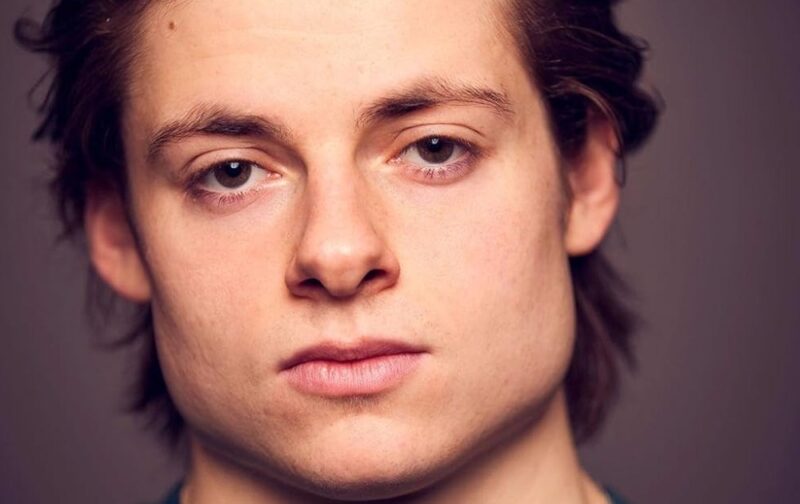
The son of acclaimed actor and filmmaker Andy Serkis, Louis Ashbourne Serkis is carving out a compelling path of his own with a performance that is as raw as it is quietly devastating. In Out There, he plays Johnny, the teenage son of a rural farmer (Martin Clunes) who is pulled into a dangerous county lines drug operation, forcing him to make decisions far beyond his years. Set against the stark beauty of the British countryside, the tense thriller explores how quickly innocence can erode when survival and loyalty collide.
As Louis reveals to our Peter Gray during their conversation to celebrate the Australian streaming release of Out There on BritBox, Johnny isn’t a bad kid – just one shaped by grief, isolation, and impossible circumstances, making his descent into this world all the more unsettling and tragically human.
First of all, with a character like this – someone who makes an irreversible decision in a moment – do you see Johnny as a good person who does a bad thing, or as someone discovering who they really are?
Honestly, I think he’s a great kid. That’s easy to see. The decisions he makes come from his environment. He’s sort of coerced into this whole county lines operation. If it were up to him, he’d stay out of it – he’d be in his own world, gaming online.
But he’s forced to make decisions based on the people he loves and cares about, and in that moment, he believes he’s doing the right thing. Of course, they’re not necessarily the right choices – but when you’re in that situation, it’s hard. You want to protect the people around you.
He’s 16, he’s just lost his mum – he’s vulnerable. That kind of grief can make you act quickly, make rash decisions, and react to your environment in ways you normally wouldn’t.
Do you think what he does binds him to Sadie, or isolates him from everyone else?
I think it does both. It definitely binds them – they go through this whole experience together, meeting the kingpin, going to Newport. It’s a bonding moment. But it also isolates them. They share this secret, and it creates this feeling that they’re in it together. There’s something quite sweet about that dynamic – Johnny really idolises Sadie and wants to do right by her.
But as the story unfolds, those layers unravel, and you start to see more complexity in their relationship.
There’s something fascinating about how quickly Johnny adapts to that world. Did you play that as survival instinct, or something darker already inside him?
Probably a bit of both. He has to adapt quickly – that’s survival. But losing his mum plays into that as well. It’s just him and his dad on a farm, so even though he’s young, he’s quite mature and already taking on responsibility.
I don’t know if there’s necessarily darkness in him, but he definitely adapts fast. He’s never comfortable, but he processes what’s happening and makes decisions the way any 16-year-old might – trying to protect the people they love.
With his dad – do you think Johnny fears the consequences of his actions more, or disappointing him?
Again, a bit of both. But I think not wanting to let his dad down is huge. It’s just the two of them – if you lose that bond, what do you have left? As the story progresses, their relationship splinters because of grief and what’s happened, but that same trauma also brings them back together. That’s something really beautiful in the story – how deeply difficult situations can reconnect people.
Do you see Johnny as someone who wants saving, or someone who resents being controlled?
In a typical teenage way, yeah – there’s that resistance. “Stop telling me what to do.” But on a deeper level, he needs guidance. Because he’s so isolated, he really looks up to his dad. Even if he doesn’t love the idea of taking over the farm one day, he knows it’s coming.
At the beginning, their relationship feels quite cold – two men living in a big house, not really talking, just passing each other. That was an interesting dynamic to play, especially seeing how it evolves.
It feels like a coming-of-age story, but instead of freedom, it’s crime and consequence. Did that change how you approached his growth?
Yeah, absolutely. The sad thing is, what Johnny goes through isn’t uncommon. A lot of young people are coerced into these situations. In his case, he comes from a relatively stable background but falls into it unintentionally. Because of what happens, he has to grow up much faster than he should.
That happens in real life – young people going through traumatic experiences and being forced to adapt quickly. And what he sees… that stays with him forever.
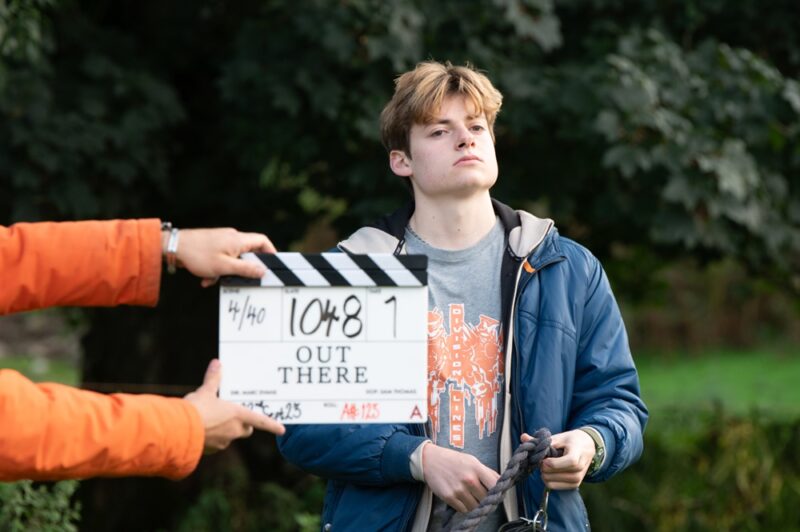
Did the rural Welsh setting unlock anything for you?
Definitely. I’d never been to Wales before, so that was amazing. But it also highlights something important – you don’t expect these kinds of operations in quiet, picturesque rural communities. You think of it as a city problem, but actually, it’s widespread. In some ways, it’s even more prevalent in rural areas because there’s less infrastructure to control it.
Were there moments where holding back emotionally made scenes more powerful?
Absolutely. Less is often more. When it feels like something is hard to express, that’s when it’s most convincing. A lot of the performance is internal. And working with Martin was incredible – he transforms completely. I learned so much just watching him.
Did you build a full backstory for Johnny?
Yeah, completely. I created a full timeline of his life up to that point – daily routines, relationships, family dynamics, everything. That process is really important to me. When you step on set, you already have that world in your head, and it informs everything you do.
Any specific details you made uniquely Johnny?
The costume helped a lot. I liked that he wore a shorter tie and a jacket instead of a blazer – it felt slightly rebellious. That actually came from my own school experience. He’s not a rebel, but those small hints of teenage defiance felt right.
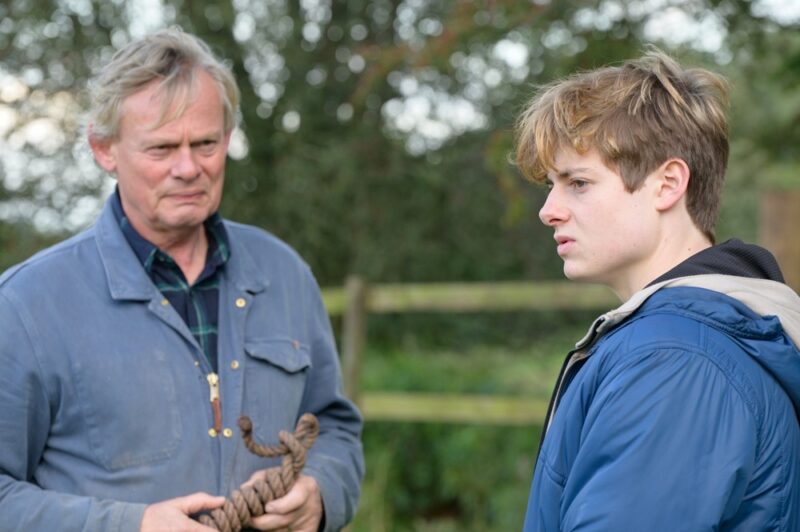
Was there a moment on set where you thought, “This is it – I’m exactly where I’m meant to be”?
Yeah. There’s a big moment in episode three where Johnny commits a violent act. That whole sequence was intense to film. Watching it back months later, I could remember exactly how I felt on the day. And seeing that translate onscreen – it was really gratifying. That was the moment where I thought, “I’m so lucky to do this.”
If you had to describe Johnny at the end of the series in three words?
Tougher. Still vulnerable. And courageous. He goes through so much, but he endures it. That takes bravery, especially at that age.
What conversations do you hope the show sparks?
One big question is: how far would you go to protect your own? People might say, “Of course you’d do anything.” But then the show complicates that – it shows how things spiral. It also raises awareness about young people being coerced into these situations. It’s a real issue, and it’s happening everywhere.
Are there roles you’re avoiding right now?
That’s a good question. Not really. For me, it’s about the role itself. If I connect with it, I’ll do it – whether it’s fantasy or something grounded. The dream is to explore different worlds and prove you can do a bit of everything.
That range is what makes acting exciting.
Exactly. And shows like this prove there are still fresh ways to tell these stories. I’m just really glad it’s reaching audiences around the world.
Out There is now available to stream on BritBox Australia.
