

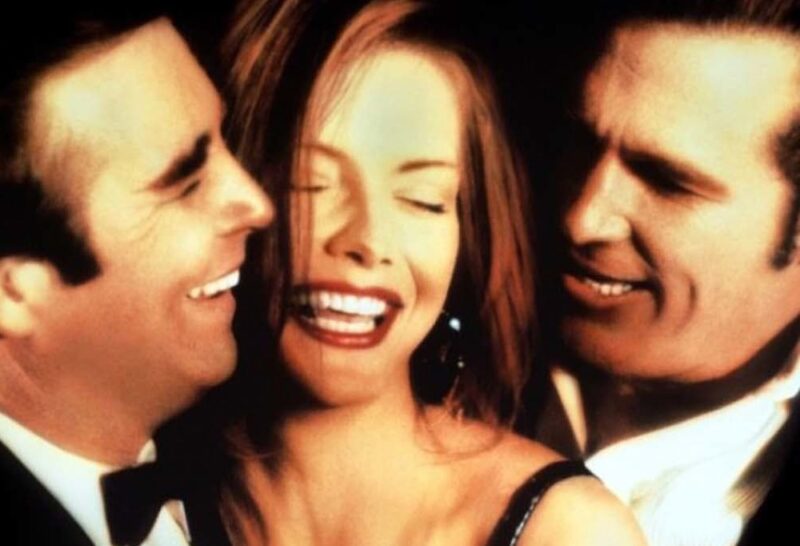
When The Fabulous Baker Boys arrived in 1989, it carried the modest shape of a character drama: two weary lounge musicians drifting through a career of half-empty hotel bars and forgotten standards. What transformed the film into something electric was the arrival of Michelle Pfeiffer as Susie Diamond – a character who, in lesser hands, might have been a cliché. Instead, Pfeiffer turned her into one of the most indelible performances of late-1980s American cinema.
From the moment Susie walks into the audition room, Pfeiffer radiates something the film’s world desperately lacks: danger, charisma, and a faint hint of sadness behind the glamour. Opposite the quietly simmering dynamic of the titular brothers played by Jeff Bridges and Beau Bridges, Pfeiffer becomes the film’s emotional and sensual center. She isn’t merely the singer they hire – she’s the force that exposes the loneliness and longing beneath their carefully maintained routines.
The sequence that sealed the performance in movie history arrives midway through the film: Susie performing the standard “Makin’ Whoopee.” Draped across a piano in a smoky lounge, Pfeiffer transforms what could have been a simple musical number into pure cinematic alchemy. It’s not explicit, not crass, not even particularly flashy. Instead, it’s a masterclass in suggestion and presence. Every movement is deliberate; every glance carries an undercurrent of seduction and melancholy.
The scene works because Pfeiffer understands something fundamental about Susie Diamond: her sexuality is both performance and armor. Beneath the smoky voice and languid confidence is a woman who knows the power she holds in a room, and how fleeting that power can be. That tension gives the moment its charge. It’s sensual, yes, but it’s also quietly heartbreaking.
The performance earned Pfeiffer an Oscar nomination at the Academy Awards for Best Actress. But the award ultimately went to Jessica Tandy for her role in Driving Miss Daisy – a decision that has long been debated by film historians and critics.
Tandy’s work in Driving Miss Daisy was warmly received at the time, fitting comfortably within the Academy’s long-standing preference for dignified, sentimental drama. Yet as the decades have passed, the film itself has become more controversial, often criticized for its simplified and paternalistic treatment of race relations in the American South. What once seemed like a comforting prestige drama now feels, to many viewers, like a relic of Hollywood’s tendency to reward safe storytelling.
By contrast, Pfeiffer’s work in The Fabulous Baker Boys has only grown in stature. Her Susie Diamond is complicated, wounded, funny, seductive, and fiercely alive. It’s the kind of performance that refuses to settle into easy categories – neither pure femme fatale nor tragic heroine, but something messier and more human.
That complexity is why the role became the turning point of Pfeiffer’s career. Before it, she was often cast primarily for her beauty. After it, she was recognized as one of the most compelling actors of her generation. In the years that followed, she delivered remarkable work in films like The Russia House, Frankie and Johnny, Batman Returns, and The Age of Innocence – but Susie Diamond remains one of her defining creations.
The new Australian Blu-ray release from Imprint Films is therefore more than just a catalogue upgrade. It’s a chance to revisit a performance that still feels startlingly modern. Pfeiffer didn’t simply play Susie Diamond – she inhabited her completely, turning a smoky lounge singer into a cinematic legend.
And that piano scene? Decades later, it remains proof that true screen magnetism can’t be manufactured. Sometimes a star simply walks into frame, and the whole film belongs to her
The Fabulous Baker Boys is now available to buy on Blu-ray through Imprint Films.
