

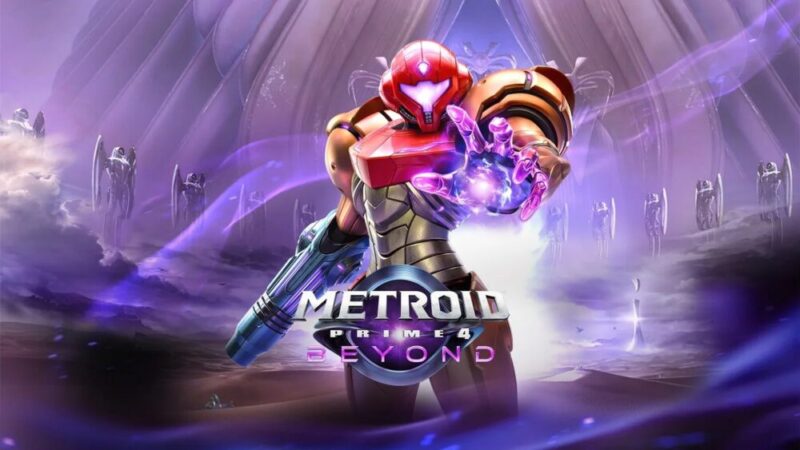
It feels like forever since I’ve played a new Metroid Prime game, and then I realised, that’s because it’s been forever since we got one. Not counting 2023’s admittedly stellar Metroid Prime Remastered, we last touched base with this particular series in 2007 with Metroid Prime 3: Corruption on the Nintendo Wii. While it was far from the best of the bunch, it was a solid sequel that probably deserved a follow-up a little (or much) sooner.
But here we are. Almost 20 years later, Metroid Prime 4: Beyond is here. It definitely makes sense given the release of the Nintendo Switch 2 this year, but I’m ultimately glad Samus is back in this form. This sequel might not be the best in the series, but it certainly does plenty of things well, from its solid gameplay and level design to its decent performance on the new hardware.
Metroid Prime-Time
Samus Aran is back and sent to the planet Viewros after a Space Pirate attack. She soon discovers her rival, Sylux, along with an army of Metroids, has been working on a new mind control device to wreak havoc on various planets. Now stranded on Viewros, Samus must stop Sylux, find her way home and uncover the secrets of the Lamron race, the inhabitants of Viewros, in the process.
There’s definitely an emphasis on psychic abilities and themes as it lends itself to overall gameplay, enhancing Samus’ abilities, but I would be lying if I said the story blew me away at any point. There are a few decent setpieces and some high stakes towards the end of the narrative, but it mostly takes a backseat to gameplay for large portions of its runtime.
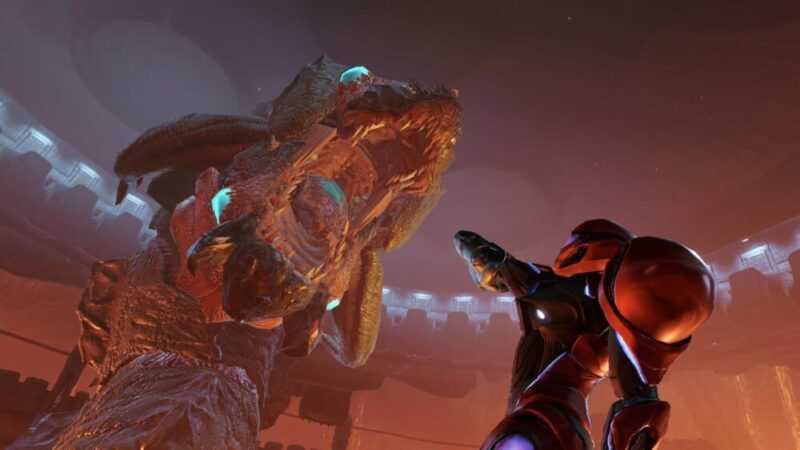
It’s not bad, so to speak, but it definitely lacks any real emotional beats or memorable performances. Of course, Samus is still silent here, so I don’t think she’s part of the problem, but I feel like the team at Retro Studios could have made this a more poignant, introspective story, given that this stranded Samus spends most of her time alone.
Overall, the 10-15 hour story does go by rather briskly, depending on your intent to explore the game’s hidden areas, but it definitely doesn’t overstay its welcome, which I commend it for.
Blast Away
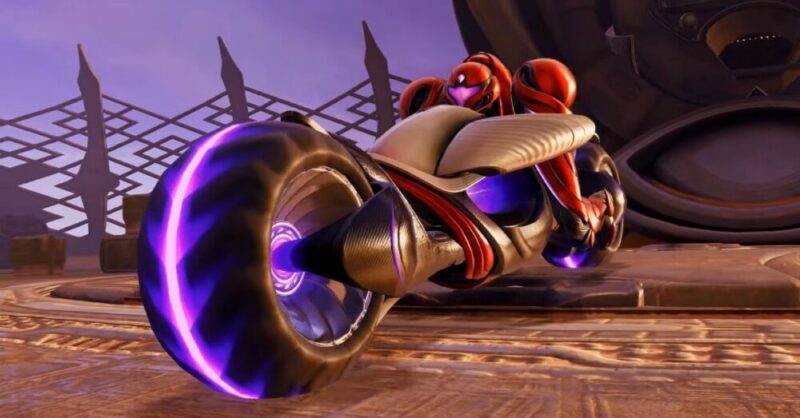
Samus is still equipped with her trusty Arm Cannon, which soon becomes infused with new psychic abilities. There’s also the introduction of the Vi-O-La bike to help traverse the game’s larger open-world sections. The remaining gameplay will feel familiar to most fans of the franchise, providing a balanced blend of combat, puzzle-solving and exploration.
Combat in Metroid Prime 4: Beyond is still fantastic. The Arm Cannon feels punchy and responsive, with players being able to tap the A or ZR buttons to fire individual shots from the cannon, or hold the button to charge it up and send out a powerful blast. Samus can still free-aim, but also lock onto enemies and aim within that specific area. In these moments, however, the gyroscopic motion controls can get in the way. I played this game primarily on my TV with the Switch 2 Pro controller, and I much preferred aiming with the sticks rather than tilting the controller in a specific direction.
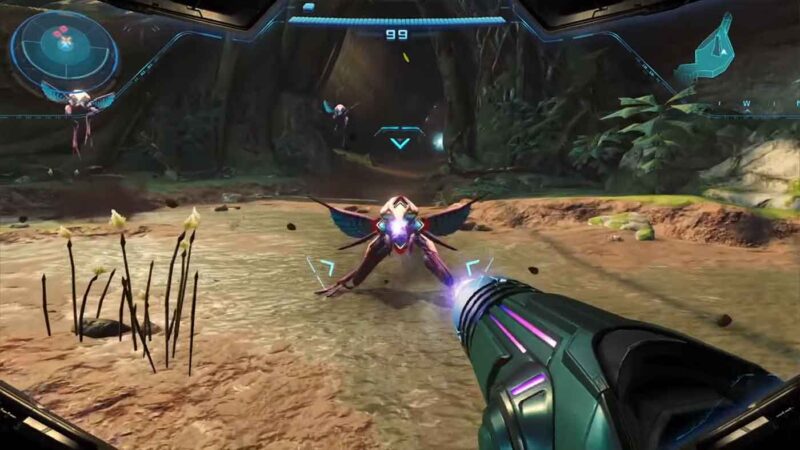
Down the track, Samus will also gain access to various elemental abilities, which mainly affect the cannon and help make combat that much deeper, as you’ll need to adapt and choose the right elemental ability for each enemy. While the combat primarily succeeds based on how well it feels, I love how it keeps all abilities and upgrades relevant in the process.
Samus will also have access to her handy scanner, which can be used to scan various items of importance within an area, lending hints on how those items can be utilised. The scanner can even be used on enemies and certain bosses, which helps reveal weak spots and effective attacks. Much like previous Metroid Prime games, Samus will also unlock various abilities throughout the game, which are generally acquired by progressing through each area. These abilities can then help access previously out-of-reach or inaccessible areas, and many of you will feel right at home.
Most of these new abilities are based around those aforementioned psychic abilities, with Samus being able to telekinetically move items around the environment, or send out a telekinetic blast from her Arm Cannon, which slows down time in the process. While these are only a few abilities gained earlier in the game, I simply love just how well they tie into the level design and general puzzle-solving. There is still a fair amount of backtracking involved, but it never feels pointless, and you’re always progressing towards the next objective.
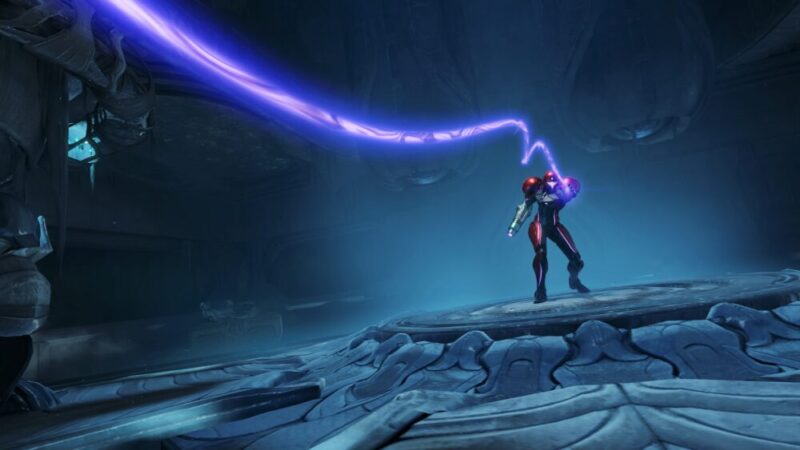
As you would expect, Samus can also activate her Morph Ball form, which allows her to access tighter areas and is generally essential, at least in part, to solving most puzzles. Samus can even drop Morph Ball Bombs to help her access higher ledges and even take out enemies in the way. Down the track, these Morph Ball Bombs are even infused with their own psychic abilities, allowing to to form bombs that linger for a while before exploding, for Samus to change back into her normal form and throw about the environment.
A few hours into the game, Samus will also unlock the Vi-O-La bike to help her get around Sol Valley, a large, open desert hub that binds together many of the game’s levels and environments. Unfortunately, these portions just don’t do it for me. The bike itself is fantastic to ride, being both fast and smooth, and packed with its own combat weapons and mechanics, to shoot enemies out of the sky.
Even so, the larger Sol Valley just feels lifeless. Sure, it’s a desert, but there’s just not much to do when you’re riding about, apart from heading to the next main area. There are certain Lamorn Shrines that Samus must head to to unlock elemental abilities for the Arm Cannon, but as they’re practically essential to the core experience, the supplementary options feel rather sparse in a large hub that isn’t really putting much in your way. What I can’t understand, though, is why there’s no music or soundtrack to accompany you while you traverse the long stretches of desert. It turns out there is, and it’s locked behind an Amiibo purchase, which I find bizarre.
Finally, Metroid Prime 4: Beyond allows players to take advantage of mouse controls on the Switch 2, with some generally successful results. Like any game, the Joy Cons will work on any surface, including your lap, and this explains why a few of the game’s main controls have been assigned to two buttons on the controller. It’s fine in the sense that it’s responsive and totally playable in this form, but I have more of an issue with the mouse controls feeling awkward when you’re not in the correct position to utilise them. If you’re on a desk or a table, it will definitely make more sense, but as I’m always on the couch, I feel much more comfortable with a controller-based alternative.
Look the Part
We reviewed the game on the Switch 2, and I must admit, this runs really well. Players will be able to choose between a Quality Mode, which outputs at 4K/60fps while docked, and 1080p/60fps while in handheld mode. Alternatively, there’s a Performance Mode, which will output 1080p/120fps while docked and 720p/120fps while in handheld mode.
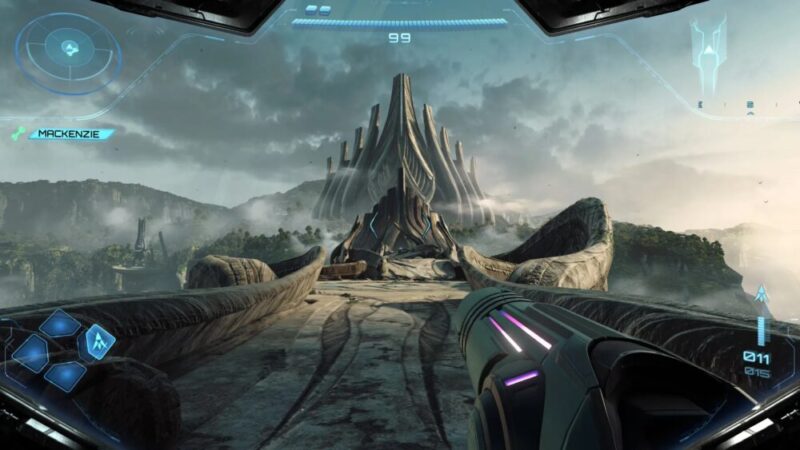
For the most part, this is pretty consistent across the board, with only the most minor hiccups when things get a little busy in the more open areas. Visually, though, there’s no getting around some of the muddier textures in certain parts, which make the game feel a touch older than it really is.
Final Thoughts
Overall, Metroid Prime 4: Beyond might not be the best in the long-running series, but it definitely stands tall as a solid sequel, after so many years of anticipation. The combat is solid, and thanks to new elemental and psychic abilities, deeper than ever. Puzzle-solving is also consistently clever and well-paced, making backtracking feel like you’re always moving forward.
While the story takes a backseat at times and certain muddy textures bring the game down a touch visually, there’s no denying just how good Samus’ return feels, especially on the new hardware.


FOUR STARS (OUT OF FIVE)
Highlights: Solid combat; Plenty of clever puzzles; Abilities feel balanced and well-implemented; Decent visuals and performance
Lowlights: Open-world areas feel lifeless
Developer: Nintendo, Retro Studios
Publisher: Nintendo, Nintendo of America Inc.
Platforms: Nintendo Switch, Nintendo Switch 2
Available: Now
Review conducted on Nintendo Switch 2 with a launch code provided by the publisher.
Featured header image also provided by the publisher.
