



If you read my review of Clockenflap festival in Hong Kong last week, you may remember I mentioned that there were quite a few bands saying that this was the first time they’d played together on a stage… in front of a crowd. Coming from Australia, you can’t help but think that this is the sort of thing that maybe you’d want to do before playing the stage of a major festival.
It would be unheard of in Australia for a band to make their debut at a festival, let alone one this big. But herein lies a fairly surprising issue facing the Hong Kong music scene: there simply aren’t opportunities for these bands to play.
Traditional, smaller venues (like pubs and clubs), seem to only book cover bands or DJs, while Cantonese Pop (or HK-Pop) dominates any other opportunities. Without the venues to get the experience, this means that these bands can’t get support slots for touring international artists (for they would no doubt be deemed too “amateur”) – and so this never ending cycle of bands struggling to grow in the live scene seems to be stifling the possibilities for a serious indie music scene in this city. But judging by the sheer quantity of Hong Kong bands who were playing the festival – indeed some with more experience under their belts than others – there is no reason there shouldn’t be a scene here.
While in Hong Kong, Johnny Au spoke to two industry members about the issues facing their music scene to help get our heads around it a bit more.
Leslie Ho, Sony Music Entertainment (Hong Kong) – Marketing Manager (International Repertoire). Also manages the indie label OUR Works:
“I think one of the big problems is the lack of venues. We don’t have a lot of big venues. We have plenty of cafes, but they may not draw enough people. And the cost of putting on a gig like that is very expensive. Because of the lack of creative venues for us to do something different, it takes a lot of researching, linking up with the right people.”
“I think the most creative one I’ve done recently is for (one of our local artists) Lil’ Ashes’, where we actually worked with a group called “Fashion Farm Foundation” in Hong Kong. They had a rooftop on the top of an industrial building in the middle of the city, which is a rare opportunity. We had problems of course with police, and because there were offices under the roof, so we couldn’t do a lot of the sound checks we wanted to. There we a lot of sound complaints. The police were understanding though, they didn’t really stop us. But the lack of venues to do something that embody what live music is all about is tough. Even when international acts come, the venues are pretty small.”
In terms of other opportunities, like supporting Internationals? “Lil’ Ashes (pictured below) did support a Spanish artist called Russian Red, in Hong Kong. It really depends on the promoter and the artist itself. So it’s possible to make it happen, but it’s also, do the audience want to see an opening act? When you talk about someone the size of Taylor Swift, how are you going to find an opening act that could work on that scale, and what are people going to think if they see someone unknown on the stage. Even with local performances, there aren’t really support acts. Lots of guest performers, but not opening acts. So there is the opportunity for intentional acts, but it’s not easy.”
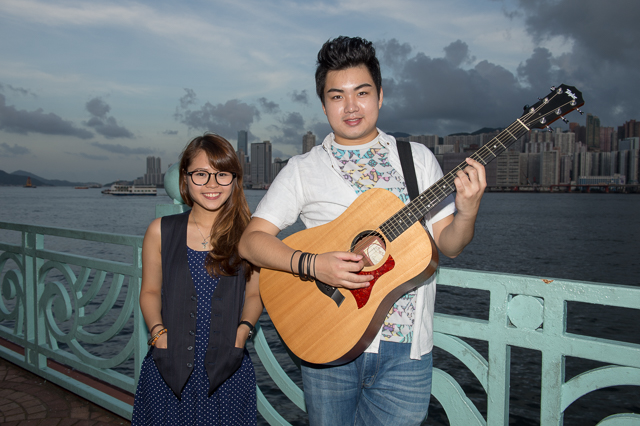
Lil’ Ashes
Justin Sweeting, Clockenflap Music Director, Artist Voice Asia Managing Director and Proper Job Ltd Managing Director:
“I think there are very well documented issues like venue options, but ultimately it’s the situation that for local artists it’s very difficult to graduate their art beyond a hobby style of engagement. In Hong Kong, the cost of living is high, rent is high. It’s not easy to get by here. So for artists to dedicate the necessary time needed to take their craft to the next level, that’s a serious investment. And it’s very difficult to commit to… it’s not easy to dedicate the time. There’s definitely a low glass ceiling here. There aren’t the natural steps here for bands to take, where you can go from a small venue to larger and get signed along the way, and add other elements to your team. That structure of the industry isn’t in place here. So that’s an issue as well.”
“What we need are a few success stories. People who break through, and prove the mould and knock the door down for the next bands to come through. It’s going to be a more evolutionary process I think. It’s happening bit by bit, it just takes a very long time. I definitely can see the momentum moving forward, it’s just not going to happen overnight.”
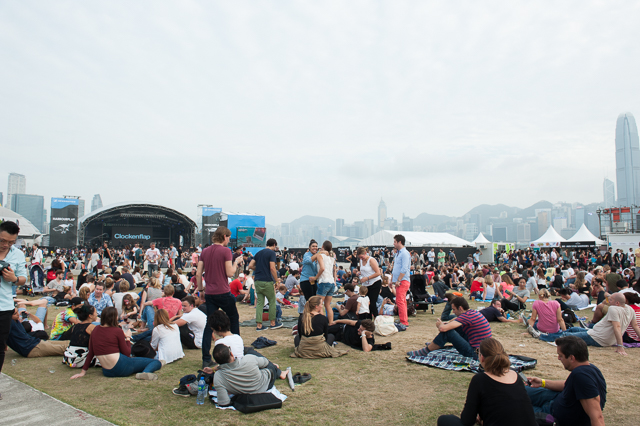
Justin co-founded and is the Music Director of the festival Clockenflap.
Hong Kong bands all I’ll say is this: don’t stop what you’re doing. Keep working to create a scene in your city. Find venues that may not normally have live bands and try to convince them to take it over once a week with original music. The first week there might be ten people show up… maybe less. But get your community of musicians together and support each other and, eventually, a scene will emerge. It seems like that’s easier said that done though.
As such a fan of music, and a supporter of the bands who are trying to do something against the norm (which, in Hong Kong, seems to be anything that isn’t HK-Pop), it’s heartbreaking to see the city seeming to work against the growth and success of original independent music. But the quality is there, and it will just take some people power (and probably a few years… at least) to break through the fuzz and see a change to the city’s potentially vibrant music scene.
I’d like to make particular mention to the Hong Kong bands Yukilovely, Lil’ Ashes, Celestial and Noughts and Exes who I mentioned in my top picks article. All bands stood out as particularly professional, tight and engaging at Clockenflap. And given what I now know about the Hong Kong music scene, that’s made their performances all the more impressive.
It’s sad to think this is the only major contemporary music festival in a location that is truly breathtaking, but it feels promising to know it is there, amongst an atmosphere that seems to have otherwise told them that something like this would never have worked. But it has, and as organisers promised Clockenflap would be back for an eighth year at the end of the festival, one thing’s clear: they aren’t going anywhere. Now here’s hoping that its continued success will herald new opportunities for the talented musicians that live and work in this international city and encourage them (and the city) to develop a scene that will thrive. With people like Justin and Leslie on the case, at least we know there’s a good group there trying to make it happen.
