

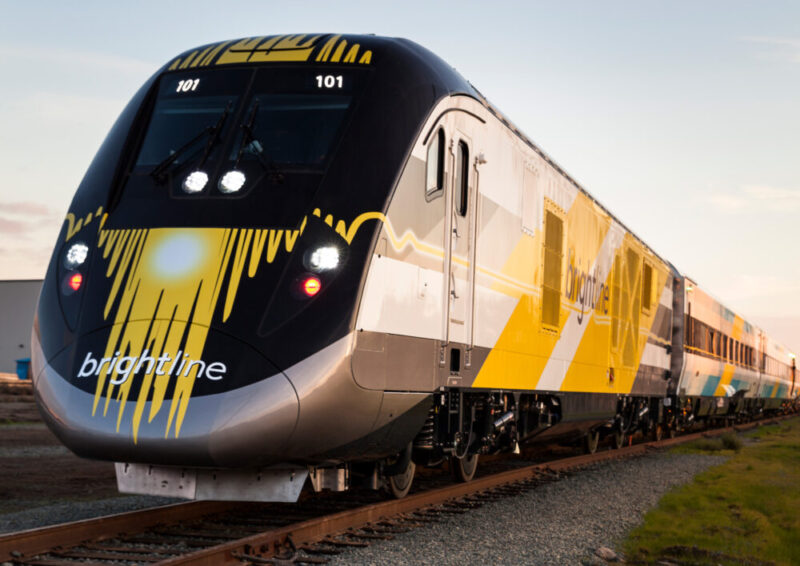
When it comes to rail transit, something North America and Australia have long held in common is the lack of a true high-speed service. This is defined as a service that generally travels at speeds of 200km/h (125mph) on upgraded but existing rail infrastructure, or 250km/h (155mph) on newly built lines. Even now, neither country offers the latter, however the United States does have two defined by the former.
The USA got their first high-speed rail service back in 2000 when Amtrak launched Acela on their most popular corridor: Boston to Washington D.C.. This route goes via a number of popular destinations, including New York City and Philadelphia. The line can now hit, at least on a portion of the track, 260 km/h (160 mph), following the introduction of the new NextGen Acela last year.
The second service, Brightline, has been operating in Florida since 2018, where it started taking passengers on the 40 minute trip from Miami to Fort Lauderdale. In September 2023, the line added another 275km (170 miles) north to the Theme Park capital that is Orlando (in fact, it was following my visit to Epic Universe last month that I took this trip). And it’s now taking some 10,000 passengers a day across the Sunshine State, after extending its service, with the economy fares I found sitting comfortably under $100.
Now Brightline just scrapes through on the definition of “high-speed”, 125mph (201 km/h), but it remains an impressive modern addition to America’s transit infrastructure. So what was the experience like riding it? I jumped on the service from Orlando to Fort Lauderdale last month to bring you this review.
Departing from MCO Station
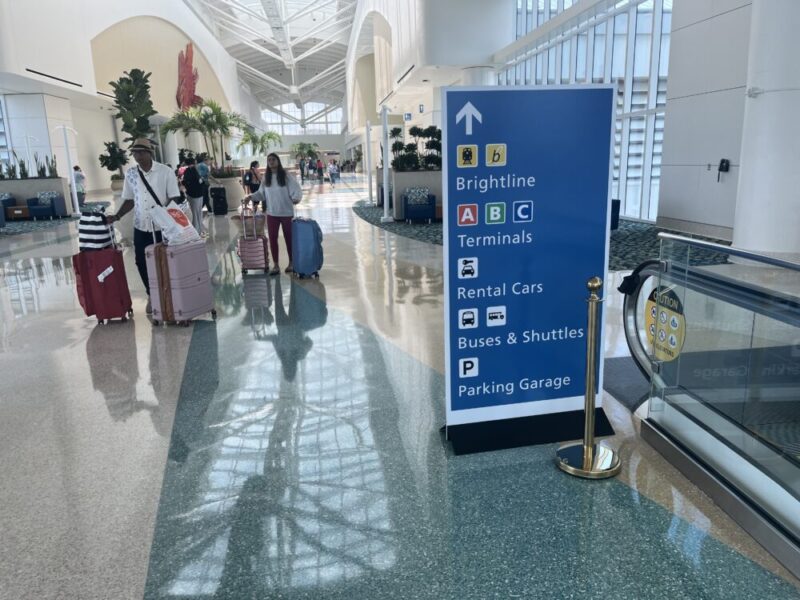
The Brightline service from Miami terminates conveniently at Orlando’s International Airport, MCO. So do consider this anytime you’re trying to get to Florida’s East Coast – as flight prices differ between destinations. I was departing from Orlando, rather than arriving, however, and so I jumped in an Uber from Universal Studios Orlando to get to the station. It took about 25 minutes, with the Uber dropping me on the curb, with clear signage directing passengers to Level 5 and the Brightline terminal.
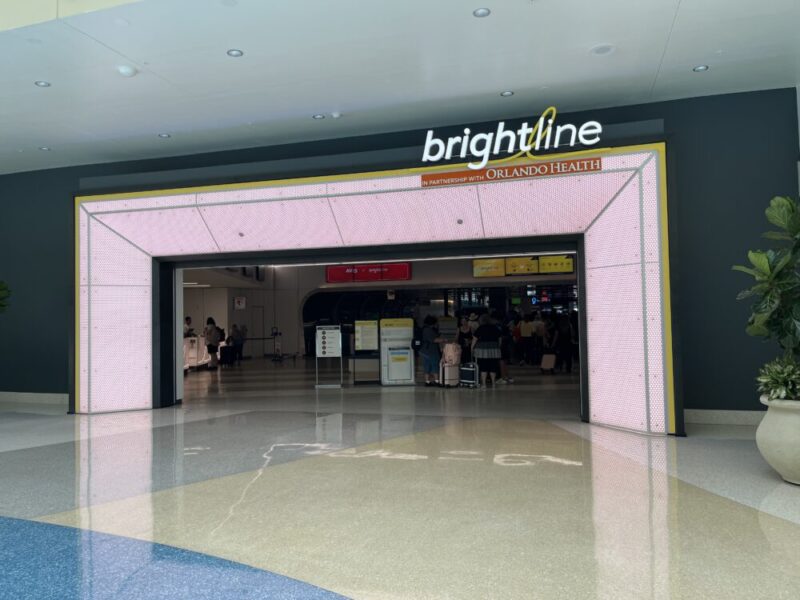
If you need to drop your bag, make sure you’ve arrived at least 30 minutes before your flight, otherwise you won’t be able to. My ticket was e-mailed to me, and I used that QR code to scan in – but at the same counters where you drop your bag, they’ll be able to help you out with any ticket enquiries.
From there, you’ll go through an automated machine that checks your ticket, and then security, where all bags are scanned and every passenger goes through a metal detector. It’s a bit TSA-lite, and elicits some of the same frustrations. Here, the layout of the space needs a rethink, as the security queue creeps right up to the exit of the automated machines.. There just isn’t enough room. People kept bunching up and stopping people from being able to use the machines, and staff seemed unable to assist. Still, it took less than 10 mins from arrival to get to the other side.
I only arrived half an hour before the train was due to depart, as I had no bags to check in. So it’s now 20 minutes before boarding, and the platform is still roped off. They don’t let anyone onto the platform until the train is ready to board, which means everyone is waiting inside. Since I was cutting it close to departure time in my arrival, there was very little waiting space.
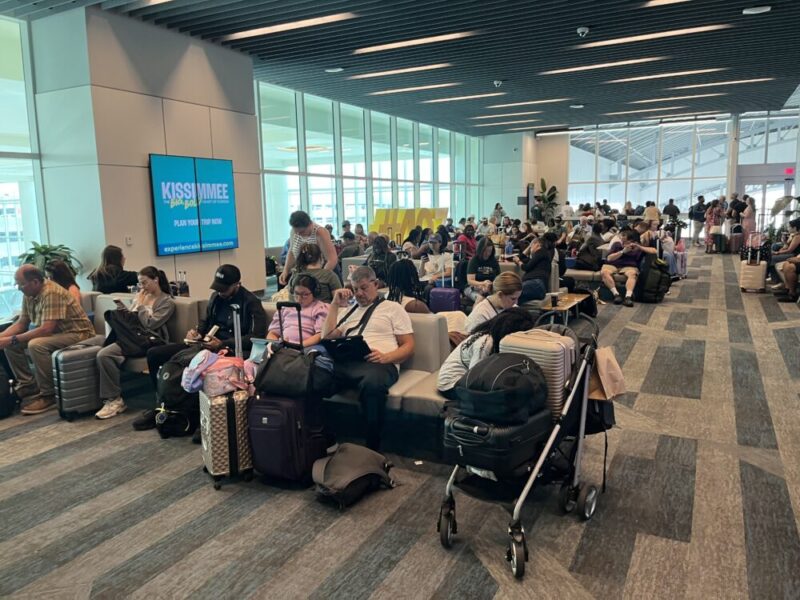
Premium passengers get their own lounge and it’s recommended to give yourself extra time to enjoy that. For the rest of us, you can enjoy a beverage at the bar Mary Mary.
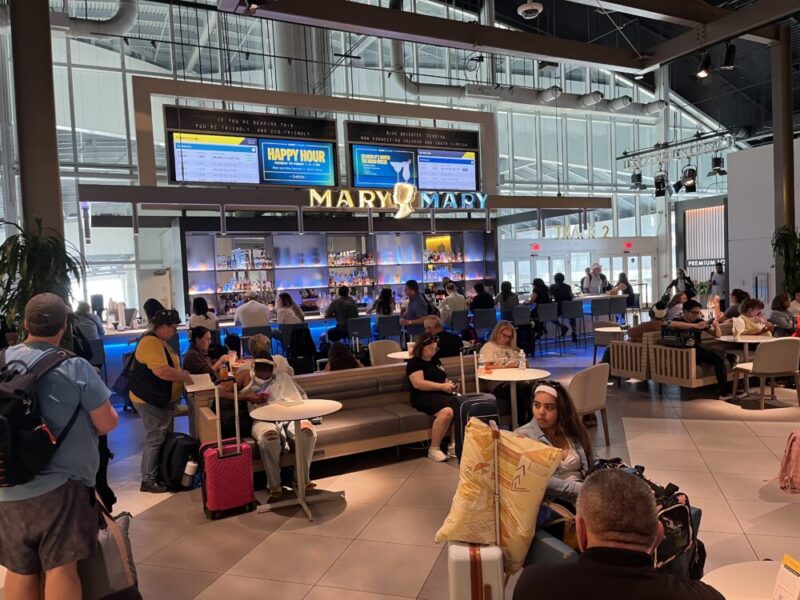
Five minutes after getting into the waiting room, I received a text message that boarding was imminent. Then three minutes later – just 12 mins before my scheduled departure time of 2:20pm – they sent a text, and made an announcement that boarding had started. Escalators and elevators started operating, and ropes were dropped. Everything moved impressively from here, with the train leaving on time.
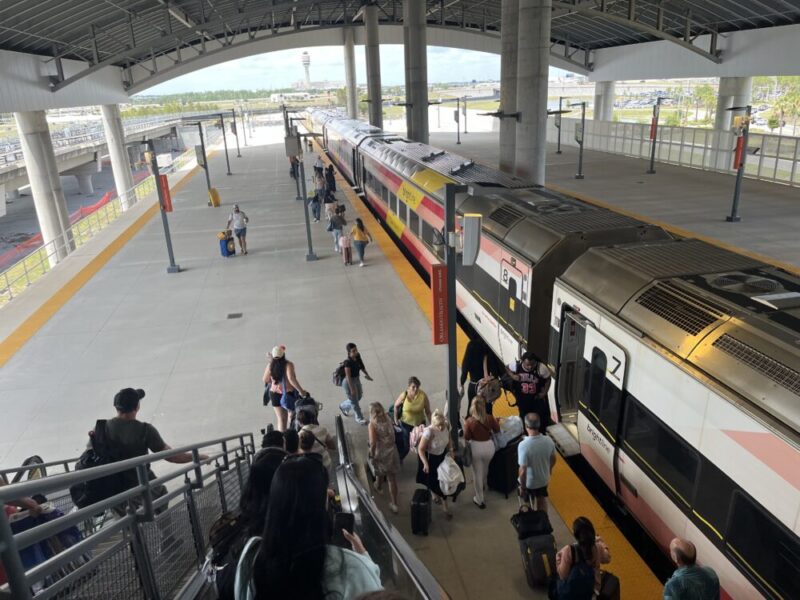
They do say that boarding closes five minutes before departure time, but that likely refers to the scan in area, rather than the train itself, as people were continuing to move onto the train until about a minute to departure time. Still, make sure to arrive 15 minutes early at the very least, you don’t want to miss the service – though they do have 16 services a day, which isn’t bad. Especially for the USA.
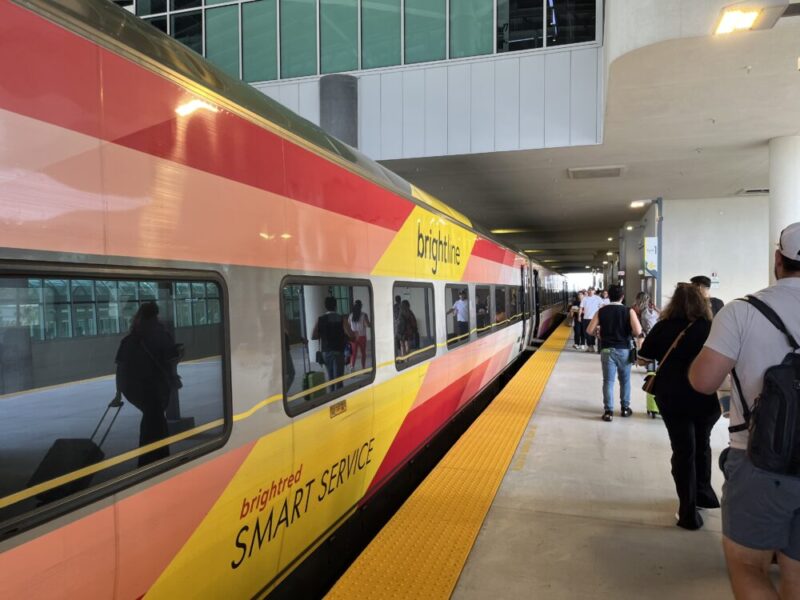
The On Board Experience
I had pre-booked a window seat, and was impressed by everything I saw on board.
The cabin was spacious and clean, as were the seats. With decent leg room to boot. You’ll find a good amount of luggage space at the entry to each cabin and above the seats. But my backpack fit comfortably at my feet, and still gave me plenty of room.
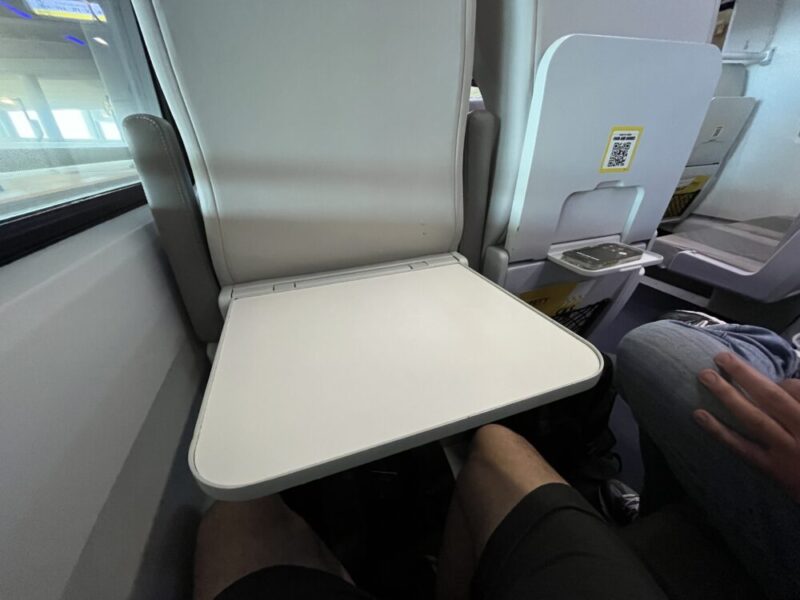
The tray table is offered in two parts, giving you a smaller one for your phone or a drink, and a larger one for your laptop. You can move your seat forward or back to change your distance to the table via a button next to you. You’ll find two power points under the seats, and another two plugs, as well as a USB slot, under the armrest. The lights above you can be turned on and off, and though it couldn’t be controlled remotely, the air conditioning was fantastic.
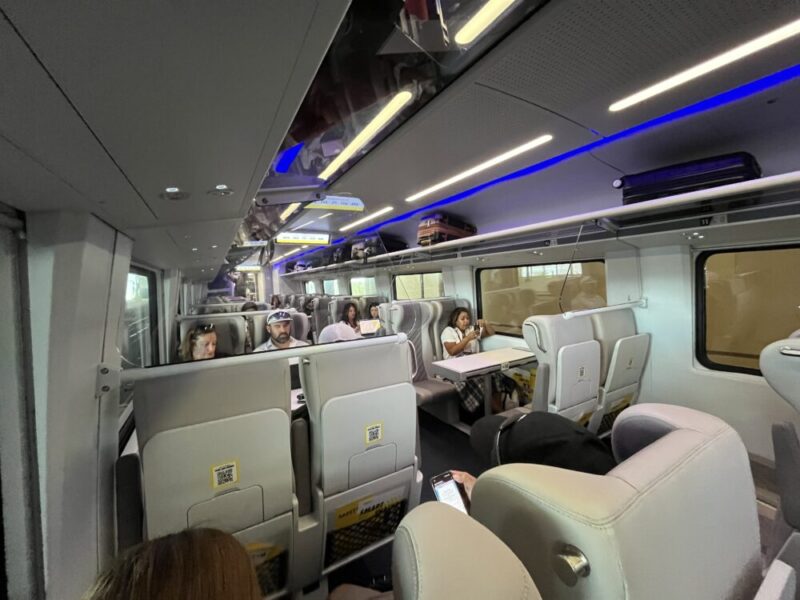
There’s a food and drink QR code at the seat, letting you order to the seat. Though this is the only way to get food or beverage on the train, prices were reasonable and service was quick. Wine and liquor is $10, beer $8, cocktails for $12 and sandwiches and plates range from $8-12. Snacks and sodas are $4.
Free wi-fi was available in partnership with Princess Cruises, who sail from Fort Lauderdale and Port Canaveral – so many of their passengers would connect using this service. The wi-fi was spotty at the start, but improved as we went on.
I also received a text when we approached Fort Lauderdale, and we arrived on time.
Once in Fort Lauderdale, we simply walked out of the station and into the city. The whole trip took 3 hours, before it continued on another 40 minutes to its other terminus in Miami.
What’s Next for High-Speed Rail in America
Work on Florida’s Brightline service is complete for now, though there is a plan to take the service onto Tampa in the future. And we may see additional stations added along the existing line in 2029.
In the meantime, all eyes are now on the first true high-speed rail service in the US – one that will compete with services in Asia and Europe in terms of speed and, they hope, usage. This will see passengers travel up to 320 km/h (200mph) on a 350km, 2-hour journey between Rancho Cucamonga in LA and Las Vegas. This is poised to change the way Americans travel, and hopefully get some of those oh-so-bad for the environment short-haul passenger planes off the route. It’s due to open in 2029.
Australia, we’re still waiting…
Final Thoughts
The launch of this service, and its placement at Orlando Airport, makes travelling across the State of Florida easier than ever. It was heartening to see the train so packed, so clean, and so well maintained. With free wi-fi, ample power outlets and clean lavatories to boot.
There’s a few things I’d like to see improved – in particular the layout of security at its Orlando Airport terminus. I also would love to see a place where you can go and order a drink or food on board. The QR code is great, and the staff were excellent – but there’s something about being able to go for a walk and come back with a snack that I love on longer rail trips. But maybe that’s just me.
Minor gripes aside, Brightline offers American travellers and tourists, for the first time in my lifetime, the epitome of what train travel should be. I would love to see them expand to more destinations around the country. It’s wild that Florida got it before so many other destinations. But I’m here for it. And you should be too.


FOUR STARS (OUT OF FIVE)
To book your next trip with Brightline, head to their official website.
The author travelled at his own expense. All prices were correct at the time of printing, and in US$. Photos by the author unless otherwise credited, except the headline photo with was supplied by Brighline.
