

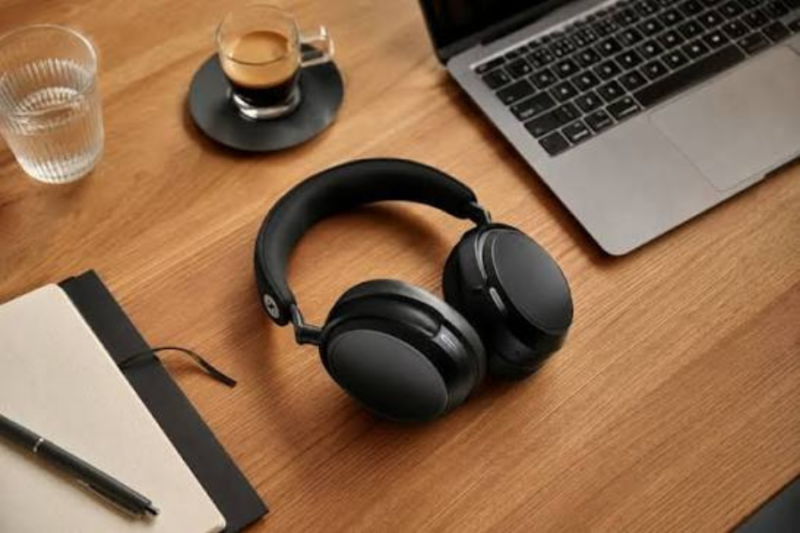
The market for premium over-ear headphones has been eerily quiet over the past few years. Ever since Apple released its AirPods Max in 2020, there’s been a sense that the category has settled into a comfortable rhythm, with manufacturers seemingly less interested in making substantial leaps between generations.
We’ve seen a stronger showing elsewhere. Sony has continued refining its wireless earbuds, while Jabra and Sennheiser have been busy developing excellent in-ear options across the mid-range. But when it comes to those big, muff-like noise blockers that form a perfect cup around your ears, things have felt a little less exciting.
That’s not to say the category has been completely stagnant. Sony and Bose have continued releasing premium models, but the kind of meaningful improvements that once accompanied each generation have become harder to identify. There’s only so much you can do with a pair of headphones before diminishing returns start creeping in.
Sennheiser released its acclaimed MOMENTUM 4 Wireless in 2022, and we’ve had to wait four years for a follow-up. The MOMENTUM 5 Wireless finally arrived in 2026, bringing improved adaptive noise cancellation and Dolby Atmos spatial audio, along with a renewed emphasis on longevity.
That last point is worth paying attention to. These cans feature a user-replaceable battery, which should help extend its useful life well beyond the point when most wireless headphones start losing their appeal. Sennheiser has also refined the overall design, with changes aimed at making the headphones more comfortable during extended listening sessions.
I took the MOMENTUM 5 Wireless with me on a long-haul flight from Sydney to Helsinki, which seemed like an ideal opportunity to put Sennheiser’s latest flagship through its paces. A lengthy international flight is one of the most demanding environments for headphones, especially when you’re trying to get some sleep.
At $749.95 in Australia, these are expensive headphones. And after four years of development, I was expecting a meaningful improvement over the previous generation.
Design
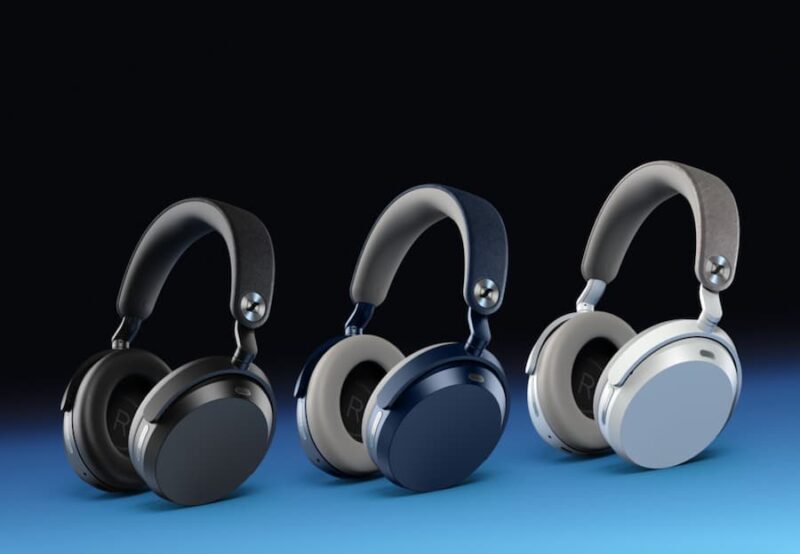
Sennheiser hasn’t done anything radical with the headphones’ appearance, and I’m glad. The minimalist styling remains handsome, with broad earcups and a fabric-covered headband that gives the headphones a more restrained appearance than some of their flashier competitors.
The construction is largely plastic, which is a little disappointing at this price. There’s nothing inherently wrong with plastic, especially when weight is a consideration, but I would have liked a slightly more luxurious finish.
At approximately 290g, they’re heavier than the MOMENTUM 4, although still manageable for an over-ear design. The ear cushions are generously padded, and the headband is designed to distribute pressure evenly rather than concentrating it at the top of your head.
Comfort is one of the most important considerations for headphones like these. On a long-haul flight, you’re dealing with hours of continuous wear, and even minor pressure around the ears can become irritating after a while.
This is one area where Sennheiser has made some welcome progress. Having spent time with previous Sennheiser headphones, I found the latest model much easier to wear for extended periods. The earcups sit comfortably without creating too much pressure, while the headband does a good job of distributing the weight.
I was even able to doze off with them on during my flight from Sydney to Helsinki, which isn’t something I’ve always found comfortable with over-ear headphones. There’s usually a point where I become conscious of the pressure around my ears and need to take a break, but that wasn’t much of an issue here.
The earcups rotate flat for storage, although they don’t fold inwards. That means the supplied carrying case still takes up a fair amount of space in a backpack, even if the case itself is slimmer than the previous generation’s.
Controls remain largely touch-based, with gestures on the right earcup handling playback and volume. I’ve never been entirely convinced by touch controls on headphones because it’s easy to activate something accidentally when adjusting their position.
There’s a physical multifunction button, but I would have preferred a more tactile arrangement for the main controls. Physical buttons are simply easier to locate when you’re half-asleep on a plane.
Specs
- Type: Wireless over-ear headphones
- Drivers: 42mm dynamic transducers
- Connectivity: Bluetooth 5.4 with multipoint support
- Codecs: SBC, AAC, aptX, aptX HD, aptX Adaptive and aptX Lossless
- Noise cancellation: Hybrid adaptive ANC with eight microphones
- Spatial audio: Dolby Atmos
- Battery life: Up to 57 hours with ANC enabled
- Fast charging: Up to seven hours of playback from a 10-minute charge
- Full charging time: Approximately two hours
- Wired connectivity: USB-C and 3.5mm audio
- Weight: Approximately 290g
- App: Sennheiser Smart Control Plus
- Battery: User-replaceable rechargeable lithium-ion
- Australian RRP: $749.95
Performance
I tend to judge noise-cancelling headphones by how well they perform in the air. A pair might sound fantastic in a quiet room, but that tells you very little about how effectively they’ll handle the persistent low-frequency rumble of an aircraft cabin.
Sennheiser has made a meaningful improvement here. The MOMENTUM 5 uses a new hybrid adaptive noise-cancelling system supported by eight microphones, with the processing adjusting to changes in surrounding noise. It’s a welcome step forward from the MOMENTUM 4, whose noise cancellation was good without ever quite matching the best from Sony and Bose.
On my flight from Sydney to Helsinki, I found the noise cancellation genuinely effective. The constant drone of the aircraft faded into the background, making it much easier to settle into music or simply close my eyes for a while. Combined with the improved comfort, the headphones made those long stretches in the air more manageable. I could leave them on for hours without feeling the usual urge to give my ears a break, which is something I can’t say about every pair of over-ear headphones I’ve taken travelling.
Some independent reviewers still place Sony and Bose ahead for outright noise cancellation, but I certainly didn’t feel short-changed by what the headphones could do in an aircraft cabin.
I think there’s also a tendency to focus too heavily on how much noise a pair of headphones can eliminate in controlled testing. That’s useful information, of course, but comfort becomes just as important when you’re wearing them for the better part of a day.
The headphones strike a satisfying balance between the two, and that’s ultimately what made them such a good travelling companion. Transparency Mode is useful when you need to hear what’s happening around you without removing the headphones. That’s something I appreciate while travelling, when airport announcements and conversations can interrupt whatever you’re listening to.
The Smart Control Plus app offers a good degree of customisation, allowing users to adjust noise cancellation and create personalised sound profiles. It’s worth spending some time with the app because the default settings won’t necessarily suit everyone’s preferences.

Sound
Sennheiser has an enviable reputation when it comes to sound quality, and these headphones continue to build on the company’s experience in high-end audio. Interestingly, the headphones retain the same basic 42mm driver size as the MOMENTUM 4, although Sennheiser has refined the tuning and introduced new processing features. The biggest difference here is a noticeably lower amount of distortion at the higher end.
The resulting sound signature leans towards warmth, with a generous amount of bass and a relatively relaxed presentation. It’s an approachable tuning that works well for extended listening, although anyone who prefers a brighter sound might find the default settings a little restrained. There’s good weight behind the lower frequencies, which gives electronic music a satisfying sense of depth. Vocals are presented with enough body to remain engaging, even if the upper frequencies don’t have quite the same sparkle as some competing headphones.
I’ve always appreciated headphones that preserve the character of a recording without pushing the bass too aggressively. These cans get close to that balance, although I’d recommend experimenting with the in-app equaliser if you listen to a lot of acoustic music.
One of the headline additions is Dolby Atmos spatial audio, which creates a more expansive presentation with compatible content. It’s an interesting feature, although I still think a well-recorded stereo track can be every bit as immersive.
I’m not convinced spatial audio should be treated as an essential feature when buying headphones. The technology can be impressive, but its usefulness depends heavily on the source material, and I’d much rather have excellent stereo reproduction than a mediocre attempt at creating a three-dimensional soundstage.
The more important advantage is codec support. With aptX Lossless and aptX Adaptive available on compatible devices, the set gives Android users more flexibility when pursuing higher-quality wireless audio. But this is expected for a pair of high-end headphones in 2026. There’s no reinvention here, just refinement.
You can also listen through USB-C or the supplied 3.5mm cable. I appreciate having those options, especially for travel, when Bluetooth connectivity isn’t always available through an aircraft’s entertainment system. Sennheiser’s reputation was built on sound, and that’s still one of the strongest reasons to consider these headphones. These offer a rich listening experience that should appeal to anyone who spends a lot of time with music.
Battery
Battery life is where the MOMENTUM 5 makes one of its strongest arguments. Sennheiser quotes up to 57 hours of playback with active noise cancellation enabled. That’s a remarkable figure when you consider that many premium competitors advertise around 30 hours.
It’s actually slightly less than the 60 hours promised by the MOMENTUM 4, but the difference is minor given how much endurance you’re getting. For long-haul travel, that kind of capacity is enormously appealing. A journey from Sydney to Helsinki can involve the better part of a day in transit, depending on your connections, and having enough battery to cover the trip without constantly worrying about finding a charging port is a genuine advantage.
Fast charging is equally useful. Sennheiser claims a 10-minute charge provides up to seven hours of playback, while a full recharge takes approximately two hours. The more significant improvement, however, is the replaceable battery.
Sennheiser has designed the MOMENTUM 5 so the battery can be accessed with a small screwdriver, rather than permanently sealing it inside the headphones. Replacement parts and the appropriate procedure still matter, but the design makes future battery maintenance much more realistic. I wish more manufacturers would adopt this approach. Expensive headphones should remain useful long after their original batteries begin to lose capacity, especially when the drivers and other components are still working perfectly.
Verdict & Value
Four years is a long time to wait for a new pair of headphones, especially from a company with Sennheiser’s reputation. The MOMENTUM 5 Wireless doesn’t completely reinvent the range, but it makes enough meaningful improvements to justify its existence.
The upgraded noise cancellation addresses one of the biggest weaknesses of the MOMENTUM 4, while Dolby Atmos and improved wireless support bring the headphones closer to what buyers now expect from a premium model.
Sound quality remains a major strength, although the warmer tuning won’t suit everyone. The plastic-heavy construction also feels a little underwhelming for something costing $749.95.
And then there’s the competition. Sony and Bose have both established themselves as leaders in active noise cancellation, and their flagship models can frequently be found at discounted prices.
But Sennheiser has an advantage that deserves more attention: longevity. The battery life is without a doubt the primary reason to invest in these cans over any similarly priced alternative
With up to 57 hours of battery life and a user-replaceable battery, the headphones have been designed with a longer useful life in mind. That’s important when we’re being asked to spend this much money on a pair of headphones.
Taking them on a long-haul journey from Sydney to Helsinki also reinforced why I still prefer proper over-ear headphones when travelling. The noise cancellation did an excellent job of keeping the aircraft’s constant rumble at bay, but I was even more impressed by how comfortable they remained after several hours.
I’ve used previous Sennheiser headphones, and this was the first time I felt I could comfortably keep a pair on through extended periods of listening and sleep. That makes a difference when you’re spending much of a day in transit, and it’s one of the biggest reasons I’d recommend these to frequent flyers.
The MOMENTUM 5 Wireless is a welcome return for Sennheiser. I would have liked a little more ambition in the design, and there’s still room for improvement in the noise cancellation, but there’s a lot to appreciate here.
Four years later, Sennheiser has delivered a worthy successor. Whether it’s worth upgrading from the MOMENTUM 4 will depend on how much you value the stronger ANC and improved comfort, but for anyone shopping for premium travel headphones, these deserve serious consideration.


FOUR STARS (OUT OF FIVE)
Highlights: Excellent battery life; warm and engaging sound; effective ANC; exceptional long-term comfort; user-replaceable battery.
Lowlights: Super expensive; touch controls can be frustrating; plastic construction feels less premium than expected.
Price: $749.95
Review based on a unit provided by Sennheiser.
