


The smartphone market has become obsessed with “bigger is better,” but Google’s Pixel 9 Pro makes a compelling case for restraint. In an era where flagship phones increasingly resemble tablets, the 6.3-inch Pixel 9 Pro feels refreshingly normal to hold, while delivering every premium feature you’d expect from a top-tier Android device.
After three months of daily use, I’m convinced this might be the sweet spot Google has been searching for, a phone that pound-for-pound offers the best Android experience to date while successfully showcasing the leaps in AI-based tech and power efficiency that the tech giant has made over the last year.
Design
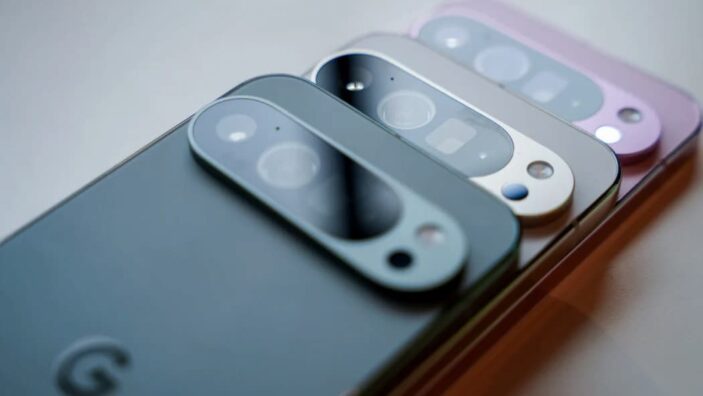
First impressions matter, and the Pixel 9 Pro delivers immediately. The matte aluminium rails provide exceptional grip, while the camera bar, now more refined than ever, creates a distinctive silhouette. Unlike the bulky Pro XL, this model slips comfortably into jacket pockets and can be operated entirely with one hand.
The build quality represents a significant leap from previous Pixel generations. Google has clearly invested in premium materials. The phone feels substantial without being heavy, and the IP68 rating is sturdy, and the Gorilla Glass Victus 2 has held up remarkably well. You tend to drop your phone a lot when you’re using it while travelling.
Display
The 6.3-inch OLED display hits the perfect balance between usability and immersion. Text remains crisp, videos look stunning, and gaming feels engaging without requiring two-handed operation for basic navigation. The 120Hz refresh rate makes scrolling buttery smooth, while the adaptive brightness handles everything from dimly lit restaurants to bright sunlight with ease.
Colour accuracy is outstanding. Photos appear true-to-life, and HDR content pops without looking oversaturated. The bezels are minimal without feeling fragile, and the slight curve at the edges adds visual elegance while maintaining practical durability. Compared to the Pro XL’s 6.8-inch panel, you’re not missing much in terms of quality, just real estate.
For content consumption, the size proves ideal for reading, social media, and casual video watching. It’s large enough to enjoy YouTube during commutes but compact enough that your thumb can reach every corner of the interface.
Performance
Google’s fourth-generation Tensor chip represents a maturation of its experiments with silicon. Performance feels consistently smooth across demanding tasks, from photo editing to gaming to running multiple apps simultaneously. The 16GB of RAM ensures apps stay in memory longer, reducing reload times and creating a more fluid experience. I haven’t had a single point where this phone has felt chunky or weighed down by overuse.
Gaming performance has improved dramatically over the Pixel 8 Pro. Titles like Call of Duty Mobile run smoothly at high settings, though the phone does warm noticeably during extended sessions. But every non-gaming phone I’ve ever tested does the same. The compact form factor actually helps here; heat dissipates more effectively than in larger phones, preventing the uncomfortable hot spots that plague supersized flagships.
Camera

The triple camera setup represents Google’s computational photography at its finest. The 50MP main sensor captures exceptional detail in various lighting conditions, while the ultrawide lens handles group photos and landscapes with minimal distortion. The 5x telephoto zoom produces usable results even in challenging conditions, though it can’t quite match dedicated camera systems.
Where the Pixel 9 Pro truly excels is in automatic scene optimisation. The phone consistently produces better-looking photos than what I actually see with my eyes, enhancing colours and contrast in subtle yet effective ways. Portrait mode works reliably on both people and objects, creating natural-looking depth effects and has actually helped me pick up details I didn’t notice before I took the shot.
Night photography remains a Pixel strength. The enhanced Night Sight mode captures remarkable detail in low light, often producing images that look better than what you could see in person. For social media and everyday photography, the results consistently impress.
Video recording has improved significantly, with better stabilisation and more accurate colours. The Magic Eraser and other AI-powered editing tools continue to feel almost magical, removing unwanted elements from photos with impressive accuracy.
Although I think it’s all about the Pan mode. With content creation getting so prevalent these days, people are starting to understand that controlled movements and stability are what matter the most. This mode doesn’t have the artificial effects of slow motion; you get a slow, cinematic pan of any scene while the record time is exactly halved to maintain the perfect motion. I love it.
Battery
The 4,700mAh battery represents the most significant compromise compared to the Pro XL. During typical usage—messaging, social media, navigation, and moderate camera use—the phone comfortably lasts a full day. However, power users who frequently game, stream video, or use GPS extensively might find themselves reaching for a charger by evening.
Charging speeds feel adequate rather than impressive. The 27W wired charging takes about 90 minutes for a complete charge, while wireless charging provides convenience at the cost of speed. The battery degradation over my three months of testing has been minimal, suggesting good long-term durability.
For most users, the battery life will prove sufficient. The key is understanding that you’re trading some longevity for the convenience of a more manageable size—a worthwhile compromise for many people.
Should you choose the 9 Pro proper or the XL sibling?
What sets the Pixel 9 Pro apart from both its XL sibling and competitors is its commitment to usability over specification sheets. Most people I meet tend to prefer those smaller, more manageable screens because of how natural they feel in the hand. XL takes some getting used to.
One-handed operation is genuinely practical, not just technically possible. Typing feels natural, reaching the notification panel doesn’t require finger gymnastics, and the phone doesn’t constantly threaten to slip from your grip.
Verdict & Value
The Google Pixel 9 Pro succeeds by remembering what smartphones should be: powerful tools that enhance your life without overwhelming it. You can pick up the 128GB version for $1,699 while the XL starts from around $1,849. Do you feel like a slightly bigger battery is worth $150? With Google’s gains in power efficiency, I don’t think it matters at all.
