

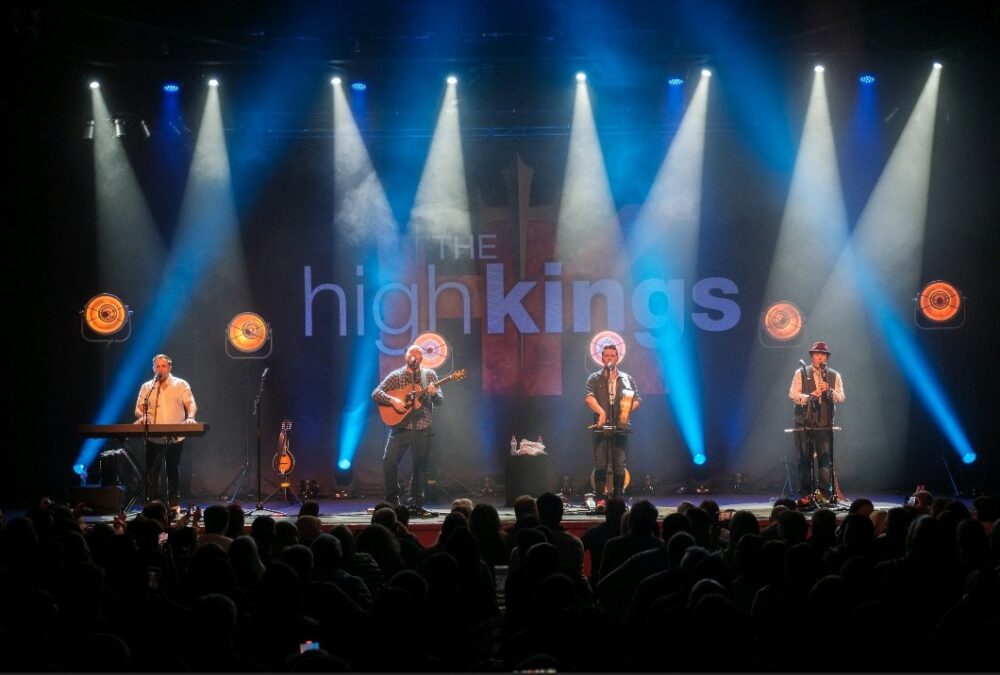
Across generations and continents, Irish music has carried stories of home, migration, loss, celebration and belonging. For The High Kings, that tradition is not something preserved in the past. It is something living, evolving and finding new audiences, including an ever-growing following here in Australia.
When I spoke with Finbarr Clancy and Brian Dunphy ahead of their Australian tour, they were generous with their time and remarkably committed to the conversation. The conversation repeatedly returned to what sits underneath the music: family, heritage, memory and the extraordinary ability of Irish songs to make people feel connected to somewhere, even when that somewhere may be thousands of kilometres away.
When The High Kings first began touring here, their audiences were largely Irish people looking for something familiar, a few hours of music, memories and, as Dunphy puts it, “a taste of home”.
Four years on, something has changed.
“It’s become mainly Australians that are coming to see us now,” Dunphy says. “It’s kind of done a flip over to the other side, which is great for us because obviously the music is reaching other people and it’s not just about home all the time.”
For Clancy, there is something about Australia that has always felt slightly different.
“I think we kind of feel like home here,” he says. “It’s a very, very different feeling, a very different emotion when you’re on stage and you’re singing for everybody.”
Australia and Ireland share a long and complicated history of migration. Generations of Irish people have made Australia home, bringing with them stories, traditions, music and an enduring relationship with the country they left behind.
The High Kings are now part of that ongoing cultural exchange.
From Riverdance to a second honeymoon
For Clancy, the Australian connection began long before The High Kings.
He spent five and a half years touring with Riverdance. As that chapter came to an end, the plan was relatively simple: get married, settle into life together and move beyond the relentless demands of touring.
Then came a phone call.
“The executive producer asked would we go to Australia,” Clancy recalls. “We were like, well, we couldn’t turn that one down because we’d never been.”
The Riverdance tour brought them to Australia for four months. When a couple of weeks off appeared in the schedule, the newlyweds made the most of it.
“We did a week on the Gold Coast and then a week up in Port Douglas and just kind of had a second honeymoon up there,” he says. “We did the Barrier Reef and the whole lot and did the cane toad racing, of course. You know, the usual.”
Years later, he returned, this time with The High Kings.
“And it’s just been incredible to get here because we’ve wanted to do it for so long.”
‘They were all waiting for us’
The decision to tour Australia wasn’t simply a case of following the Irish diaspora.
“We knew that there was an awful lot of young people coming out to Australia,” Clancy says. “And we knew that there was a market here.”
It took a few attempts to make the tour happen.
“When we finally got there four years ago, we’ve been coming out since. And it’s just like they were all waiting for us.”
He laughs.
“It’s just like a whole family of people that are just there waiting for you to arrive.”
Clancy has an aunt who has lived in Perth for more than four decades. Like so many Irish-Australian families, the connections stretch across the world.
“There’s so many people of relations over here,” he says.
Dunphy describes the relationship in simpler terms.
“The ties that bind us are the music.”
On the band’s first Australian tours, he remembers the audience being predominantly young Irish people who had moved here and wanted that connection with home.
Now the crowd is broader: Australians of Irish heritage, Irish migrants, families, and increasingly people with no Irish background at all.
“Everyone, we want everyone to come along,” Dunphy says. “The more the merrier.”
When the songs become personal
The High Kings have seen it everywhere, from Australia to Canada and across the United States, where people without any Irish heritage regularly tell them they’ve been listening for years.
“It just seems to resonate with people,” Dunphy says.
Sometimes a song is connected to a happy memory. Sometimes it is attached to grief.
“There’ll be a song that reminds them of a time in their life,” he says. “It could be they went through a hardship or something fantastic.”
Clancy agrees that the emotional weight of the songs is crucial.
“It is the power of the music,” he says. “I know this sounds like a cliché to say, the power of the music or the lyrics of the songs, but it just resonates something within people emotionally.”
“The lyrics of some of the Irish folk songs are strong lyrics,” he says. “They’re emotional lyrics and they pull the heartstrings.”
For Clancy, that understanding came relatively late.
His father, Bobby Clancy, was a member of the legendary Clancy Brothers. Yet as a young man, Finbarr wasn’t particularly interested in following the family tradition.
He was playing bass in a rock band, had long hair and, as he puts it, was “too cool for school”.
His family had been involved in Clancy Brothers cruises featuring some of the great names of Irish and folk music. Finbarr was in his early twenties when someone asked him to sing a verse of “Finnegan’s Wake”.
“I was like, I don’t know the words of any of those songs.”
The reaction was one of genuine shock.
“You’re a Clancy and you don’t know these songs?”
Not long afterwards, his father underwent a quadruple bypass operation and couldn’t fulfil a scheduled Clancy Brothers tour.
Finbarr dusted off his five-string banjo.
“I started tuning it up and practising these songs and I took his place.”
What happened during that tour changed everything.
“At the end of that tour I was like, oh my God, I never realised the power these songs had on an audience and what it means to people.”
That was the moment.
“I just have to do this full time. This is where it’s at.”
Years later, he sees the same connection happening from the stage.
“When you see generations of families come along — your grandparents, kids and grandkids from one family all coming along to see you — you’re on the right track.”
A tradition that keeps moving
The High Kings’ own story began with a much more international ambition.
“It was really to hit the American market,” Dunphy explains. “It was never really supposed to be for home or anywhere else.”
They were putting together the DVD, stage show and production with America’s public broadcasting network PBS firmly in their sights.
“We worked our butts off,” he says. “The harmonies you can hear on that first DVD.”
The gamble paid off.
Once the band saw how successful the American shows were, Irish dates followed, then the UK, Europe and festival appearances.
“It was just a snowball effect,” Dunphy says.
And then came the global financial crisis.
The band survived the recession years of 2008, 2009 and 2010 at a time when entertainment budgets were tight.
“People were coming out to see us,” Dunphy says. “They’d be saving their money all month.”
Clancy remembers recognising what that meant.
“When people are saving up their money in the middle of a recession to go out and forget their troubles for a few hours, and they were picking us to go out and see — I thought, that’s a very encouraging sign.”
The unexpected life of a song
One of the band’s most enduring songs, “The Parting Glass”, has taken on an entirely different life in recent years.
For many listeners, it has become associated with funerals and remembrance.
“People were playing that at funerals over the last few years,” Dunphy says. “And they were looking for a version. They found our version.”
The High Kings’ music has also found its way into contemporary film. Their recordings of “The Rocky Road to Dublin” and “Go Lassie Go” featured in Ryan Coogler’s Sinners, through composer Ludwig Göransson.
For the band, the opportunity was extraordinary.
“To go into the studio and just listen to the songs because they thought their versions were a little like ours,” Dunphy recalls. “And actually, you know what? Why don’t you just pop your vocals on it?”
“It was just insane how it happened.”
And suddenly another audience was discovering The High Kings.
“More people discovered us through that.”
Irish music isn’t standing still
For a band so closely associated with traditional Irish music, their own listening habits are surprisingly broad.
Clancy’s tastes range from The Beatles, Bob Dylan and Neil Young to The Pixies, Queen and U2. Dunphy names The Cranberries, Garth Brooks and Coldplay among his favourites, alongside contemporary artists including Dua Lipa.
Loving traditional music doesn’t mean being trapped by it.
The High Kings see themselves as part of a tradition that continues to evolve, and they are enthusiastic about the newer generation too.
The Mary Wallopers. Kingfishr. Amble.
“The folk like the Mary Wallopers and Kingfishr and Amble and all those, they’re all coming up,” Clancy says.
“We’re in very good company and we’re proud to be at the forefront of the genre as well.”
For him, that is part of what makes the current moment exciting.
“It’s going to continue, you know. It’s going to continue going and growing, please God.”
A show built to move
The band’s current Australian tour takes them beyond the major capital-city venues and further into suburban and regional Australia.
The set is designed to take the audience on a journey.
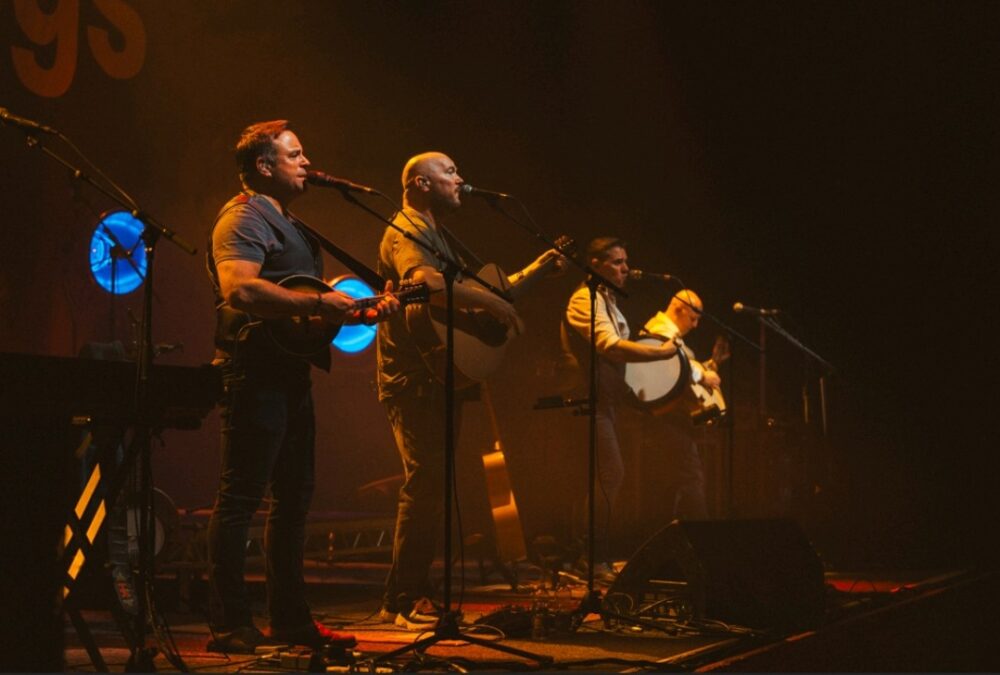
They open with their new version of “The Rocky Road to Dublin”, before moving through songs including “Step It Out Mary”, “The Galway Girl”, “Mountain Dew”, “Grace”, “McAlpine’s Fusiliers” and “The Town I Love So Well”.
And then there are the songs that have become particularly associated with individual members.
Brian’s “Grace”. Darren’s “The Town I Love So Well”. Finbarr’s “Go Lassie Go”. Paul O’Brien’s “Only a River Runs Free”.
“The slow ballads are going to hit hard,” Dunphy says.
But the overall show is deliberately energetic.
“It’s like being on a roller coaster,” he says. “You just don’t want to get off.”
After years of touring, they still sound genuinely excited about the production.
“I think this is one of the best sets that we’ve ever done as a band,” Dunphy says. “It really, really hits hard with everybody and it flows beautifully.”
Carrying it forward
Australia is only one part of a schedule that seems almost permanently in motion.
The band have already been touring extensively through North America and are heading to Germany after Australia. Meanwhile, a new album is underway, with new material being recorded alongside their touring commitments.
Their recent material points towards a band that is still interested in moving forward rather than simply recreating the past.
They aren’t simply reproducing songs because they are old. They are keeping them alive.
As our conversation winds down, what remains most striking is how generously Clancy and Dunphy have spoken about the culture and music that brought them to this point.
They are proud to be part of the tradition, but equally aware that the tradition belongs to everyone who picks up a song and carries it forward.
Because ultimately, the songs are bigger than the band.
They belong to the people who remember them, the people who discover them, and the generations still to come.
The songs may have travelled thousands of kilometres.
But somehow, they still feel like home.

The High Kings – Australian tour dates
Sunday 11th October – Civic Hall, Ballarat – tickets HERE
Monday 12th October – Frankston Arts Centre – tickets HERE
Wednesday 14th October – The Princess Theatre, Brisbane – tickets HERE
Thursday 15th October – Twin Towns Showroom, Tweed Heads – tickets HERE
Friday 16th October – The Gov, Hindmarsh, SA – tickets HERE
Saturday 17th October – Riverside Theater, Perth – tickets HERE
Wednesday 21st October – Anita’s Theatre, Thirroul – tickets HERE
Thursday 22nd October – Canberra Theatre – tickets HERE
Friday 23rd October – Enmore Theater, Sydney – tickets HERE
Saturday 24th October – Civic Theatre, Newcastle – tickets HERE
Sunday 25th October – The Art House Theatre, Wyong – tickets HERE
You can give The High Kings a follow on Instagram
Photo credit: Gareth Danks Photography
