
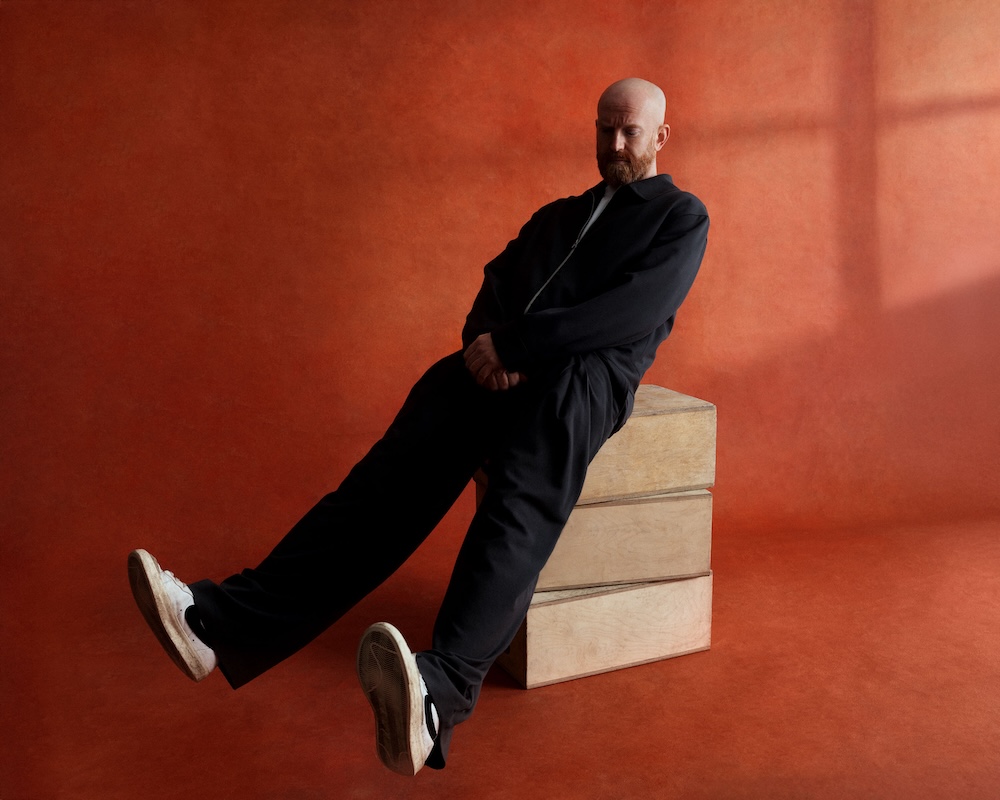
Newton Faulkner’s eighth studio album OCTOPUS marks a bold new chapter for the multi-platinum-selling singer-songwriter and is his most adventurous work to date. Over five years in the making, the album signals a refreshed sense of artistic freedom, blending influences from funk, R&B, soul, and Latin grooves. We chatted to him about the making of the album and his upcoming Australian tour.
You’ve just completed a European tour, which looked pretty massive.
Yeah, it was great fun. We’ve got such a nice bunch of people, just me and part of my management team and a sound guy that I’ve done loads of stuff with before. It was just so just comfortable and easy, without the slightest hint of an ego, which makes life so much easier.
Your latest album, Octopus took five years to make. What took so long?
Just lazy. The last record was during COVID. It wasn’t really the record that I was planning on. I remember saying that before that the next record, I really wanted to work with lots of different people. I wanted to go into different people’s studios, and I couldn’t wait to be out and about. Being out and about became impossible. So, I had to go the whole polar opposite route. I learned so much, but that was kind of part of my way of doing it. I was going to bed with manuals, bits of equipment, and just watching tutorials all day and just experimenting and working out how to do things that I didn’t know how to do.
What I would have done at any other point in the history is bring someone to come in and do it for me. So, I’m gonna have to actually learn to do this. With that came so much more freedom to explore and be creative within the tools that I was using. Definitely this record wouldn’t have been possible without that period of time.
You collaborated on the album with artists such as Lizzie, Los Bitches and the Bloom Twins. How was that?
I generally tend to work on my own. From the outset I was interested in who we could work with, that we could pull in. Especially a female vocal is a really nice layer to have. With “Alright, Alright, Alright” which has a punk vibe, but adding a female vocally produced focus, gives it almost a feminine K Pop layer to it. Which makes it way more interesting than a point and shoot male rock thing.
With the track I did with Los Bitchos, “Hunting Season” is probably the most international thing I’ve ever worked on. I wrote it with a girl from the Netherlands, Sarah is from Australia, then some vocals from Texas and it ended up, I think, sounding genuinely exotic, which is a weird word to use. Going back through history, making something sound genuinely exotic was very easy, because all you have to do is put some bongos on something. Now it’s challenging to find a combination of stuff that people haven’t done a million times. I feel like that ended somewhere that I haven’t heard anyone hang out before. It’s a really interesting place to be.
I really like “Hunting Season”. It’s a solid track. I think what got me about the album itself is the variety. I noticed the song “Snakes and Ladders”, much like the game, goes up and down. The album also starts with “Alright, Alright, Alright”, which is almost punk rock, and ends with “Gratitude”. It’s quite an interesting variety of music in there.
I’ve always been artistically drawn to stuff that I love, but I tended to stay within the same kind of sphere. But there’s always been a lot of genres that I’ve listened to that have never entered into the music that I’ve made. Part of me felt I wasn’t allowed to make it.
When you release a massive hit song like “Dream Catch Me”, does that lock you into a style that makes it hard to break free from?
The first album moved around quite a lot, although production wise, it didn’t go quite as far. As soon as I was making another record, there were people breathing down my neck. Can you just do “Dream Catch Me” again please? Obviously, that was the product. Obviously, I was involved. But the number of dominos that had to fall for that to do what it did, is endless. Hundreds and hundreds of people doing exactly the right thing at exactly the right time, which is what made that happen. I think this is the first album where I genuinely wasn’t chasing anything. For me, there’s only so long you can do that for. There was a question that was that was kind of banned from my head, which I think is why the album sounds the way it does. When I got to certain points in the past, the record is kind of going in a direction. A bit of me is like, okay, this is really fun. But what would someone who likes Newton Faulkner want Newton Faulkner to do next. which is really limiting sometimes.
I always find that interesting to know that as an artist, how far can you go away from what people expect and still keep your core fans and core audience?
I mean, you can’t really win. Because I think if there are people that are saying this is the biggest step away from anywhere I’ve been before. It’s really hard to tell from the inside. An alarm bell rings in my head, because I was kind of around the same time as The Band, and they’d had a single that had done really well, an album, and then they had this whole kind of very expensive piece made by their label, and then stating how different this next thing was going to be. It went on for ages, and I couldn’t wait to hear how different it was. When it came in, I swear it was the same chords, same tempo, loads of the same stuff in it.
How is it possible to be so lost inside something that you can’t see that it’s so similar. I’ve stated my intent to do things that are different to things I’ve done before. But with this, a lot of people have said that it is the biggest apart from my repertoire, which is great to hear, because that’s like a win. And reviews have been astounding of the record, which is always satisfying. Reviews of the first record, especially like kind of UK broadsheet-wise, were horrendous. There was a huge journalist movement against civil song writers. It’s kind of like an anti-pop thing, which is where I was. It was openly despised.
I’m fascinated with the Hofner violin base that you used. Is it something that you just stumbled upon?
I wanted one for about fifteen years. Ever since making the track “Human Love”. On the track “Human Love”, with Sam Farah in LA, I played the guitar, and the guitar was actually recorded into my phone. That kind of really trashy kind of distortion that came out of that, we used on the track itself. And then when Sam Farah played the bass, he played that model, and I just totally fell in love with the sound of it and the amount of sub, it’s just huge. It just kind of fills that space. Then when I got one, every time I sat down to play bass on a track, it sat better on the tracks. The parts I was coming up with were so much better than everything I’d done before. It totally changed my approach to bass as an instrument because it’s quite an “unbass” feeling bass. It feels more like a classical instrument. It’s got this kind of lightness to it, despite the kind of weight of the subs it can kick out. I loved playing bass on this record. I had such a good time.
As a solo artist, you surround yourself with these instruments of the synths and loops and things like that?
I’ve pretty much done everything any way you can do it, even in terms of business side of things. I’ve had major record deals. I’ve released things independently, I’ve had live bands, I’ve been completely solo. I’ve experimented with everything from having things on cassette, and Ableton, I keep playing, and kind of just looking for this new thing. Looping, for the way that I write, doesn’t really work because the structures are quite extreme. The way that the chorus comes in is that I can’t just set it up and let it run and sing over the top, because pre-chorus is completely different to the chorus, which is completely different to the middle eight. It works a small percentage, but as a whole it’s too limiting.
I experimented with a lot of stuff sitting down and playing with my feet. It’s great with how much noise it makes, but I felt like with this record it’s not a sitting down record. It felt like it needed more emphasis. So, what I’ve ended up doing this time, and I’ve done it for the festival season and all of these tours, is I’ve built a pair of MIDI shoes. It means I can make loads of noise and be considerably freer. I get a lot of questions about the shoes, mainly from kind of technical people, and they are so shocked that it works. I had the idea, and I was talking to some people who were going to build me things, but I was like, this seems very complicated. It’s never going to actually work. I just sat in my studio and looked around. I was like, what if I plug that bit into that bit and adapt that bit so it goes into there. Basically, MacGyvered it together. I mean the thing holding the cables in place, the only thing that I could find was a stack of pound coins. So, there’s two pound coins gaffer taped to the bottom of my shoe, but it’s done four tours, and countless festivals. But it’s just stuck together.
It just gives me so much physical freedom, and it sounds really big. And the sounds can be different. When I was touring with a physical kick drum and a physical snare, that is the noise that those make and I can’t mess with that. Being able to change kick sound and change snare sound and use the triggers for totally different things. When I’m playing “Teardrop”, I’ve got some samples that are kind of made in the studio, attached to different bits of my foot, which I’m triggering as I’m doing the percussion on the guitar. Sonically, it just makes so much space.
What about the vocals on the album. Do you have them pre-recorded for the tour?
There’s nothing, no track, no. Every trigger is single sound. If there’s a harmony that I think is really important, I can build it into the guitar part. A bit like what I did with “Bohemian Rhapsody”, the guitar part and the harmonies kind of played at the same time. I move the vocal around to which bit I want to occupy. But it’s more like a guitar and vocal duet. I’m kind of implying harmonies and playing bits of harmonies on the guitar. My dreams definitely involve backing vocalists, because harmony is obviously a huge part of how I make records. But they’re big files and there’s limits. Generally, I can imply them on guitar. I’ve learned that if you play that bit down there, and you’ve got something up there that’s tickling that register. Maybe you’re not even playing the whole bass line, but you’re playing enough of the bass line for people to think they hear it. Then you can just hint at the harmonies, enough for people to kind of think they’re there without them being there. There’s a degree of audio illusion that you can tap into.
And you’ve been to Australia before?
Many times. Some of my favourite touring memories of my life have been in Australia. It was the first place years ago, when I got off the plane and someone said, “Are you Newton Faulkner?” Wow, this was the furthest from home I’ve ever been, and it continues to blow my mind. It’s not just travelling around, people turning up, knowing the words to every song. I was in Germany, and people knew every word, for every song I played, even if I didn’t know I was going to play it.
Travelling for work is a beautiful thing. It’s not something I can just sit here and decide I’m going to do. It’s something that other people in other places allow me to do. I feel incredibly honoured and lucky, to be able to sell tickets in Australia.
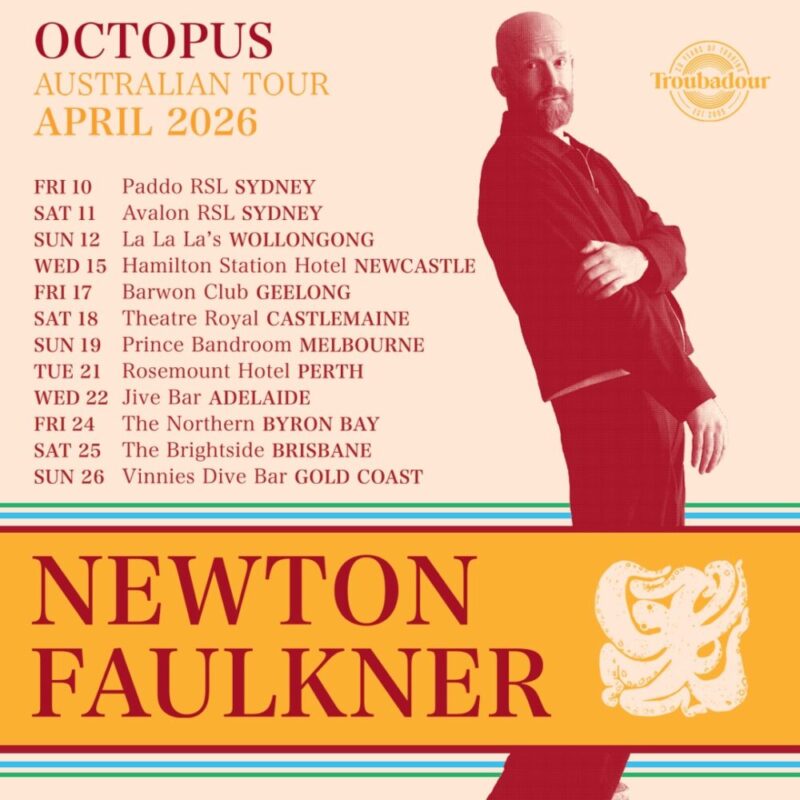
Newton Faulkner is touring Australia in April. Check out the tour dates and find links to hear the album on his website.
Cover image supplied by Newton Faulkner
