

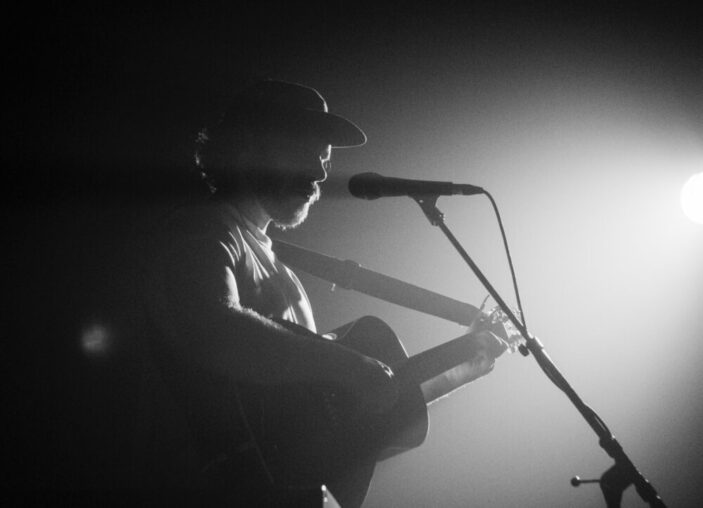
It’s been 15 years since Early in the Morning slipped quietly into the world – a raw, soul-spun debut that would go on to soundtrack thousands of lives, break open hearts, and launch James Vincent McMorrow into a space he wasn’t entirely sure he wanted to occupy: the spotlight. Now, after years of moving forward, reinventing, pushing past and pushing through, he’s circling back. But not for nostalgia alone – this anniversary tour is about reclaiming a record that changed everything. It’s about presence. About meeting the past not with perfection, but with tenderness.
I sat down with McMorrow, where he opened up about returning to his 2010 debut for a series of intimate Australian shows, a prospect that feels like stepping into a time machine. For the Irish singer-songwriter, revisiting Early in the Morning evokes a bittersweet blend of joy and melancholy, mirroring the emotions it stirred in fans. “It’s weird,” he admits. “It was 15 years ago, and so much has changed. Putting yourself back in that headspace elicits all this nostalgia.” The album was born during a period of unwavering forward momentum, with McMorrow fixated on the future. “I’ve never once looked back and thought, ‘I should revisit that thing,’” he says. “I was always obsessed with the horizon.”
The stillness of 2020 and 2021 forced a rare pause, a moment to reflect on years, achievements, and accomplishments he’d never lingered on before. This introspection revealed the album’s profound impact. “There are hundreds of thousands of people who bought that album and have a story with it,” McMorrow marvels. “I never stopped to consider that.” The sadness, he confesses, lies in not savouring those moments as they unfolded. “I was bogged down in the bullshit of the music industry,” he recalls, describing the grind of touring with a small indie team. Australia, however, was a haven. “I felt like a professional musician here before anywhere else,” he notes. “The label got it quickly. Australia was well-suited for the music I made.” Yet, amidst the chaos, he didn’t pause to soak it in. “No one does,” he adds. “We think things will last forever.”
Choosing Australia to launch this tour was deliberate. “I asked to do Australian shows first,” McMorrow says. “It’s where I felt the music resonated most.” His follow-up, Post Tropical, also thrived here, defying expectations. Now, returning to perform Early in the Morning in full feels like a chance to finally “drink it in.” The tour isn’t just about nostalgia – it’s a fresh experience. “I’ll be on stage knowing it means something to the people there,” he says. “That’s new for me.”
Did understanding the album’s influence add pressure? “I’ve never struggled to put pressure on myself,” McMorrow laughs. But he admits that fixating on its cultural weight might have hindered his creativity. “What made Post Tropical and We Move work was this sense that I was still the guy driving a crappy Toyota Corolla, selling CDs at gigs,” he says. That grounded mindset, forged in 2010 while touring Ireland and Europe, kept him authentic. “I sold 50 or 60 CDs a night and thought, ‘This is going well,’” he recalls. “Then 200,000 people bought the album the next year.”
He never compared himself to his heroes, like The National, whose album Boxer inspired his debut. “I never thought of my records alongside the ones I love,” he says. Only recently, after announcing the tour on Instagram and seeing an overwhelming response, did he grasp his work’s enduring impact. “People have told me for years, ‘Post Tropical meant this,’ or ‘Your version of Higher Love did that,’” he says. “Reading those comments made me go, ‘Oh, these records do exist alongside others in people’s minds.’”
McMorrow’s path wasn’t without lows. He recounts a 2010 gig at a poetry festival in Dingle, Ireland – his “low point.” Booked for a free show in a pub’s back room, he arrived to find the sound engineer, a part-time boat captain, had left for an early ferry. With a football match blaring, only 10 people showed up. The PA failed, forcing an unamplified set. Then, a black cat wandered in, jumped on a dilapidated stage couch, and stared at him for the entire performance. “I walked off thinking, ‘That might be it for me,’” he says. “Four months, and no one’s heard the record.” Ironically, a TV performance of The Cold Dark Machine aired that night, igniting interest. By the next day, ticket sales for his Kilkenny show surged from 50 to 400. “It was the worst gig I’ve ever played, the most despondent I’ve felt,” he says. “By the end of the weekend, it had all clicked.” That moment, marked by a black cat we jokingly suggest he name his memoir after, embodied the “divine timing” of his career.
McMorrow doesn’t shy away from critiquing the music industry’s flaws, especially its impact on mental health. “It needs a top-end rebuild,” he says. Early on, he could afford to be an inconsistent performer, grappling with anxiety. “I’d have two good shows, two bad ones,” he recalls. “Once I got to three-to-one, I was winning.” Today’s streaming-driven industry offers no such grace. “If you’re not locked in, they move on,” he laments. This pressure stifles potential. “There are people who could be incredible,” he says, citing The National’s 15-year journey to greatness. Streaming prioritises instant hits, rewarding “the loudest person” or AI-generated novelties like a viral Japanese song he calls “dog shit.” While musicians adapt, focusing on guitars and studios, the industry lags. “Musicians solve the problem,” he insists. “The industry gets on board with what makes money.”
For fans, supporting artists goes beyond merch or tickets. “Find intentionality in listening to music again,” McMorrow urges. “Share music you love. That’s a lost art.” In the playlist era, he advocates reviving the spirit of mixtapes. “If 50 people buy tickets because you shared a song, that’s real,” he says, recalling how fans sharing Early in the Morning fuelled his 2011 Australian shows. “It doesn’t cost anything, but it matters.”

The upcoming shows will feature McMorrow solo, a once-terrifying prospect. “Playing by myself was my nightmare,” he admits, recalling anxiety-fuelled mistakes like racing through Sparrow and the Wolf. Now, he embraces the freedom. “I can do whatever I want,” he says, describing a recent Switzerland gig where he impromptu played piano for 250 fans. Covers like Band of Horses’ Saint Augustine, Joanna Newsom’s 81, and his iconic Higher Love will join the set, chosen for personal joy, not obligation.
McMorrow hopes fans leave the shows feeling whatever the album unlocks – nostalgia, catharsis, or joy. Songs like Down the Burning Ropes, his first-ever composition, carry special weight. “It’s cool that it’s a good song,” he says, proud it still resonates.
As he prepares to take the stage, he’s not just honouring Early in the Morning – he’s reclaiming the artistry that defined it, poised to craft the next chapter with uncompromising spirit. Catch James Vincent McMorrow’s Australian tour this month, where he’ll perform Early in the Morning in full, alongside newer songs and select covers, in a heartfelt celebration of music’s enduring power.
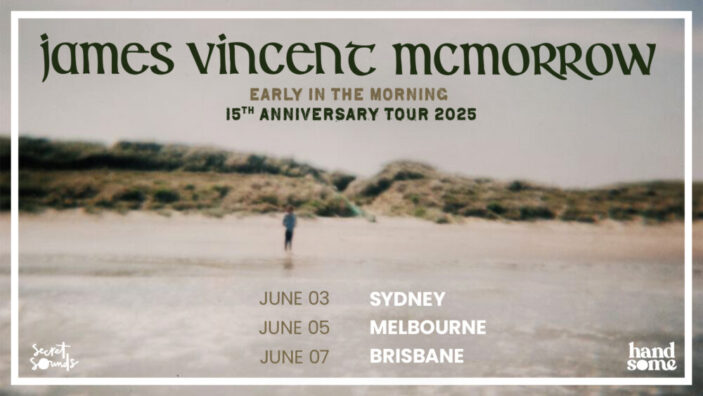
Tickets & more info via Secret Sounds & Handsome Tours
Header image credit: Nolan McBride
