

While there’s now much less of a gap in value between Android and iPhone, one area that I feel Apple is still almost unimpeachable in is the smart watch for everything. And by everything, I don’t just mean tracking steps, closing circles and being mindful of my heart rate zones.
Yes, it can do all that and then some. Plenty has been said about the Apple Watch Series 10 being the ultimate expression of where the company is at right now. Over the past few years covering Apple products, I’ve most admired the company’s commitment to accessibility. They want to create luxury products, yes, but luxury products that offer profound value.
Tech changes our psyche. It changes our lives and how we experience the world. Often in subtle ways. And while this is particularly frightening when you think about the increasingly diverse use cases of AI
Plenty has been said about the value of a smartwatch in today’s world. They’re becoming increasingly complicated, accurate and efficient, and I’d imagine harnessing AI will only boost that even further. Later this year, Apple will announce the iPhone 17 series. And speculation has already been rampant about the Apple Watch Series 11.
This is particularly exciting given how refined the Apple Watch experience has become.
I’ve been using the Apple Watch 10 for over six months now in various situations, but never stepping outside my very light day-to-day routine. I’m not much of a fitness guy; I’m more of a walk far, try and explore the world as much as possible, consume as much culture as I can or be mindful of heart rate zones.
And that’s where the Apple Watch has quietly become indispensable—not as a fitness tracker, but as a life tracker. From navigation nudges during city explorations, to subtle reminders to check in with my mental state, to the seamless integration of music, tickets, translation, and even just time zone hopping—it’s a device that complements curiosity.
While other smartwatches are catching up in hardware, Apple continues to refine the experience. The Watch doesn’t just track your steps; it helps you step into new situations with a bit more confidence and context. And that, to me, is where its true value lies for people who aren’t measuring gains in reps or VO2 max, but in moments and moments.
With the Apple Watch Series 11 around the corner, the question isn’t just how much faster or more powerful it’ll be. It’s how much more useful it can become in quietly enriching the lives of people like me, who might not run marathons, but are always on the move in our own way.
The Invisible Travel Assistant
Solo travel searches are up, to absolutely no one’s surprise. Communal mental health is being decimated by social media. The long-term effects of AI are only now being discussed, and some of the data is not pretty. You may also find that the obvious rise in loneliness for young people has increased the desire for solo travel.
That then gets me thinking about the everyday tech we can use to further strip away any stress we find when travelling. I like to think of stress and travel as a bit of a mathematical equation. The more stress I can subtract, the more I’ll be living in the moment; I’ll be getting more out of my travels.
When I’m navigating an unfamiliar city, the Apple Watch becomes something approaching magic. Not flashy magic; the kind that works precisely because you barely notice it working at all. The gentle tap on your wrist directing you left at the next corner means you’re not that person hunched over their phone, blocking foot traffic while squinting at Google Maps. You’re present, alert, moving with purpose through spaces that would otherwise feel overwhelming.
I don’t need to constantly pull out my phone in an unfamiliar area. That’s especially valuable for solo travel in the USA.
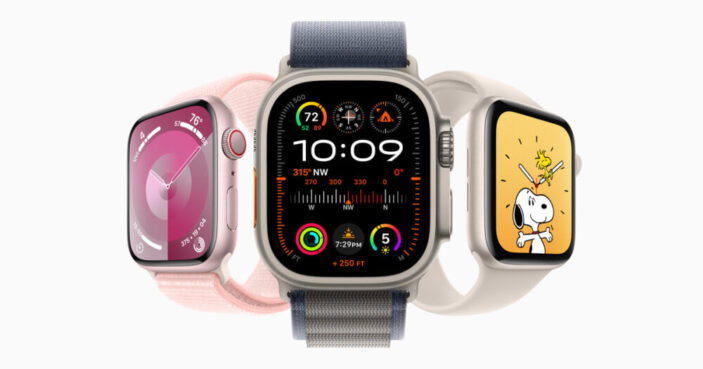
The Series 10’s larger display makes this even more seamless. Glancing at transit information, boarding passes, or hotel confirmations feels natural now—less like checking a tiny screen and more like consulting a well-designed piece of information architecture that happens to live on your wrist.
But it’s the small interactions that reveal how thoughtfully Apple has considered the traveller’s experience. The way it automatically switches to the local time zone. How Siri can translate phrases without you fumbling for your phone in a crowded market. The manner in which it surfaces relevant information—your gate number as you approach the airport, your hotel address as you near your destination—all without being asked.
Just Breathe
The notifications I would generally see as useless in day-to-day life have become my essentials when I’m using the Apple Watch on my travels. Consistent noise level monitoring actually has its uses when you’re moving between environments that vary wildly in terms of noise. Similarly, I enjoy using the Breathe app when I’m experiencing something slightly spiritual, like getting lost in the natural settings of Squamish or admiring the Chicago River Walk.
The ecosystem starts to make sense
The ecosystem approach that all these big tech companies take is obvious by now. Yet no brand has been as famously aggressive about it as Apple. The attempts to lock you into a branded lifestyle have their issues, of course, but I do see the incredible advantage of being part of just one ecosystem.
When I travel, I do so with two phones and my Apple Watch. I have the latest iPhone Pro and the latest Google Pixel. The reason for this is straightforward. I prefer to use Apple as a phone, and the Pixel as a content engine. I find the Pixel can shoot much differently from the iPhone, which I prefer for the style of travel reels I like. I like those really slow, cinematic movements, and the Pixel’s “pan” mode is superior for it.
This also means I can see the pitfalls of not being a device that’s part of the ecosystem. This brings an extra level of stress when travelling, as there are more steps involved when trying to bring all this content together. Shooting video on the Pixel may be excellent; editing video on the Pixel is not.
Apple’s integration philosophy makes sense. I want my boarding pass to appear on my watch via my iPhone at the exact right now. I want the AirPods to connect instantly without me having to fiddle around with my phone. I want an effortless digital life, and that’s not possible without being part of an ecosystem.
What I want from the Apple Watch Series 11
As we look toward the Apple Watch Series 11 and beyond, I find myself less interested in spec improvements and more curious about experiential refinements. How might future iterations better understand context? Not just that I’m walking, but that I’m exploring with purpose? How could it better surface serendipitous information about my surroundings without becoming intrusive?
The real innovation isn’t in making the watch more powerful; it’s in making it more invisible. Apple has been moving in this direction with the Watch for the previous few generations, but the intention has never been more obvious than it is now.
I don’t think it’s even up for debate now. Apple has made the Apple Watch just as essential as the iPhone. One hand can’t wash the other in an age where we need to start thinking about healthy habits when it comes to tech. Nowhere is this more obvious than when you’re constantly on the move, so the next time you’re out long-haul travelling with your iPhone and Apple Watch, pay attention to the relationship between the two devices.
Have both been set up to help travel run smoothly? Or are they focused almost entirely on your fitness? You can have both.
The Apple Watch Series 10 starts from $649. You can find more information on apple.com.
