

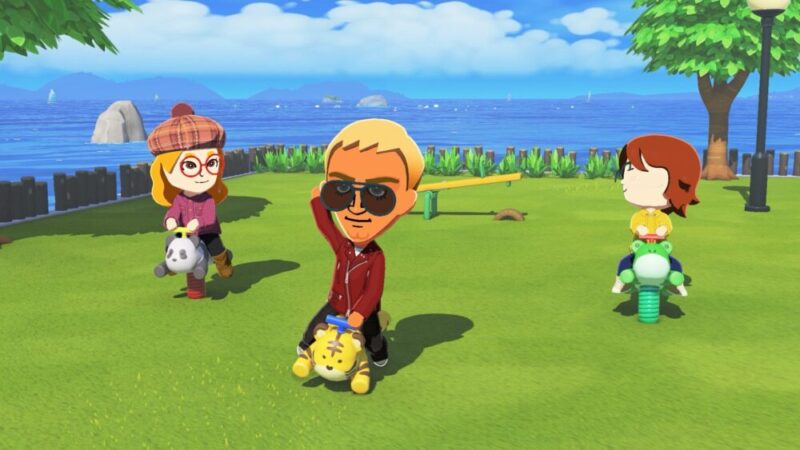
It has been over a decade since Tomodachi Life first launched on the 3DS, and in that time, it has taken on something of a cult status. I tortured my family and friends recreating them in the original, sharing their mishaps on social media, absolutely overwhelmed with bizarre, hilarious clips of their tiny Mii characters doing inexplicable things, clips that made even the most disinterested bystander want to know more.
When Nintendo announced Tomodachi Life: Living the Dream for both the Nintendo Switch and Switch 2, the internet reacted in an almost unprecedented way.
Having now spent substantial time with the full game, I can tell you that the hype was not only warranted, it barely scratched the surface. Tomodachi Life: Living the Dream may suffer from poor release timing; amongst big hits like Pokémon: Pokopia and the major update for Animal Crossing: New Horizons, it feels like a crowded space to be releasing another life sim game. The great news is it’s addictive and fun, and able to be experienced across both small bursts and long play sessions alike.
Your Dream, Your Way
From the very first moment, Living the Dream puts customisation front and centre. Before a single Mii sets foot on your island, you’re tasked with naming it, and to my complete surprise, Nintendo has included a thoughtful option to adjust the game’s text-to-speech pronunciation if your chosen name doesn’t read phonetically. It’s a small touch, but it says everything about the level of care that went into making this island feel truly yours. This echoes across the rest of the game with massive detail and customisation options that will make your head spin.
Once the island has a name, it’s time to populate it. Mii creation here is genuinely excellent, offering granular sliders that control everything from physical appearance to core personality traits. You can sculpt characters entirely from scratch, or import existing Miis from your Switch system and spruce them up with new hairstyles, ears, and more with the game’s comprehensive editing tools.
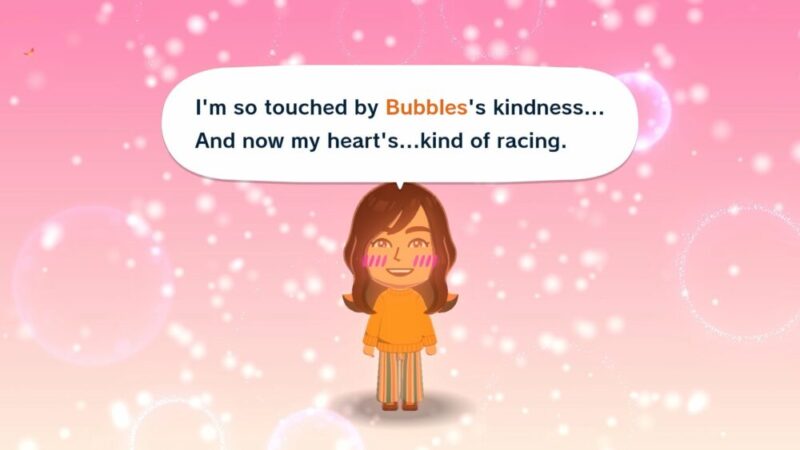
The standout new addition to the editor is the ability to “paint” directly onto a Mii’s face. It is a rudimentary yet remarkably expressive drawing tool that has already produced everything from celebrity lookalikes to fine art. The sky is genuinely the limit.
What’s especially worth highlighting is that Living the Dream has introduced meaningful, inclusive features that were sorely missing from the 3DS original. You can now select from Male, Female, or Non-Binary gender settings, and Mii customisation is no longer locked into gendered appearances or voices. Romantic options now accommodate any combination of genders, meaning same-sex couples are fully supported, as are non-binary Miis finding love with whoever the game’s social web throws at them.
In keeping with this spirit, married couples can have babies regardless of their gender settings; it is a long overdue and genuinely welcome evolution for the series. It’s not just good representation; it opens up richer, more unpredictable drama within your island’s population.
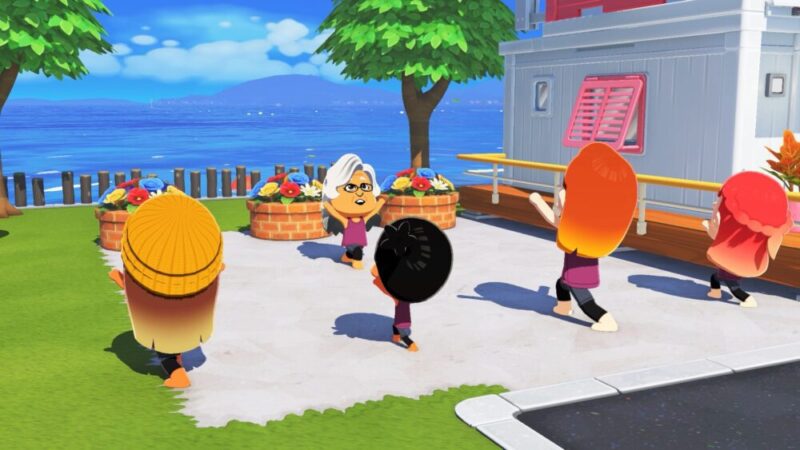
In keeping with this theme of inclusivity, I decided to name my island Heated MAFSvalry, populated with characters from the recent HBO Max series Heated Rivalry, and set them in a MAFS-style (Married At First Sight) situationship. Planting their houses close to each other makes it easier for them to socialise. When they eventually shack up together, it then provides sufficient space to combine their separate houses into one.
Each character has their own connections that they can attempt to make organically, or you can literally pick them up and force them to interact with each other. Each house can be customised in pre-set floors, or each piece can be completely customised, depending on what you feel like doing and how much time you have.
A Social Sim That Doesn’t Waste Your Time
One of the things I most appreciate about Living the Dream, coming from someone who has sunk many hours into Animal Crossing: New Horizons and, more recently, Pokémon: Pokopia, is just how quickly it moves. Games like Animal Crossing famously drip-feed features over days and weeks, time-gating progression to encourage daily check-ins. Tomodachi Life: Living the Dream takes quite an opposite approach.
In the first few hours, I added 4 Mii residents and opened the clothing store, housing store, and Studio Workshop. Terraforming, building placement, construction, and island customisation tools that would take Animal Crossing dozens of hours to unlock are available to you almost immediately. It makes a bold statement about what Nintendo considers the core of this experience: get the toys in the player’s hands as fast as possible and let them play, and it works.
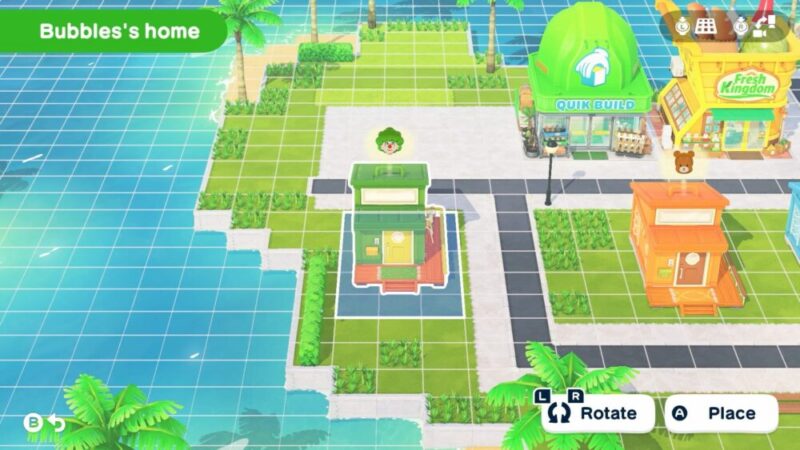
What you’re ultimately using all these tools to build is a stage for emergent social drama. Your Miis are dropped onto the island and largely left to their own devices, but as their omnipotent overlord, you have enormous influence over the situations they find themselves in. You can nudge conversations, encourage Miis to share interests, resolve crises when a Mii freezes on the spot or is struck by a bout of hiccups, and even guide the seeds of budding romances.
The comedy moments that arise, particularly when Miis start referencing past conversations or express suspicion that a higher power is watching them, had me laughing consistently.
The full game supports up to 70 Mii residents, and if you think six of them already creates a rich social web – and it absolutely does – just wait until your island begins to resemble a small town. Relationships spiral. Romances ignite and implode. Friendships form based on shared quirks. Babies are born and grow up.
The whole thing spirals into a warm, chaotic, laugh-a-minute soap opera that is uniquely your own. The best part is you can leave the residents to their own devices and form friendships and relationships on their own, or you can be the meddler and force them to interact and like or even love each other.
Levelling Up, Quirks, and the Studio Workshop
As you work to keep your Miis fed, clothed, and happy, matching food, outfits, and home decor to their specific personalities, you’ll earn happiness points that contribute to levelling up both your island and your individual Miis. This is managed through the central fountain in the middle of the island, which is powered by the collective happiness of your population and grants special rewards as it fills.
When a Mii levels up, you get to gift them a new perk, reaction, or quirk. It’s a wonderful system that lets you gradually develop each Mii into a fully realised individual with their own peculiarities, hobbies, and responses.
The personality system’s sliders, polite or direct, serious or relaxed, outgoing or reserved, help to shape these developments in consistently surprising ways. Two Miis I modelled on close friends developed a rivalry that mirrored real life with an accuracy that was equal parts flattering and alarming.
The Studio Workshop is another major highlight. Here you can craft custom items – clothes, food, decorations, pets – and introduce them into the island’s wider ecosystem. The starter example of creating a decorated cake lets you draw on it, colour it in, or stamp a design, but the tools go well beyond that. Anything you create or name has a way of propagating through the island’s social fabric in unpredictable and entertaining ways. I’ll spare you the details of what I produced, but rest assured: this is not my strong suit. It was still a tremendous amount of fun.
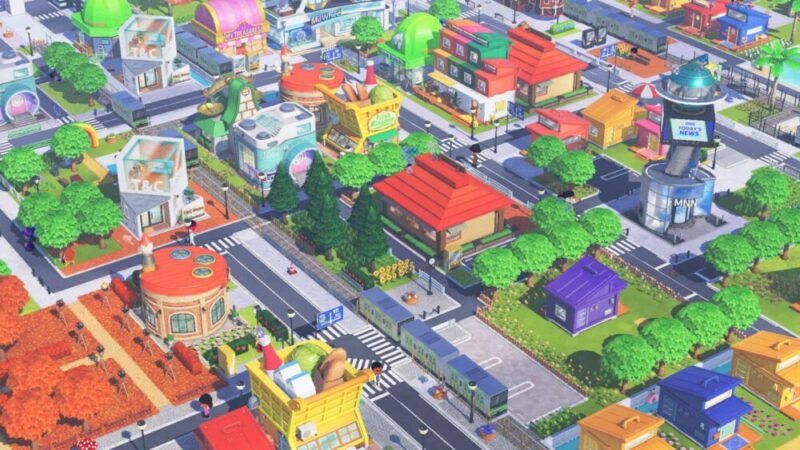
Elsewhere, there are restaurants and cafes to build so your Mii’s can gather and get to know each other. This can either happen organically, or you can push Mii’s together and force the connection. Part of the daily routine is the MNN – the Mii News Network. Every time something significant happens on the island, one of your residents heads behind the news desk and pushes out an entertaining news update you can watch.
These are saved in the diary and can be rewatched if needed. The Supermarket has 4 new dishes each day to be added to your collection. Each of your residents will have likes, dislikes, absolutely loves, and absolutely hates. Knowing their preferences can be a quick way to level them up easily. The photo studio allows you to create staged memories with some or all of your Mii’s.
Sometimes, a resident will request it, and sometimes, if you want to show off a new area, it can be fun to play around with this mechanic. The Market offers special items three times a day. In the morning, afternoon and night, you are given different options to purchase, and it is totally up to you if you want to add these items to your collection. The night market item is generally a lucky dip consisting of four various items, and some can be great, while others can not be so bad.
Customising your Mii’s can go even further at the Clothes Shop with a daily refresh of outfits, as well as a collection of single items consisting of everyday clothes, active wear, formal dress and hilarious costumes that each character will like or dislike depending on their personality and tastes.
A Stage Built for Sharing
Tomodachi Life: Living the Dream feels designed to be shared. Nintendo has explicitly confirmed that posting images and videos to social media is fully supported, and the game generates shareable moments at an almost alarming rate. Now, it is worth noting that there is no language filter, so, surprisingly, Nintendo is going to let players run wild. I did test that, and there were definitely no limitations here, so it will be interesting to see how this plays out on social media.
However, this comes with the caveat that you can take screenshots and videos in-game; you cannot, however, export them from your Switch device to a smart device, so blurry phone camera shots will have to do.
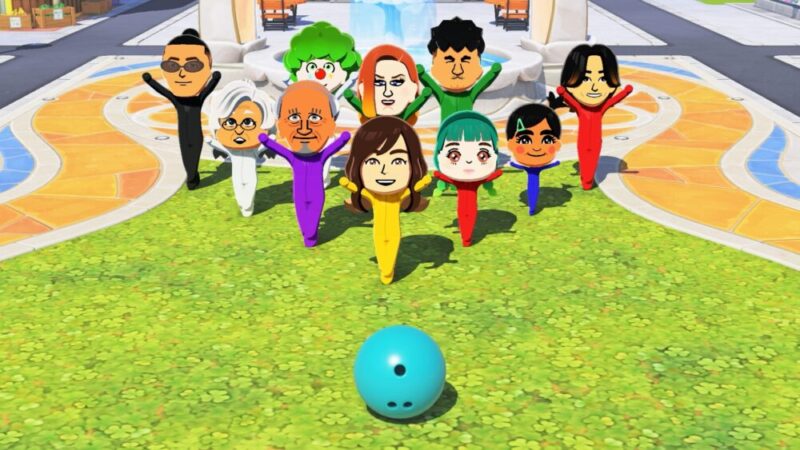
It’s worth noting that the game does not support online multiplayer – local play is the extent of the collaborative options. For a game this focused on social dynamics, the lack of online island-visiting feels like a genuine missed opportunity, and it’s the one feature that would genuinely elevate the experience further.
On the Switch 2 side, the game benefits from faster load times, GameChat support for Nintendo Switch Online members, and a crisper 1080p resolution in handheld mode. Joy-Con 2 mouse controls are not supported, which feels like a missed trick given how naturally they would suit the game’s cursor-driven interactions, and there’s no dedicated Switch 2 Edition, though this feels like an inevitable future update rather than a permanent omission.
Final Thoughts
Tomodachi Life: Living the Dream has genuinely surprised me. As someone who gravitates toward more mechanically dense and directly engaging experiences, I didn’t expect to find myself so thoroughly charmed by the relaxed rhythm of island life and the surprisingly deep well of laughs that comes with it.
Nintendo has built something that respects the player’s time, front-loads its best tools, delivers emergent moments of genuine hilarity that feel unique to your island, and – importantly – has finally stepped up to represent its audience with the inclusive options the series always deserved. The lack of online multiplayer and the absence of Joy-Con 2 mouse support are legitimate frustrations that hold the experience back from true greatness, but they don’t come close to dimming what is otherwise a wonderfully crafted, joyously weird slice of life.
I said in my preview that this game had become part of my morning routine, and weeks later, that hasn’t changed. I can mix up the gameplay with just a quick check in ecah day, or spend hours terraforming the island, creating new characters and designing new things, but it’s become something I genuinely look forward to checking in on and watching the drama unfold, nudging a romance along, and waiting to see what unhinged thing one of my Mii’s will say next. That, in itself, is the highest compliment I can pay it.


FOUR AND A HALF STARS (OUT OF FIVE)
Highlights: Inventive social play akin to The Sims; Fully customisable residents, islands, features and social relationships; Respectful of your time and can be played in short bursts or long playthroughs
Lowlights: Lack of mouse mode for NS2; Unable to transfer screenshots and videos to external devices.
Developer: Nintendo
Publisher: Nintendo
Platforms: Nintendo Switch & Nintendo Switch 2
Available: April 16th
Review conducted on Nintendo Switch 2 with a pre-release code provided by the publisher.
Featured header and images provided by the publisher.
