

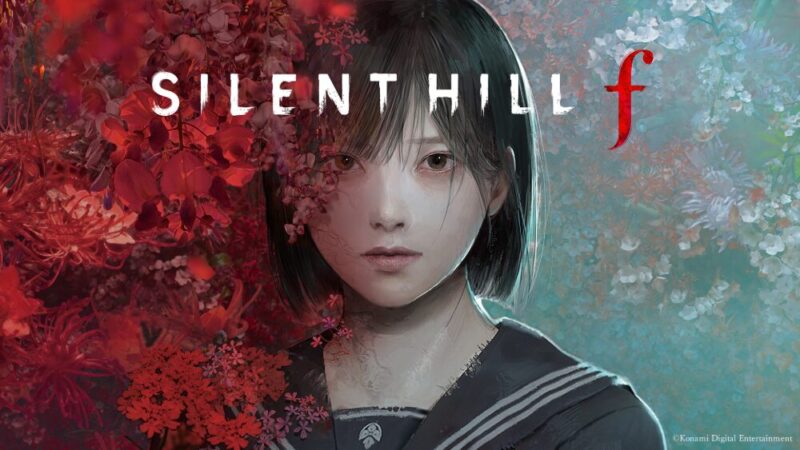
These days, remakes and remasters are often seen as a way to play it safe. They can delight fans with welcomed nostalgia, but they can also signal an unwillingness to take creative risks.
A year on from the remake of Silent Hill 2 and with the Silent Hill 1 remake already announced, Silent Hill f stands out as a rare and welcome gamble. With this latest entry, Konami and NeoBards Entertainment have delivered one of the finest horror experiences of the year, not only honouring the franchise’s roots but boldly reinventing them.
It might also prove a smart pivot, too, as the sprawling and occasionally bewildering Silent Hill catalogue (approaching double-digit mainline entries) proves almost as intimidating as some of the series’ greatest monsters. f might just be an ideal entry point for newcomers hoping to dip their toes into the fog, while still delivering a rich experience for long-time fans.
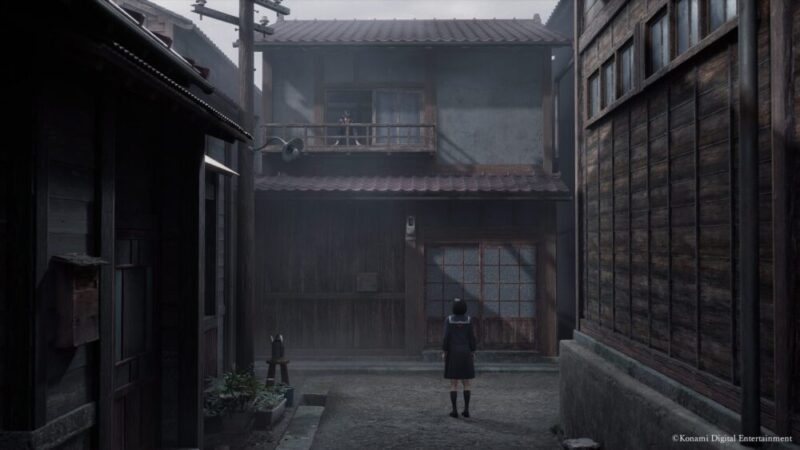
The game departs from the long-standing titular American town, whose foggy streets defined earlier instalments, and transports players to 1960s Japan. The fictional mining town of Ebisugaoka, with its hollowed-out buildings and creeping red flora, feels like a fever dream.
The usual rot of Silent Hill’s psychological decay has been reimagined through the prism of Japanese folklore and a thematic exploration of guilt, repression, and most unsettlingly: adolescence. Against a backdrop of national and personal decline, the crumbling streets set the stage for a game that merges familiar psychological horror with fresh cultural textures.
It’s a bold, creative pivot that pays off, all while remaining visually striking, thematically loaded and of course, terrifying.
Story
At the heart of Silent Hill f is Hinako Shimizu, a teenage girl grappling with the quiet horrors of adolescence in post-war Japan. When the fog rolls into town alongside a wave of killer crimson vines, her world (and psyche) begins to unravel.
Ryukishi07’s writing leans into ambiguity and dread, often withholding key details until they hit with devastating effect. The narrative confronts uncomfortable subjects from bullying, abuse, self-harm, and the suffocating expectations of adulthood in that era, but treats them with gravity rather than shock value.
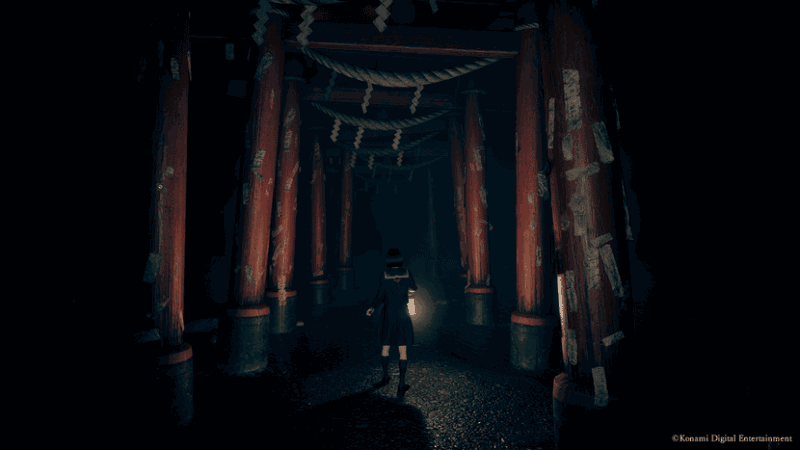
This emotional complexity distinguishes Silent Hill f from much of the modern horror landscape. Yet the beauty of the design is that even if a player ignores the deeper narrative, they’re still left with a compelling, frightening horror experience. The benefit of the series has always been that it works on multiple levels, whether you want the depth of the story or simply a well-crafted scare.
Presentation
Graphically, Silent Hill f is one of the most impressive entries in the series. Built in Unreal Engine 5, the game renders Ebisugaoka in painstaking detail: the hollowed-out buildings, the oppressive haze, and the crimson flora that creeps across the streets all contribute to the series penchant for unease.
Sound design is equally noteworthy. Series veteran Akira Yamaoka returns alongside new composers to craft a score that is both ethereal and unnerving. Environmental audio from the scuttling of unseen creatures, the creak of rotting wood, and the echoing footsteps in empty halls amplifies the tension in ways that are hard to overstate.
Gameplay
One of the most radical changes in Silent Hill f is its shift toward faster, more action-oriented combat. The clunky, hesitant mechanics of previous entries have mostly been revised, though some familiar jank remains. Hinako is more agile and responsive than in previous games, with melee combat proving challenging but fair. Open areas have less noticeable issues, though fighting indoors often leads to some frustrating encounters.
A new stamina and sanity system adds an extra layer of tension. Focus attacks slow time but drain mental stability, forcing players to carefully consider each engagement. The addition of Omamori charms and shrine-based upgrades introduces light RPG elements, allowing players to customise Hinako’s abilities and combat style.
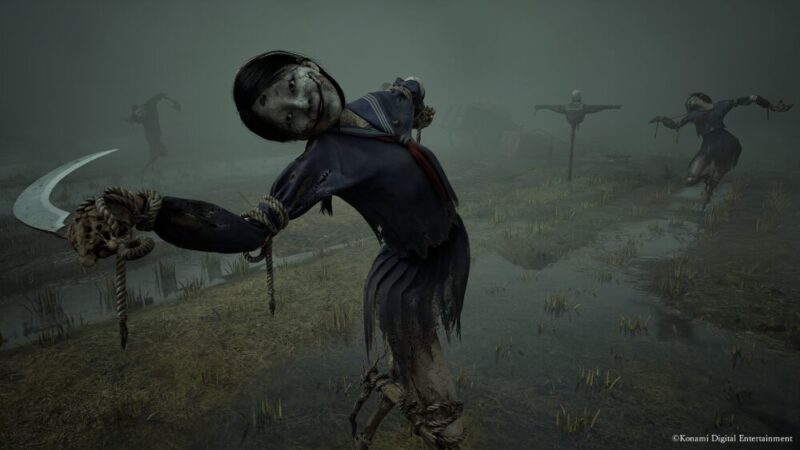
The monsters themselves are something to behold. From kitchen knife-wielding mannequins to contorting schoolyard scarecrows and tentacle-faced horrors, each encounter feels unique. And yet, while these creatures inspire awe at their grotesque ingenuity, after a while, the combat stops feeling frightening.
As Hinako breaks another knife, pipe or sword over the waves of mannequins, the confidence to dispatch an enemy can ruin the “run for your life” tension the game strategically builds. Without the need to ration bullets (firearms are absent here), you get the feeling you can comfortably dispatch each enemy who is little more than a roadblock to your progression.
That comfort lasts only so long, though, before the next nightmare appears and makes you whisper, “What is THAT?”
Puzzles, Horror and Atmosphere
Exploration and puzzle-solving remain central to Silent Hill f, giving players space to engage with the world beyond combat. Ebisugaoka and its Otherworld counterpart are dense with secrets, environmental storytelling, and, of course, riddles.
The puzzles themselves vary in complexity, ranging from straightforward brainteasers to multi-layered challenges that require careful observation, backtracking, and critical use of Hinako’s journal. Some sequences demand piecing together scattered notes, objects, or calendar fragments, and failing to pay attention to subtle environmental cues or textual hints can leave players stuck.
The game’s puzzles are more rewarding if you slow down and, importantly, if you refer to Hinako’s journal for assistance, which might have saved this reviewer a few hours of flipping wooden blocks.
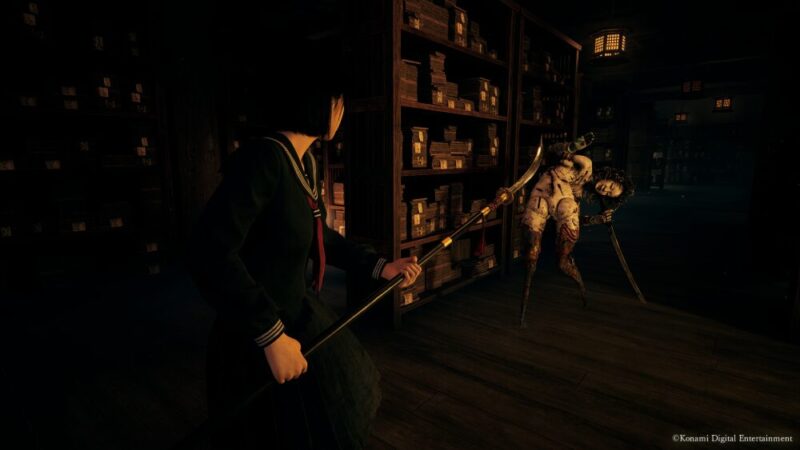
The Otherworld sequences (warped, unsettling versions of familiar locations) are particularly effective. They are not only visually striking but also amplify both the narrative and the gameplay, ensuring that exploration, combat, and story are deeply interwoven.
Handling the horror on multiple levels, the game leans less on jump scares and more on psychological dread and building tension. Through sound, lighting, and environmental design, the Japanese folklore and urban legends give the game a distinct identity, but it feels at home in the Silent Hill series.
Final Thoughts
Silent Hill f is a triumph, a rare game that balances homage with reinvention. It demonstrates that a long-running series can evolve while staying true to its core identity. The story is emotionally complex, the presentation is hauntingly beautiful, and the gameplay is a thoughtful blend of action, exploration, and tension.
While some interior combat encounters can feel cramped and certain narrative threads require careful attention to fully appreciate, these are minor quibbles in an otherwise exceptional experience. Konami and NeoBards have delivered a game that is as accessible to newcomers as it is rewarding for long-time fans.
In an era where horror franchises often rely on nostalgia or shock value, Silent Hill f reminds us that the most potent fear is often deeply human. It is, without question, one of the finest horror games of the year and a landmark in the evolution of a storied franchise.


FOUR AND A HALF STARS (OUT OF FIVE)
Highlights: Bold new setting and story; Immersive sound and visuals;
Lowlights: Combat can feel clumsy; The melee combat system can be repetitive
Developer: NeoBards Entertainment
Publisher: Konami Digital Entertainment
Platforms: PlayStation 5, Xbox Series X, PC
Available: Now
Review conducted on PlayStation 5 with a pre-release code provided by the publisher.
Featured header image provided by the publisher.
