

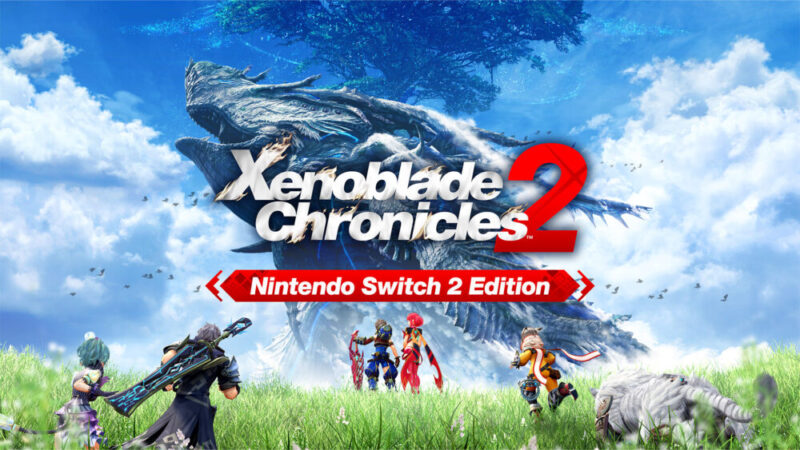
After Xenoblade Chronicles X took the Wii U in a more systemic, player-driven direction, Xenoblade Chronicles 2 marked a return to narrative focus.
Now, with its Switch 2 upgrade, it’s worth revisiting whether this ambitious RPG still holds up. After the release of Xenoblade Chronicles – Nintendo Switch 2 Edition last month, it seems we have only recovered from that journey to jump into the next adventure.
Here We Go Again
On the surface, XC2 plays it straight. There are no faction allegiances or job systems here; instead, we follow Rex and his Blade Pyra on a sweeping quest to reach the promised land of Elysium.
It’s a classic coming-of-age tale at its core, as Rex evolves from plucky scavenger to legendary hero over dozens of hours. The plot is clearly a labour of love, boasting a massive cast, constant twists, and a wealth of side content that fleshes out the world of Alrest.
Longtime fans will also appreciate the nods to the original Xenoblade lore, and for newbies like me, it is the perfect game and follow-up to the first title that helps the world feel evolved and fleshed out.
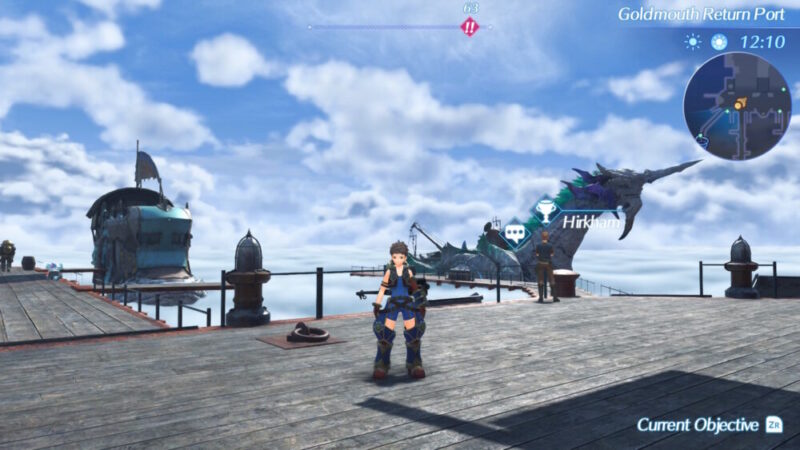
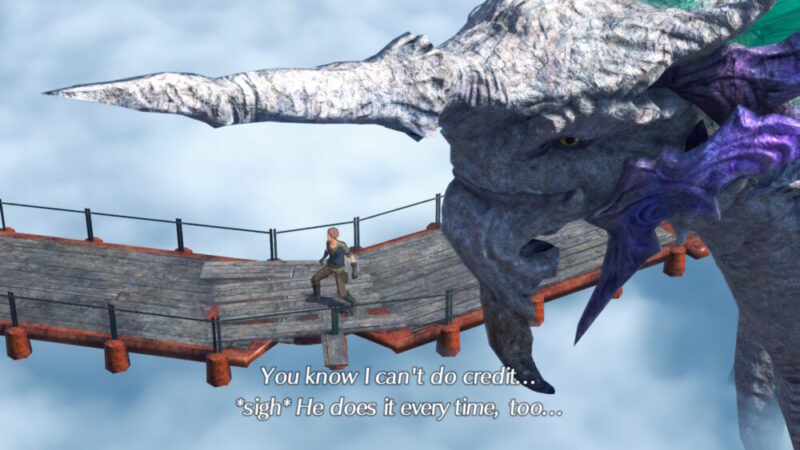
The adventure is certainly memorable, which matters when you’re committing to a game this size. The world is built atop the backs of Titans – god-like beings that drift through the Cloud Sea, with each hosting distinct nations with their own cultures, conflicts and stories. While the main thread deals with ancient wars and divine power struggles, underneath lies a very human tale of nations in conflict, friendship and isolation.
The tone occasionally veers into goofy, even toe-curling territory, but the broad narrative is among Monolith Soft’s best.
That story focus feels deliberate, channelling players from one beat to the next with startling momentum. Underneath that linear drive, however, lies incredible depth. Layered systems and dense menus create a time-consuming yet compelling blend of adventure and micromanagement.
You complete small tasks to level up and earn resources, all while pushing toward the next major battle or cinematic – and Monolith went all in on those, with cutscenes that regularly run past the ten-minute mark. It was easy to just feel like time melts away; I found myself playing into the small hours without realising it. This is quite easily a docked game, not a commute game (unless you have a very long commute!)
Look the Part
Let’s have a look at the details in the Switch 2 upgrade. The 60fps boost is a very welcome addition, even if there are occasional stutters. However, the game isn’t as sharp as I was expecting. It’s a definite improvement, particularly in handheld mode, but Nintendo’s DLSS upscaling is doing the heavy lifting rather than any true resolution bump.
The background details remain smudgy, and sub-pixel interpolation is visible if you’re looking for it; it is particularly noticeable when comparing the soft in-game visuals against the pin-sharp UI. That being said, it’s not all bad; you can feel the effort put into this version, and it definitely delivers the best experience of this game.
Extras like the new Merc Assault mode and new Blade MOMO are great new additions. If you’ve been waiting to play XC2 or are eager to revisit it, this is undoubtedly the best way to experience it. Some textures are noticeably higher-resolution, and Nintendo’s continued insistence that these upgrade packs deliver ‘4K’ is definitely on display here.
There are oddities, too. Certain cutscene animations appear locked at 30 FPS even when the surrounding gameplay hits 60. You get strange moments where Gramps moves smoothly on Rex’s back while Rex himself updates every other frame. It’s not distracting in motion, but it does take you out of the game.
Combat, Evolved
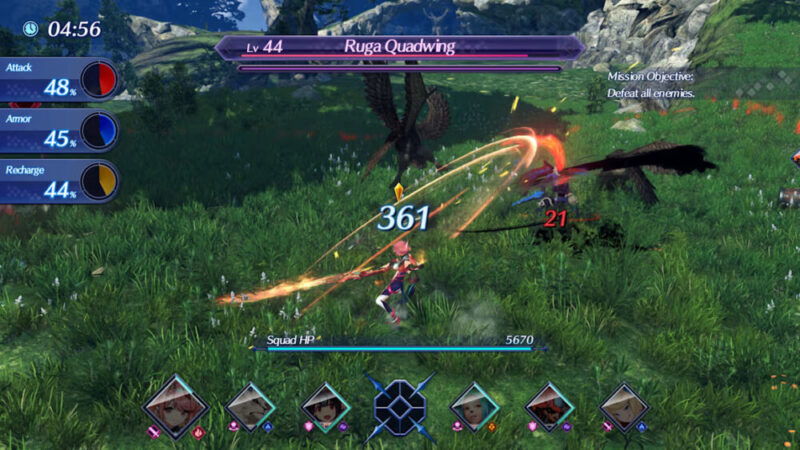
Combat evolves the series’ familiar auto-attack and Arts formula while adding Blades to manage. Each Blade functions essentially as a weapon with its own elemental affinity – Fire, Ice, Electricity and unique Arts. They also fall into Attack, Healer and Tank roles. While story mandates certain team compositions, you’ll spend much of the game gathering Core Crystals to generate new Blades through a gacha-style system. It sounds a bit convoluted, but in practice, building a diverse squad becomes genuinely rewarding and exciting to play.
As your options expand, so does the strategic depth. You’ll eventually field more Drivers and Blades than active slots allow, and you’re free to step away from Rex if you choose. Finding potent combinations of Drivers, Blades and Arts is hugely satisfying, and a tough encounter can often be cracked on a second attempt with a tweaked team.
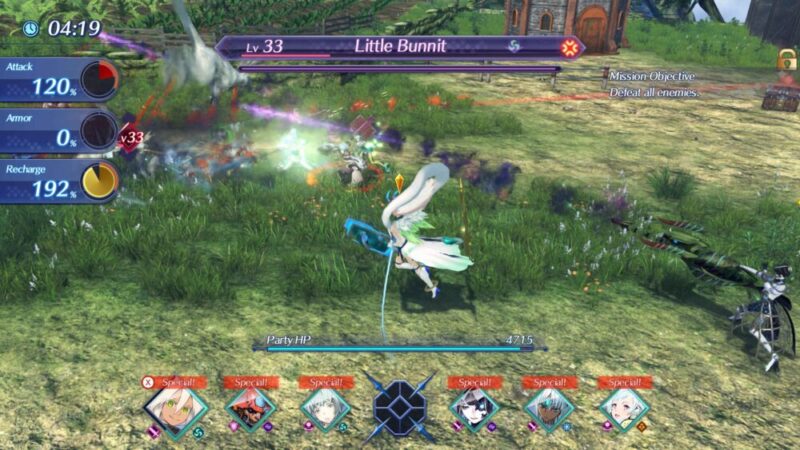
The combat truly comes alive once you master Arts and the three-tier special gauge. Stringing elements together unlocks devastating combo attacks, especially when targeting enemy weaknesses; a fire special might set up a water-based Blade for a Steam follow-up. Your AI teammates are smart enough to charge their gauges reliably, and healers typically step up right when you need them.
Team combos using the returning party gauge can do enormous damage. Veterans will find the familiar systems enhanced by Blade complexity; newcomers may find it daunting, but the glacial tutorial pace introduces mechanics gradually. What looks like chaos to an outsider feels incredibly immersive in the moment. One boss took us forty-five minutes to clear, yet it felt like no time at all.
Micromanagement goes even deeper. Drivers and Blades each have sub-menus for abilities, Affinity, equipment and temporary buff items. There are even regional economies; if you find yourself spending money in different areas, it raises their development level for various benefits—menus, submenus, which bring up more menus.
It can feel like falling down a rabbit hole, though the excellent UI keeps it from becoming overwhelming. You’ll learn which systems demand attention and which can be safely ignored.
About a third of the way through, the Merc Group system unlocks, giving your surplus Blades something to do. You can dispatch them on quests that resolve as you continue playing, much like Monster Hunter‘s mechanics. If you’ve been accumulating Core Crystals, this becomes essential – you’ll generate far more Blades than your core team can use. Some will find it busywork; we enjoyed building our auxiliary crew.
Staying on top of these side systems matters, particularly for levelling. A vital tip: regularly visit inns for fast-track level-ups. By staying vigilant, we generally stayed ahead of the difficulty curve, but like the original, XC2 spikes hard near the finale. Some grinding may be necessary, and occasionally the game stumps you with unexpected requirements.
While not as egregious as Xenoblade X‘s obscure fetch quests, we still hit walls where specific Blade abilities were needed to clear hazards. One frustrating section demanded particular secondary skills, forcing us to burn through Core Crystals until we generated the right type. These are classic Monolith Soft quirks, and they’re among my only real minor issues with the game.
Performance is similarly uneven. At times the game is gorgeous, with creative landscapes that shine in both gameplay and cutscenes. The anime art style allows for greater emotional expression, and the story sequences can be genuinely breathless and moving. Yet the animation in engine-driven cutscenes is stiff by modern standards – characters move like marionettes.
The voice acting mostly elevates the material despite some wobbles; we played with the English track, a colourful mix of regional British and American accents that mostly lands. The Nopon, however, are given serious dramatic roles despite their inherently silly design and voices, which creates some unintentionally awkward moments.
Music is another high point. Even at its most workmanlike, the score is competent, but certain areas and boss fights deliver fantastic RPG rock, choral work and orchestral beauty.
Final Thoughts
Xenoblade Chronicles 2 – Nintendo Switch 2 Edition is the definition of a magnificent game, made new again thanks to the Nintendo Switch 2 hardware. Monolith Soft has built a world so vast, so emotionally rich, and so mechanically dense that you can’t help but admire its sheer audacity, even when it’s tripping over its own feet.
The Switch 2 upgrade doesn’t magically fix the stiff animation, the grindy gates, or the design quirks that should have been retired years ago.
What it does do is deliver the smoothest, most visually refined version of one of the generation’s most ambitious RPGs. For all its stubborn refusal to modernise, Xenoblade Chronicles 2 – Nintendo Switch 2 Edition remains an epic worth surrendering hundreds of hours to.


FOUR STARS (OUT OF FIVE)
Highlights: Stunning visuals, Addictive gameplay with hundreds of hours of things to do
Lowlights: Performance issues, Long sequences make it difficult in handheld mode
Developer: Monolith Soft
Publisher: Nintendo
Platforms: Nintendo Switch 2
Available: Now
Review conducted on Nintendo Switch 2 with a code provided by the publisher.
Featured header image also provided by the publisher.
