


If you want to know why you should play this game, just look at how gorgeous that header image above is.
Possessor(s), the latest game from studio Heart Machine (best known for their savage action-adventure RPG Hyper Light Drifter), is striking in every sense of the word. Its art is vibrant, its gameplay moves at a breakneck speed, and its story hits you right in the heart.
This is the story of haunted people and a haunted city, its walls filled with secrets for you to discover and adversaries to test your skills against. And it is one that I, for one, shall not forget in a hurry.
Demons and a Dying City
Set a little after the underworld invasion of the cyberpunk-adjacent company-owned Sanzu city, Possessor(s) is the story of a girl named Luca and a demon named Rhem. If they want to survive this changed landscape, the pair will need to put aside their mutual mistrust and work together. And if they want to get home, they’ll need to fight their way through a city gone mad – a prospect which may sound difficult, but which actually feels like a blast with this tense and precise side-scrolling action gameplay.
Exploration is the centre point of this game – Sanzu city is a sprawling place, filled with hazards and secrets and yet remaining hauntingly beautiful despite it all. Danger lurks behind every corner, as does an array of memorable characters and tough bosses.
This focus on exploration extends to the combat system as well, with a wide variety of weapons, abilities and upgrades to choose from and combine with powerful synergies.
Difficulty here sits at a wonderfully manageable level, with care taken to ensure the challenge presented by bosses, gauntlets, and regular exploration speaks for itself. Checkpoints are abundant, as are fast travel options. When you die, it feels fair, the result of your own fault and failure of skills, and trying again is easy. It’s a game where, if you’re not careful, you can die in seconds. But you respawn in seconds, too, so it never feels frustrating. Just exhilarating.
Vibrant (and Violent) Visuals
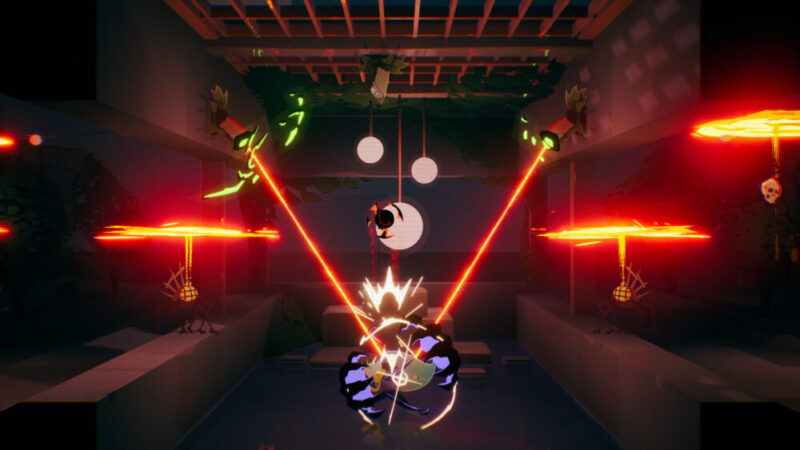
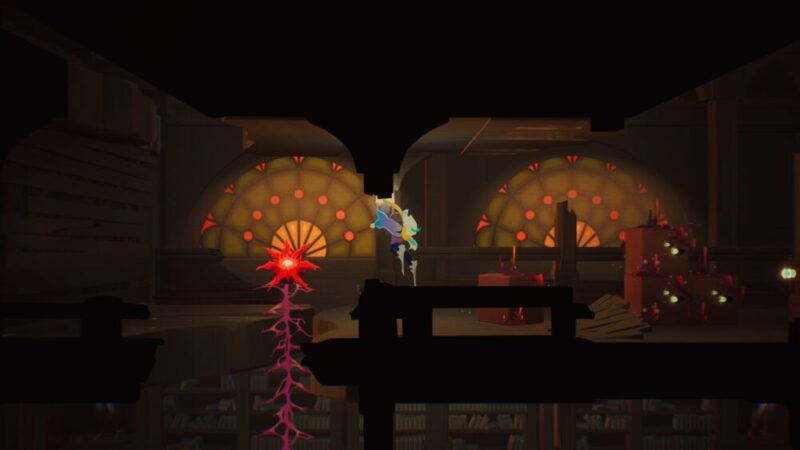
Possessor(s) is, undeniably, a gorgeous game. Atmospheric, understated music has been married to a polished, colourful aesthetic – which itself boasts a seamless blend of 2d and 3d art – culminating in a world which feels rich and characters which feel full of personality.
Everything from the character sprites, to the (many!) attack animations, to the menagerie of enemies and of course the environments have been lovingly crafted. Even the UI is silky smooth and finely crafted. And you can feel that care, every moment you play.
Demonic invasions rarely look so beautiful.
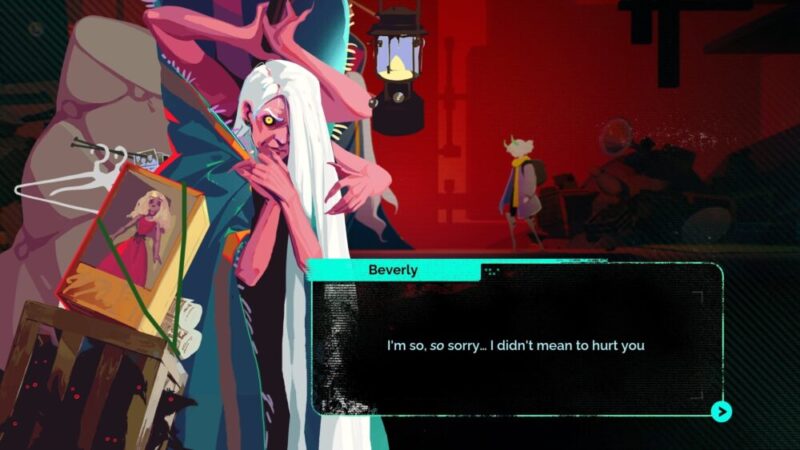
But it is not only a treat for the eyes – the art is snappy and distinct, but above all, readable. Games so rich in colour at times run the risk of growing visually noisy, but all of Possessor(s)’ eye-catching style never presents an issue. Instead, its pops of colour and snappy motions blend form and function. They allow you to tell at a moment’s glance where the boundaries of an attack are, when you can make your next move, or when the right time to parry is.
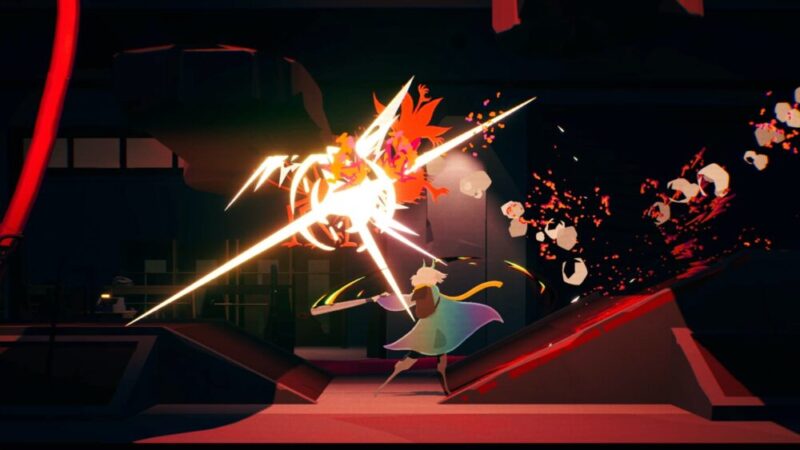
It all contributes to making the game’s central combat both look and feel great. It’s punchy, stylish, and designed to make your big hits really feel like they land.
It’s just as successful in the slower moments and during platforming sections as well. There is not a moment in this game that has not been elevated by its style.
There are times when it could do with a little more polish, but they are few and far between – moments that do not feel as impactful as they should be, which, with only a few tweaks, could do so. But the only reason those few moments do stand out so much is because the rest of the game does hit so hard.
Cruel, but Convenient
Another aspect of this game, which is undeniable (though perhaps not as obvious from the surface), is just how convenient it is. While many games in Possessor(s)’ ilk delight in minor difficulties and daily inconveniences in play (at times to great effect), it instead focuses on making the combat and exploration the only difficult part.
Everything else runs smoothly. It lets the greatest parts of the game shine and minimises busywork.
The map is perhaps the greatest example of this – filling out as you go, with merchants, checkpoints, bosses, and unentered rooms automatically marked and complemented by a set of markers you can place yourself, it makes exploring and backtracking later a breeze.
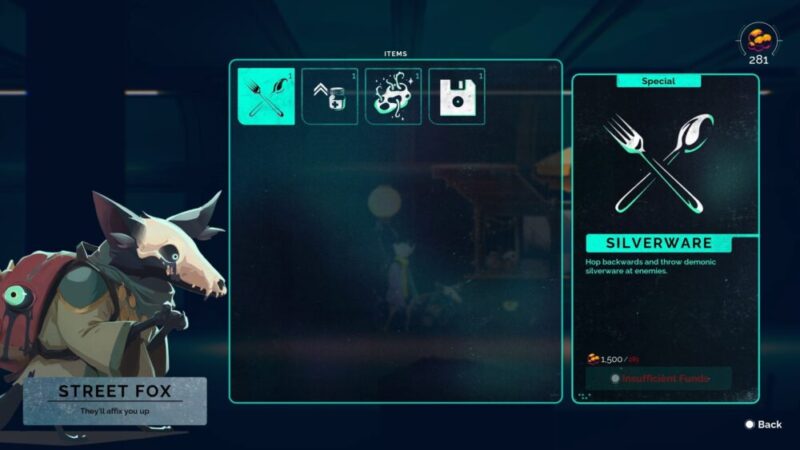
There’s even a bank at the checkpoint, a feature I dearly wish I’d had in some other action platformers and metroidvanias. Because yes, the wide map and abundance of secrets to be found mean this game does scratch that Metroidvania itch.
This light touch and forgiving nature create a sense of security, and encourage a bolder playstyle. You don’t need to worry about getting lost or losing all your money mucking around in an area you’re not prepared for, not when the game is structured to prepare for and minimise any issues.
Some may find this approach makes it a little too smooth a play, without the jagged edges that can make success in a harder, rougher game feel so deeply satisfying and so full of personality. But in my case, it instead felt refreshing, like a glass of cold water.
A Tale of Tragedy
In this game full of hard-hitting moments and excitement, however, there was one aspect that failed to wow me: the story.
It’s not that it’s awful, because it isn’t – let’s face it, gaming has some really shoddy plots, and Possessor(s) really doesn’t rank among them. Instead, it’s just that it’s okay. Generally enjoyable, with some memorable moments, but with few of the highs of its gameplay or art direction.
Our tale of a girl, her demon, and the changed world they find themselves in is well-integrated into the game. Cutscenes of memory are clearly defined and just as short and snappy as the rest of the game, telling their story without overstaying their welcome.
Extra dialogue can be seen at some checkpoints, and once again, it is made clear when our protagonists have something to say to each other. The game’s exploration is a dual one – of a shattered city, and of two shattered lives.
It’s enjoyable to dip into tragic topics and address moral dilemmas head-on. But it is, for the most part, predictable, fun, but not always memorable.
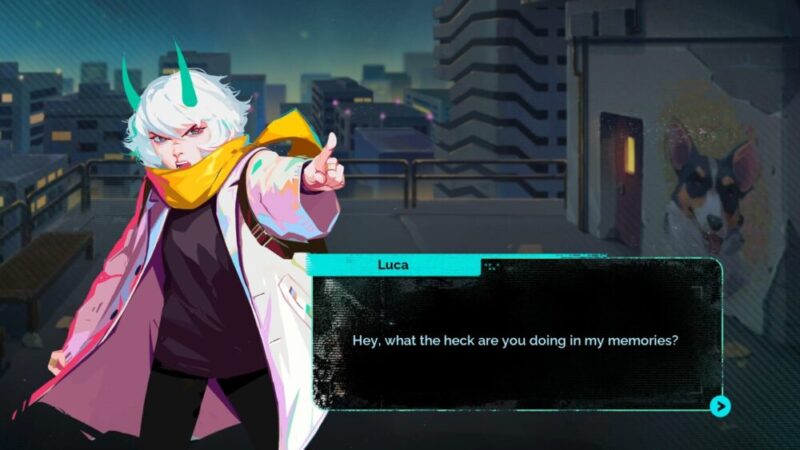
Initially, it is also a little inconsistent. It attempts to engage in a classic gameplay hand-wave, letting you use mechanics that make sense to a player without having the protagonist question how or why they work in-universe. Normally, I would be fine with this, but there are some early elements that our protagonist expressed confusion with and discussed with her new demon friend. Therefore, when certain other elements weren’t discussed, it just felt strange, inconsistent. It made for a quicker play experience, but also felt slightly uneven – our character was introduced, only to recede into the background to make way for gameplay.
Luckily, because the story is integrated so seamlessly into the game, it is rarely presented as a true problem. Whether you want to enjoy every scrap of dialogue or skip through the cutscenes to get back to fighting bosses, the story will go down smoothly.
Far into the game, you will also encounter multiple paths for the story to take, enhancing your engagement with the world.
Final Thoughts
Exhilarating at every turn, yet never frustrating or inconvenient, every moment of my time with Possessor(s) was a delight.
Its stylish aesthetic matches its punchy, action-packed gameplay, and combined with its sprawling world, it all comes together to make for a wonderful experience. I loved it, and if you’re up for a challenge, I’m sure you will too.


FOUR AND A HALF STARS (OUT OF FIVE)
Highlights: Punchy gameplay, good customisability, great art direction
Lowlights: Slight polish needed, thin story initially
Developer: Heart Machine
Publisher: Devolver Digital
Platforms: Windows PC, PlayStation 5
Available: Now
Review conducted on Windows PC with a release code provided by the publisher.
Featured header image also provided by the publisher.
