

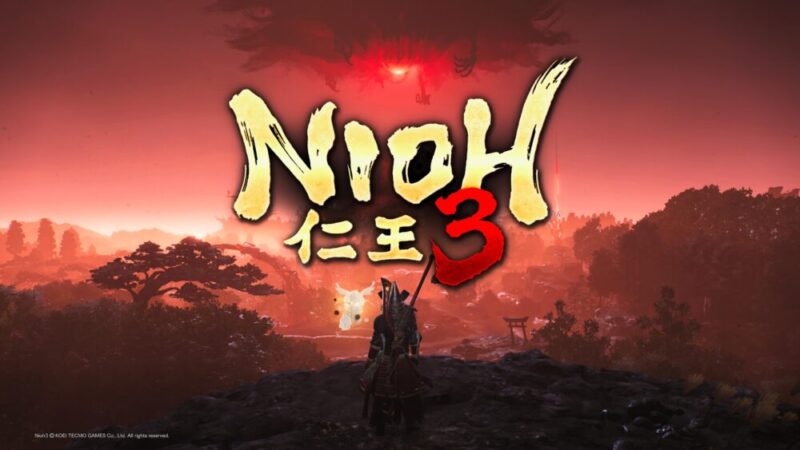
I might not have been back to them in a hot minute, but I personally love both 2017’s Nioh and 2020’s Nioh 2, and stand by the opinion that at the time, they were probably the best Souls-like games you could play, short of an actual FromSoftware game.
While those first two games provided solid combat mechanics and, at times, brutal difficulty spikes, Nioh 3 feels like the biggest surprise and the biggest leap forward for the series thus far. It’s simply expanding on almost everything it did well in the first place, be it the move to an open world or the new combat stances, and I’m absolutely here for it.
If you’re a fan of the first two Nioh games, I can’t recommend this third entry enough.
The New Samurai on the Block
Much like the first two Nioh games, Nioh 3 doesn’t really do much to bring its story to the forefront of the experience. There’s definitely a little more dialogue as you spend time with extra supporting characters and your Guardian Spirits, special animal spirits that you can equip to support you in battle with special skills and abilities.
Set in the year 1622, Nioh 3’s story kicks things off pretty much immediately, as players take control of a fully customisable protagonist known as Tokugawa Takechiyo. Takechiyo is set to become Shogun, which triggers his younger brother, Kunimatsu’s, rage and jealousy. Kunimatsu utilises an ancient evil power to unleash demonic entities known as Yokai to devour the land. Takechiyo is then initially whisked away to the year 1572 to help fix the wrongs of his family’s past and take out the Yokai who are seemingly granting Kunimatsu his powers.
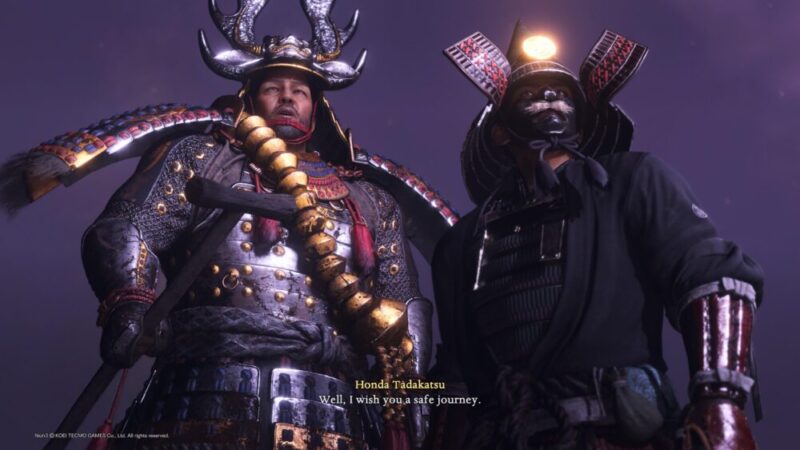
Players will time-travel to a few various historically inspired eras, each with their own unique visual flair and open-ended worlds to explore. The only issue with the story overall is that, as the game progresses, it takes a back seat to the gameplay, only really raising the stakes as you approach the end. Both Nioh and Nioh 2 never had the strongest stories to begin with, and generally let the gameplay do the talking, but as so many facets of Nioh 3 have been improved, I wish this had been given the same treatment.
That doesn’t mean that Nioh 3 is unrewarding or boring in any way, however. Players can also take part in 50 Crucible challenges scattered across the story, which essentially serve as more challenging confrontations with less forgiving enemies. You’re fighting for exclusive loot here, but if the regular challenge of simply playing through the story wasn’t enough (and believe me, it is), you’ve got another layer to tackle in between.
There are also 13 Masters to take on, which also unlock new skills for certain weapon trees, and plenty of collectibles to find, like Jizo Statues to help you while in the Crucible.
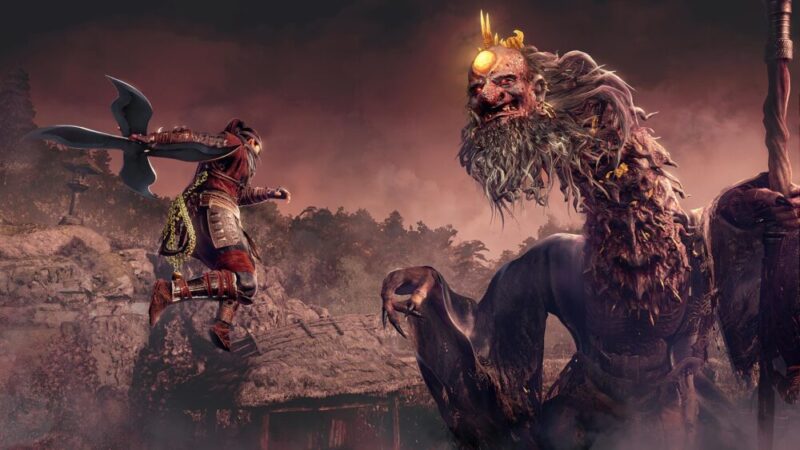
I do wish we got a little more enemy variety while progressing through each historical period. That being said, there are still a fair few to fight, and the bosses are admittedly all incredibly unique and visually striking. Along the way, you’ll also be given an Exploration Level, which essentially rewards you based on how much of the open world you’ve actually explored. It’s a main concern I have for open-world games, as the freedom to explore wouldn’t be nearly as impressive if nothing was driving you to do so. In this way, none of your time in Nioh 3 feels wasted and is instead rewarded.
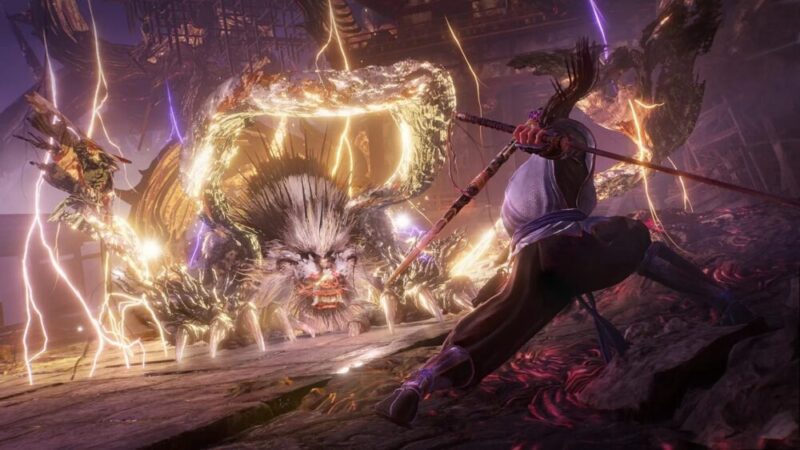
Finally, you can even play through Nioh 3 with two other friends, with three-player co-op. Simply pass the opening mission, find your first Shrine, and you’re good to go. Even on your own, you can summon Acolytes, or AI controller companions, to help you beat tougher enemies.
Overall, Nioh 3’s core experience won’t feel lost on fans, but with a larger open-world setting, it feels like the next natural evolution for the franchise, without forgetting its more challenging roots.
Choose a Stance or Two
Much like its predecessors, the strongest aspect of Nioh 3 is its combat. And I can’t really convey just how good this combat is. While Nioh and Nioh 2 had fantastic and brutal combat, Nioh 3 has taken yet another step forward by adding new stances, including a dedicated Ninja Style, which basically changes your weapons and moveset on the fly. It can even be used to parry special enemy attacks, allowing you to continue the onslaught in your newly chosen style.
The Samurai Style acts as your standard combat style, and with it, access to two distinct stances. The Low Stance keeps your offensive and defensive abilities in check and is more reliable in close encounters, while the High Stance allows you to deal more devastating blows, at the cost of defensive reaction times. While certain weapons can be more effective and enemies more susceptible to certain stances, you can usually get away with either if you feel confident in your skills.
The biggest shift in combat, however, is the new Ninja Style, which can be activated by pressing R2 on the Dual Sense controller on PlayStation 5, for example. The Ninja Style yields its own series of moves, and you even get to choose a secondary weapon to wield here. I chose the Dual Katanas for my Ninja Style attacks, and the results were a fast flurry of swings and slashes, even if my stamina bar, known as your Ki, took a massive hit. You can even equip up to three items here, too, to help you in battle.
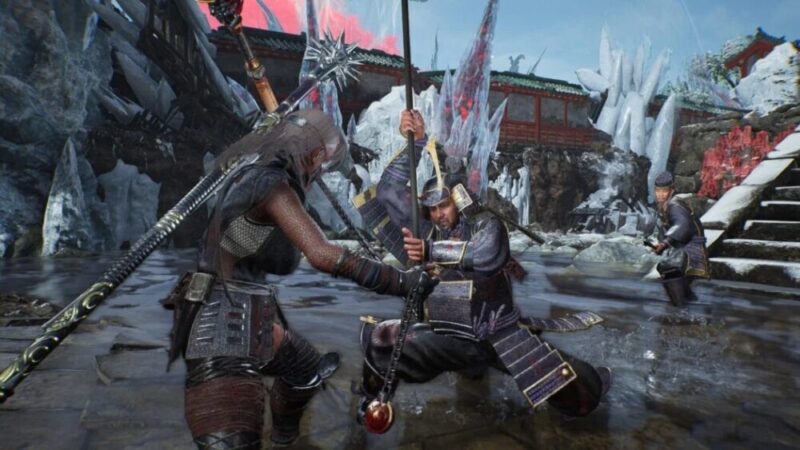
As effective as your Ninja Style might seem at times, you’ll generally always need to rely on your Samurai Style at one point or another, thanks to your Ki Pulse. By pressing R1 on the Dual Sense, players can immediately recover their fighting stance and save a little Ki in the process. This action took a little while to get used to, and is rather essential when in Samurai Style, but it’ll save you more than you think.
The fact that these two styles give you different moves and abilities is enough to make your head spin. But if that wasn’t enough, Nioh 3 actually goes as far as to provide skill trees for not only both styles, but each of your stances as well. Along the way, you’ll find Ninja or Samurai Locks, which grant you points to unlock certain abilities as you please. I can’t even begin to cover what’s on offer here, but I will say that it’s one of the most impressive and diverse skill trees I’ve ever seen in a game to date.
And if that wasn’t enough (trust me, I know), you can even upgrade your level by praying at Shrines, which act as your classic Souls-like checkpoints. These Shrines also allow you to fast-travel between them, but allow you to use your collected experience points, known as Amrita, to upgrade more concrete statistics like Constitution, Heart, Satmina, Strength, Skill, Intellect and Magic, all of which bolster your overall effectiveness in combat.
Nioh 3 also gives players the ability to collect gear and loot along the way, and now allows players to equip their most powerful gear on the fly with the tap of a button. It’s a fine system, and the game drops a fair amount of progressively more effective loot in its earlier hours. But like any randomly generated loot system, things get a little trickier and, at times, frustrating the further you progress.
It’s simply because the chances of high-end gear feel a little slimmer once you’ve acquired the game’s more powerful items, and in turn, makes that solid sense of progress feel a little less rewarding. That being said, it only really feels like this in its later hours.
The fact that Nioh 3 is balancing this much to begin with is really a true feat on its own. The combat is consistently impressive and satisfying to the point that the brutal difficulty feels warranted, given most of the deaths are caused by your lack of skill, and not the game’s mechanics. It’s the best the series has ever been, and that’s really saying something.
Look the Part
Nioh 3 generally looks fantastic as well, filled with vibrant colour pallets and impressive lighting as you navigate through these unique time periods and environments. Character models and general textures are also decent, and while there’s a slight lack in enemy variety, they, too, look fantastic at the very least.
Things also run relatively well, but it depends on how you choose to run it. Performance Modes aim for, and usually hold 60 FPS, and for pretty much all players using a base PlayStation 5, for example, this is the mode I would recommend. Frame rate dips are relatively infrequent, but the game, at times, can look a tiny bit muddy, sacrificing draw distances in the process. The Resolution Mode certainly adds a noticeable level of sharpness and detail to environments, and while it virtually runs at a rock-solid 30 FPS, it’s not the way to play a game that relies on reaction times and benefits from a higher frame rate.
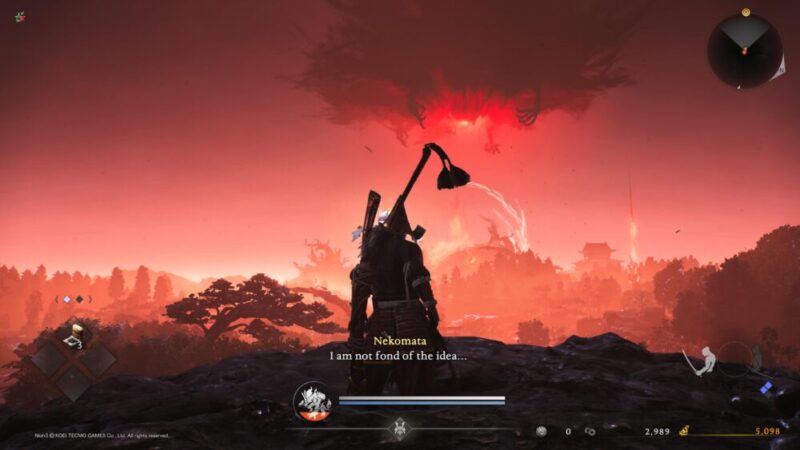
PlayStation 5 Pro users do get a higher 1440p resolution at 60 FPS, but certain dips, as slight as they are, feel inevitable during more intense boss battles or with multiple enemies on screen.
Final Thoughts
Overall, Nioh 3 understands what made its predecessors great, all while upgrading and expanding accordingly. The new Ninja Style and stancdes to wonders to the already fantastic combat, adding a level of depth and fluidity that was arguably never there before.
Every corner of the open world feels rewarding, even if the somewhat minimal story and randomly generated loot can be annoying at times. But given that the core gameplay stands at the forefront of the experience at all times, it’s hard to pass up, and the team at, well, Team Ninja, have created the best entry in the series thus far.


FOUR AND A HALF STARS (OUT OF FIVE)
Highlights: Fantastic combat with new ways to play; Open world and various historical eras to explore; Expanded skill trees add even more depth to combat
Lowlights: Randomly generated loot can be frustrating; The story takes a back seat at times
Developer: Team Ninja
Publisher: Koei Tecmo
Platforms: PlayStation 5, Windows PC
Available: Now
Review conducted on PlayStation 5 Pro with a launch code provided by the publisher.
Featured header image was also captured in-game.
