

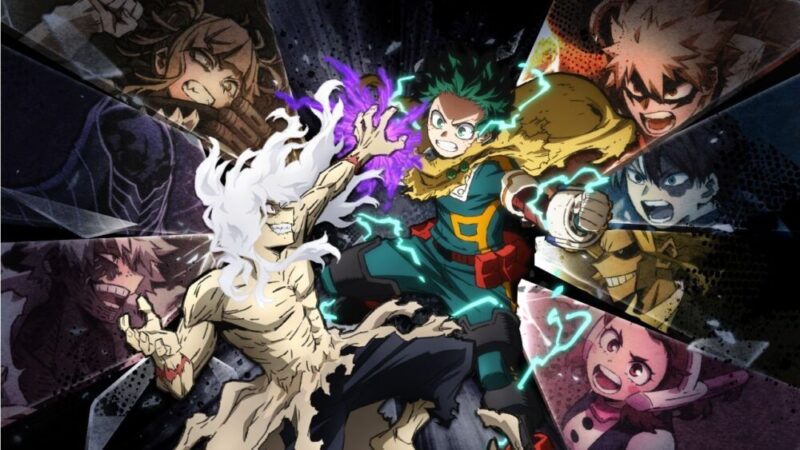
I’ll admit that I’m not a massive fan of the My Hero Academia franchise, but I do have a certain amount of knowledge regarding the characters and broader lore.
My Hero Academia: All’s Justice serves as the third game in this particular series, and in many ways, feels like it has learnt from its predecessors in certain areas, and forgotten crucial details in others.
What’s here is an incredibly gorgeous and faithful recreation of the series’ various confrontations, even if it ultimately lacks the depth and focus required to keep it together in the long run.
The End is Nigh
As previously mentioned, My Hero Academia: All’s Justice is the third game in the series, and with that, generally comes a lack of context for those uninitiated in this world or its characters. It tells the story of the Final War Arc of the My Hero Academia anime, which essentially summarises a heap of climactic battles between certain characters.
It’s all incredibly epic, and most of these battles really do look the part. I don’t think My Hero Academia: All’s Justice is the way to introduce yourself to this part of the story, but to make matters worse, it’s not even told that well in video game form to begin with.
Although players take control of multiple heroes and villains from the anime, the story centres around protagonist Izuku Midoriya, who is seemingly heading towards a final conflict with the villain All for One. There’s certainly plenty to catch up on as far as the overall story is concerned, but this game isn’t really helping with any of that.
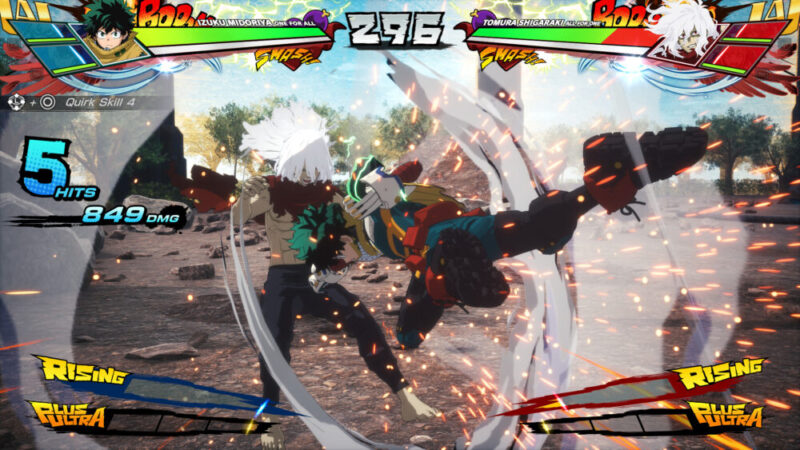
I could go on for hours explaining how we got here, but without spoiling it for those who wish to experience the story here, the heroes have managed to All for One and his many followers into a Warp Gate, splitting them up across the world and attempting to take them on one by one instead.
For what it’s worth, there is a decent amount of story here for players to trek through, but it barely presents a focused experience. In All’s Justice, the story is strangely hidden away in the game’s phone. This in-game menu of sorts actually stores many of the game’s more interesting modes and features, instead of placing them out in the open world for you to explore.
Even the side-quests feel disjointed from the game, and that’s because they really are. You can talk to characters both new and familiar out in the open world, but these side-quests don’t add anything to the game’s main story, or any of the additional modes like Team-Up Mission, for example.
The Team-Up Mission mode basically allows you to team up with Class 1-A buddies in a simulated environment to complete various missions, usually centred around either fetching something of importance or taking out waves of enemies. There’s also a decent amount of traversal here, which helps shake up the gameplay, along with some exclusive unlockable goodies. You’ll even get to recreate some iconic battles throughout the series as a whole, but once again, it’s all so disjointed from the main story mode that it takes any sense of connectivity away from the experience.
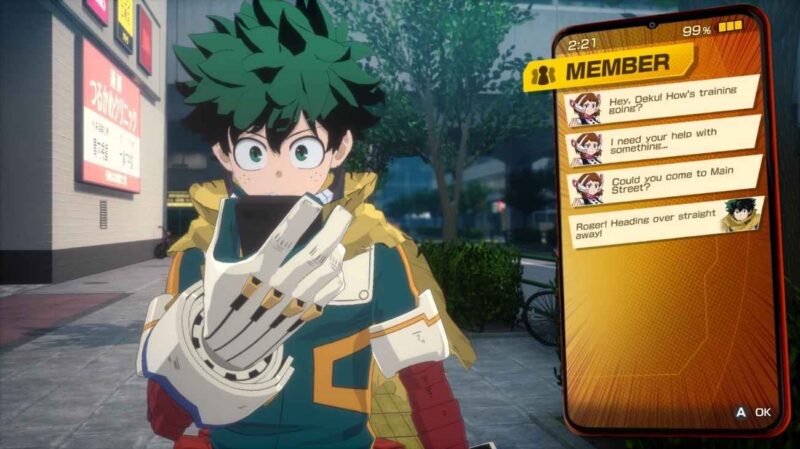
The open world looks nice enough as you run and swing about the streets of Kamurocho, but there’s a fair amount of backtracking if you’re set on completing the game’s side-content, which makes even the open world feel a little dull after a while. Once again, I feel like putting the story mission here would have helped bring focus to the open world as you organically track down and battlewithin these locations, instead of accessing them through menus. It just seems like there was more they could have done with this formula.
Fight Again
My Hero Academia: All’s Justice is an arena fighter at its core, and thankfully, it plays relatively well. Throughout its various modes, you’ll be able to take control of a whopping 68 characters from the series, including characters from U.A. High School and Pro Heroes and Villains alike. They all look fantastic and capture the spirit of these battles (and there are plenty), even if the overall mechanics wear a little thin throughout the course of the game.
Each character has a standard attack, along with two Quirks that act as additional attacks. Characters can also dash, dodge, block and counter certain attacks, although the countering system feels a little random as there’s no real prompt to help you time your counters, which also look fantastic when done correctly. There’s even a new Rising gauge that, when activated, boosts the effectiveness of attacks and abilities, which can turn the tide of a fight.
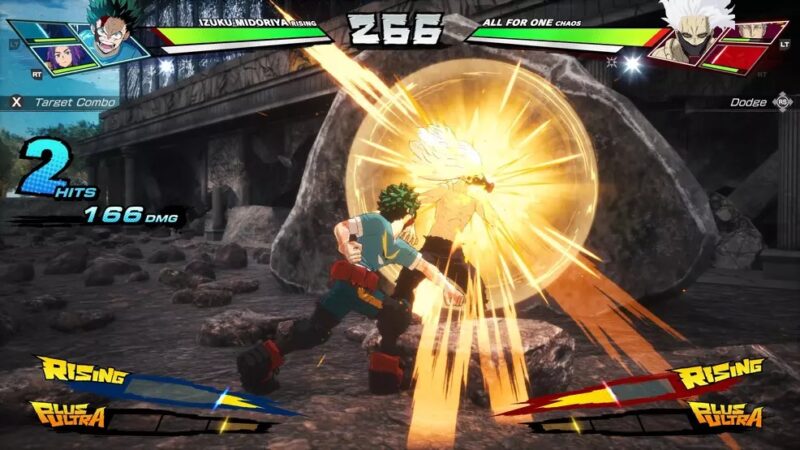
Battles are fast and frenetic, and if you’re quick enough, can be completed in a series of short attack animations that look like they’re ripped straight from the show.
Players can also choose between one of two ways to play, depending on their experience and abilities. Firstly, there’s the Normal Mode, which is geared toward newer players and essentially automatically links certain combos and abilities together, instead of coordinated button presses. It doesn’t feel too bad even if you know what you’re doing, and adds a nice cinematic quality and consistency to the experience.
Manual Mode, however, allows more experienced players to chain together their own coordinated combinations, but this does require some sense of memorisation between various chacrtaer moves sets and button combinations. It does add a little more depth to the experience, but I had more fun enjoying the more frequently occurring cinematics in Normal Mode.
Overall, the combat is functional and at times, downright engaging, but for as often as you’re actually fighting in this game, it wears itself thin a little too soon. The amount of immediate attacks you have at your disposal feels limited compared to a dedicated 2D fighter like Tekken or Mortal Kombat, and once you get the hang of the movesets and combinations, the animations also feel that much more repetitive as a result.
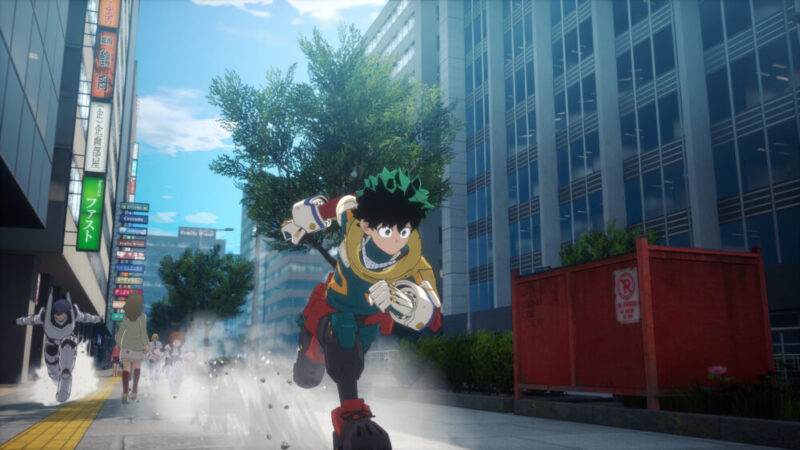
It’s far from terrible, but I found my time with My Hero Academia: All’s Justice that much more fun and engaging when played in smaller, bite-sized bursts.
Look the Part
Visually, My Hero Academia: All’s Justice looks fantastic, and really fits the look, tone and pacing of the show’s confrontations. Character models also look great, and it’s nice to see the game’s conversations all voice-acted. For as disjointed as I said the game’s modes were, the visuals do help in allowing you to feel like you’re a part of this world, which I commend.
Each of the hits and cinematically-themed attacks also look fantatisc, and it’s fun to experiment with each character on the roster to experience them all.
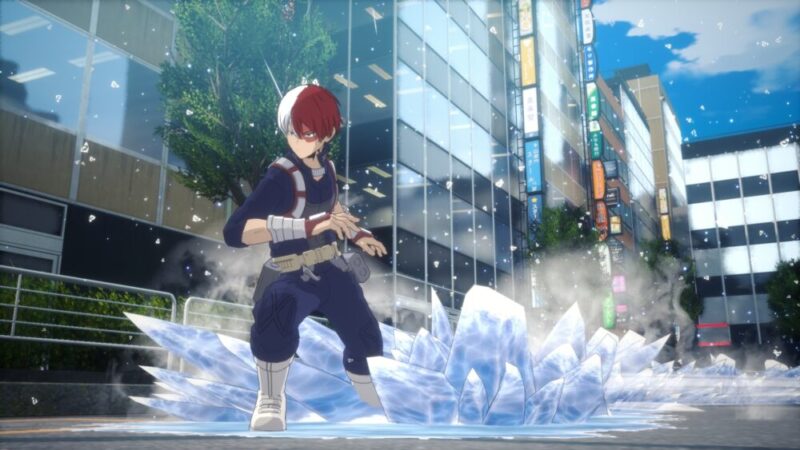
While the game stuns visually, it’s worth noting here that there are several frame rate drops throughout on the PlayStation 5 Pro, normally occurring when things get a little chaotic on screen. It’s far from game-breaking, but definitely noticeable.
Final Thoughts
Overall, My Hero Academia: All’s Justice is an enjoyable arena fighter with plenty of spectacular visuals and engaging combat mechanics. While those mechanics can wear a little thin after longer play sessions, they don’t feel as bad when compared to the game’s more prominent flaws.
I simply wish that more of the game’s main content were accessible within the open world, bringing some sense of content and connectivity to the open world as a whole.
While the game’s story won’t really do much to help acclimate newcomers, I’m sure that fans of the anime will find something to enjoy here.


THREE STARS (OUT OF FIVE)
Highlights: Functional combat; Gorgeous visuals that remain true to the anime; Huge playable roster
Lowlights: Game’s modes feel disjointed; The open world and side-missions feel a little bland and repetitive after a few hours; Multiple frame rate drops
Developer: Byking Inc.
Publisher: Bandai Namco Entertainment
Platforms: PlayStation 5, Xbox Series X/S, Windows PC
Available: Now
Review conducted on PlayStation 5 Pro with a launch code provided by the publisher.
Featured header image also provided by the publisher.
