

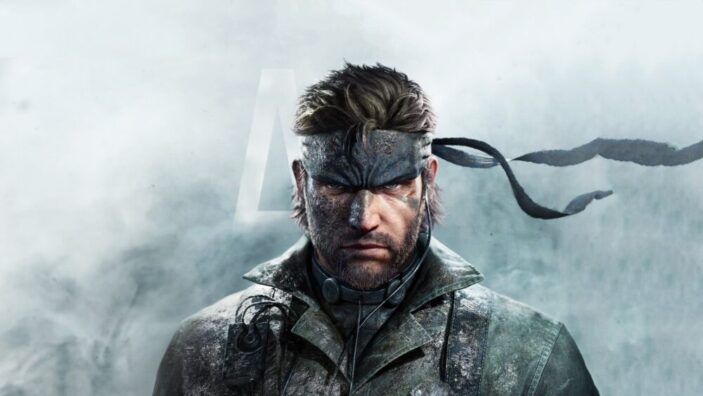
2004’s Metal Gear Solid 3: Snake Eater is not only my favourite game in the long-running series, but one of my favourite games of all time. Metal Gear Solid isn’t even one of my favourite game franchises (strange, I know), but that third game just hit all the right notes for me. A cinematic, espionage-fuelled adventure that sees a super-spy taking on his former boss and a gang of biologically altered super-soldiers, in a bid to stop a nuclear war? Sign me up.
In 2005, however, Konami released Metal Gear Solid 3: Subsistence, which featured revamped camera controls and additional minigames. It’s generally the more revered version, given the 360-degree camera control, and it feels more modern by today’s standards as a result. Given that it takes place before most other games in the series chronologically speaking, I urge you to give this one a go in some capacity.
And here we are. Metal Gear Solid Delta: Snake Eater is a fantastic remake, visually speaking, but it is very much that secondary Subsistence version of Metal Gear Solid 3: Snake Eater, both conceptually and mechanically. That’s not necessarily a criticism, given it’s holding onto what made this game so great in the first place, but if you’ve beaten this a few times like me, there are simply fewer surprises in store.
What a Thrill
Set in 1964, this Cold War era plot sees Naked Snake (also known as Big Boss in future titles) attempting to rescue a Russian rocket scientist named Nikolai Sokolov from the clutches of the Soviet Union and ultimately destroy the nuclear project known as the Shagohod. But through a thrilling and well-paced introduction, we soon find out that Snake’s boss, known only as The Boss, has defected to the Soviet Union, and along with The Cobra unit, a team of biologically enhanced individuals, seeks to retain Sokolov and see the Shagohod project finished, allowing the Soviet Union to hold the upper hand in the impending nuclear war.
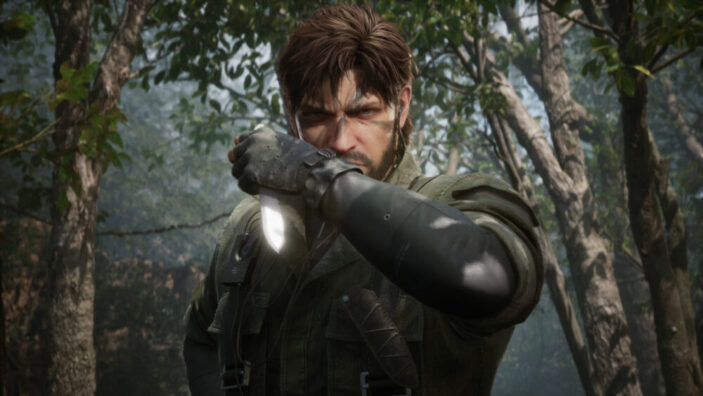
Snake is initially bested, but soon finds his way back into the Soviet jungle to rescue Sokolov and defeat his former mentor in the process. This remake still gives plenty of nods to Hideo Kojima, in that his weird ideas (Snake’s Nightmare, I’m looking at you) are on full display. Characters stand in weird poses for the fun of it, and generally overreact at the strangest times, but it’s all in service of a relatively straightforward story that’s easy enough to follow and generally well-paced.
David Hayter is also back as Snake, and while that’s far from a bad thing, the voice acting across the board is decent, too, outrageous writing aside. The 13-15 hour story feels short by today’s standards, but still feels like a blast, and wastes no time getting from one point to another, through a well-crafted blend of stealth, action, boss battles and some fairly long, but well-presented cutscenes.
Snake? SNAKE? SNAAAAKKKEEEEE!!!
Metal Gear Solid Delta: Snake Eater is still, very much like the original, a stealthy experience. It is recommended whenever possible, and is generally the best way to proceed, as the louder approach can result in utter chaos, and normally, Snake’s demise. While I’m not a massive fan of stealth games, I love the old-school approach to stealth here. Enemies will see you from a distance, and while they’re suspicious, it’s easy enough to hide and get out of the way. But while the AI is far from incredible, I personally love how each area feels like an escape room of sorts, as you find routes, create distractions and crawl along to remain undetected.
The Camouflage system also returns, in which a small number next to the health bar indicates Snake’s level of camouflage in a certain environment. The number generally grows as Snake is hidden, and diminishes when in plain sight. The aim is to equip both camouflage and face paint that suits the environment or terrain, to help that number stay as high as possible at all times, and generally increase your chances of staying hidden. It’s a fine system that’s easy to access, but it hasn’t really changed at all since the original title.
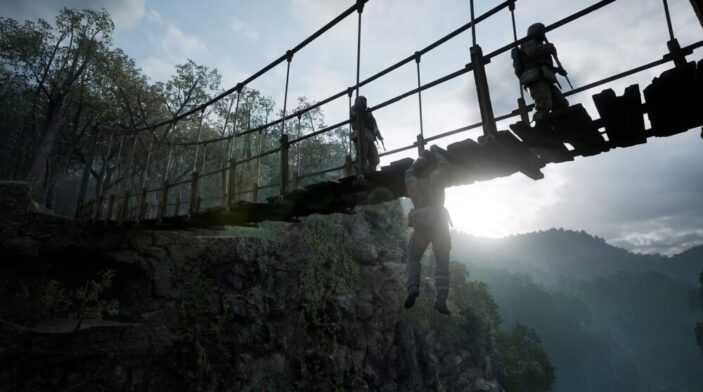
Combat is also relatively straightforward and immediately familiar to anyone who has played Subsistence. Players can aim their weapons over the shoulder, and then hit the R1 or RB button to aim their weapon down the sights for a better shot. Even though you’re encouraged to use stealth, you’re generally given a wide range of weapons like the classic M911, AK-47, and a range of shotguns, rifles, and even grenades. While the game never felt geared towards action, it’s definitely not afraid of letting you play how you like, generally giving you more ammunition than you need.
Along the way, Snake will also sustain various injuries, which will hinder his health if left untreated. By accessing these injuries via an in-game menu, Snake can treat several cuts, burns, breaks and even leeches, with a range of items that you generally find out and about in the environment. Like ammunition, you’ll find plenty of these items to keep you healthy, even if food is a little harder to come by. Food will also manage Snake’s stamina levels, but a lack of food can even cause Snake’s stomach to rumble, which can alert enemies to his presence.
Metal Gear Solid Delta: Snake Eater has no shortage of boss battles, as you take on each member of The Cobra unit on your way to The Boss. While these encounters usually focus on high-octane action, I personally love how these encounters also feel like their own unique puzzles to solve. While you can choose to shoot these bosses down, certain examples include Snake having to wait for Ocelot to reload his revolvers to get the right shot, or using smoke grenades to rid The Pain of his army of bees. Either way, they’re real highlights and expertly placed throughout the story.
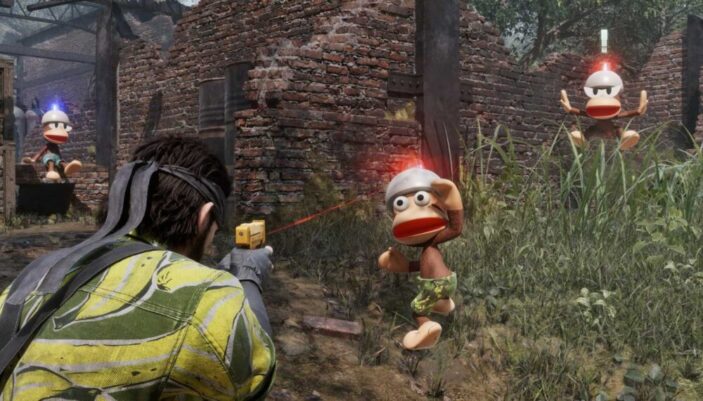
Finally, Metal Gear Solid Delta: Snake Eater also includes a few additional goodies beyond the main story. There’s a New Game+ mode, along with a list of fun and crazy camouflages, plenty of returning Kero Frogs and even new Ga-Ko rubber ducks to collect. The Snake vs. Monkey mode returns, which sees Snake catching the monkeys from the Ape Escape games, and as I previously mentioned, there’s even a newer version of Snake’s Nightmare to play through. Finally, there’s the Secret Theatre, in which players can view humorous cutscenes by finding special film canisters throughout the game.
Look the Part
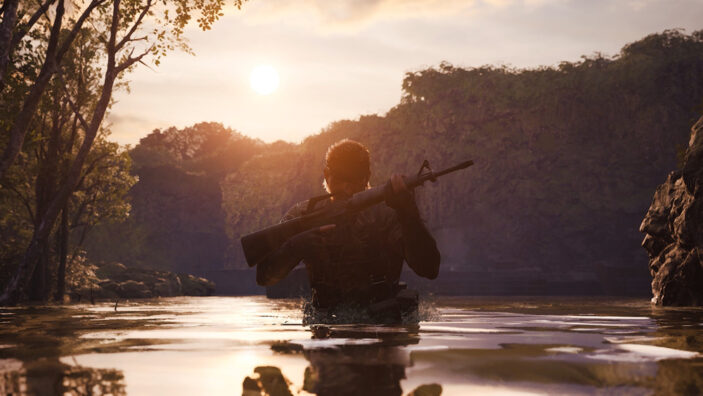
Unreal Engine 5 feels like the star of the show when it comes to this remake, and for the most part, I think it works. Photorealistic graphics, unfortunately, do bring out some of the campy facial animations and gestures that ultimately don’t translate to such a high level of fidelity, but it does wonders for the environments. The jungle feels much more dense and lush, and the lighting across the board is stellar. Light seeps in through the trees during the day and gently bounces off the leaves and water at night.
Reviewing this on the PlayStation 5 Pro was also an interesting experience. This console specifically takes advantage of PlayStation’s Spectral Super Resolution (PSSR) upscaling to deliver a mode that automatically aims for 60 FPS at a 4K resolution. It’s fine for the most part, but it does suffer from frame rate drops at the most random times, leading me to believe that the console’s PSSR boost is almost getting in the way. There’s a little more detail in the environment at any given time as a result, but I would trade that for a locked 60 FPS experience.
The base PS5 and other platforms do include both Quality and Performance modes, the former of which delivers 30 FPS at 4K and the latter of which delivers 60 FPS at a dynamically scaled 4K resolution. For as clean as the game looks, I feel as though this blend of PSSR and the early days of Unreal Engine 5 is converging in such a way that feels almost too intense for current-gen consoles, and poorly optimised for even some high-end PC setups.
Make no mistake, this game still looks great and is ultimately very playable, but the performance issues are somewhat noticeable.
Final Thoughts
Overall, Metal Gear Solid Delta: Snake Eater is a fantastic remake that relies on the strength of its original 2004 release and the improvements made by 2005’s Metal Gear Solid 3: Subsistence. While Unreal Engine 5 looks great in places, it unfortunately lends itself to a few performance hiccups here and there, in terms of the game’s frame rate.
But when all is said and done, this really is the definitive way to play one of the best games in the long-running series, with all the stealth, action, wacky characters, intense boss battles, bonus features, unlockables and minigames that have certainly stood the test of time.


FOUR STARS (OUT OF FIVE)
Highlights: Solid gameplay; Gorgeous visuals; Well-paced story; Fun boss battles; Plenty to unlock and find
Lowlights: Unreal Engine 5 lends itself to certain performance issues
Developer: Konami, Virtuos, Konami Digital Entertainment
Publisher: Konami, Konami Digital Entertainment
Platforms: PlayStation 5, Xbox Series X/S, Windows PC
Available: Now
Review conducted on PlayStation 5 Pro with a pre-release code provided by the publisher.
Featured header image also provided by the publisher.
