

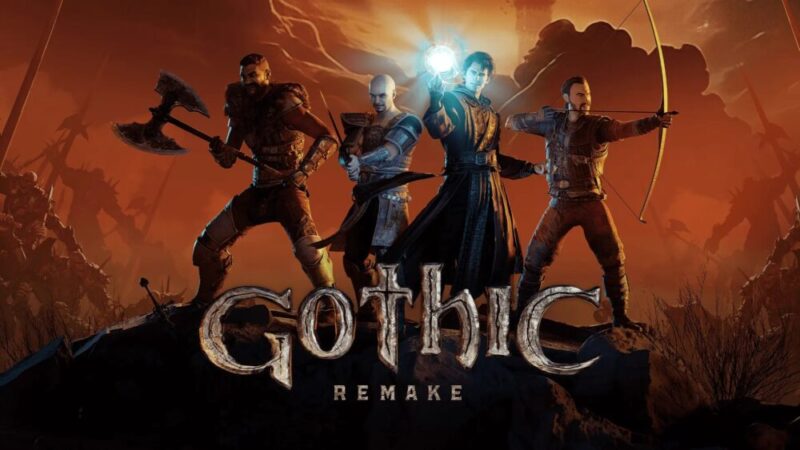
Gothic 1 Remake is a full ground-up remake of an action-RPG that originally debuted back in 2001. That era was defined by hardcore, uncompromising RPG design; games rarely offered quest markers or hand-holding to assist with progression, actively demanding players struggle through early hours to earn a sense of growth.
Twenty-five years later, times have drastically changed. In a modern landscape focused on live streaming, rapid release schedules, and heavy accessibility to maximise reach, is there still a place for uncompromising challenge in exploration and progression? That’s a question that’s really tough to answer, and it depends on your age and what you like about gaming to truly give a definitive answer.
So this review will focus on my experience with Gothic 1. I am a “semi-hand-holding” kind of gamer, so jumping into this was a bit of a challenge for me.
Welcome to the Barrier
Gothic 1 Remake literally pushes you off a cliff and punches you in the face before you even regain control of your character, a protagonist titled nothing more than “Hero” (though you’ll feel far more like a dunce at first). Your initial hours will largely be spent hiding from high-level enemies, avoiding confrontation, and dying. Often. Quite often from low-level animals and monsters that you think you can just quickly run past, but no, they just keep on chasing you down with no remorse.
But if you spend time learning the land, its factions, its people, and its economy, you’ll slowly start to feel capable. That is precisely when the fun begins; it just takes a bit of grinding, learning and failing over and over and over again to get to it.
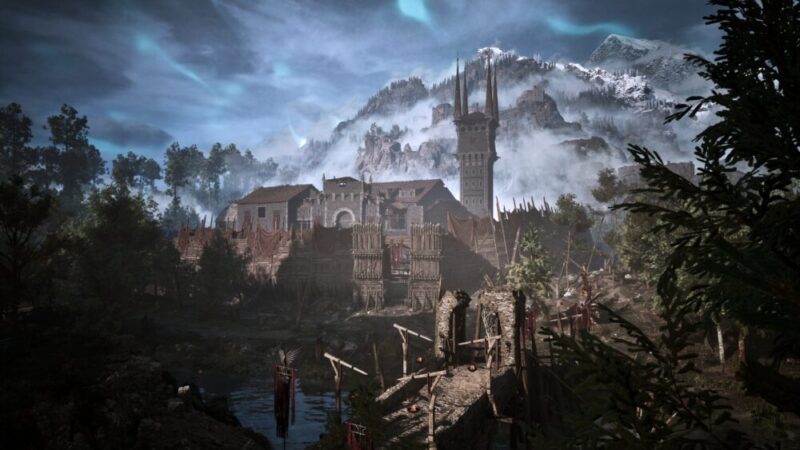
The opening setup provides all the narrative momentum needed to hook you. Spellcasters have sealed off a penal colony with a magical barrier to contain escaped convicts. Because the area is rich in critical magical ore, the King and the convicts strike a tense economic arrangement to keep resources flowing.
Your journey starts at the edge of this border: thrown inside with a letter to deliver, immediately threatened by local thugs, and saved by Diego, a charismatic friend who suggests heading to the Old Camp.
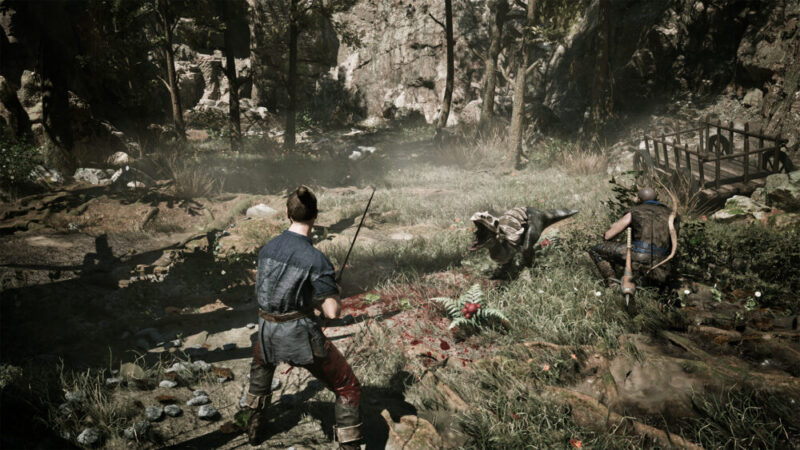
From there, the world opens up across three distinct factions: the Old Camp, the New Camp, and the Swamp Camp. How you navigate these groups is up to you, but earning favour with at least one is essential for securing armour, respect, and a foothold in this unforgiving world. There is a whole lot of learning to get to these places, and most of it is trial and error.
It took a good few hours for me to really get past the zero hand-holding, no maps, no markers and truly just fumble my way around, following my nose.
Old-School Friction
If you’ve played early 2000s RPGs, the core loop here will feel familiar. We’ve seen a similar nobody-to-somebody progression in games like Kingdom Come: Deliverance, which famously drew inspiration from The Elder Scrolls: Oblivion and Gothic.
Operating from a third-person perspective, you’ll wield swords, pickaxes, bows, and magic to tackle monsters, orcs, and rival humans. There are plenty of consumables for health and stat boosts, alongside extensive crafting options. Quests emerge naturally through NPC conversations, but there is no default map, and even after purchasing regional maps from merchants, don’t expect objective markers to guide your way.
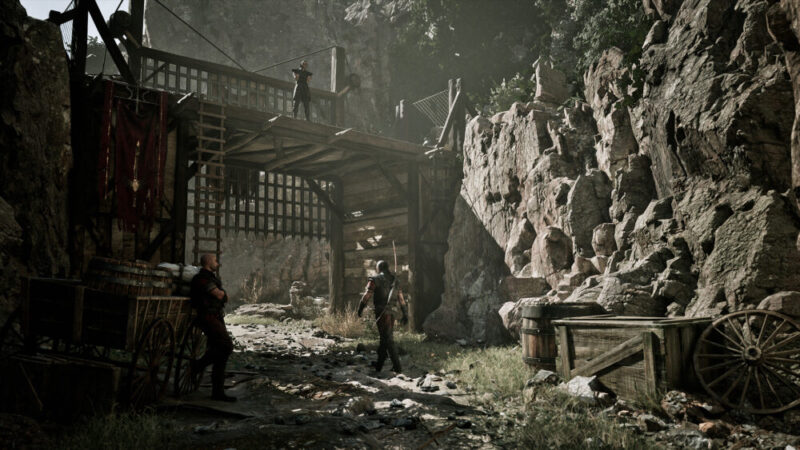
Adapting to this friction takes time. Navigating without a mini-map dotted with quest icons encourages genuine, organic exploration, but searching for a specific NPC across a massive camp can easily take 10 minutes or more. Similarly, the early-game power disparity keeps you cautious, but it may take up to five hours before you feel confident taking on basic fights or exploring new territory.
Reaching distant camps relies almost entirely on memory and landmark navigation. There is an immense value in this design; you feel genuinely clever when pulling off a trick or surviving a dangerous trek, and building your character from useless to formidable remains deeply satisfying.
Performance & Visuals on PS5
Visual fidelity and performance are natural focal points for a remake modernising a 25-year-old title. On PS5 Pro, the game offers standard performance options, and opting for the 60 FPS Mode over the 30 FPS Quality Mode is highly recommended.
The higher frame rate drastically improves responsiveness during fluid melee combat and tight dodges. An uncapped frame rate option is also present, though it introduces noticeable visual instability. It can dip low when the screen gets crowded, so locking it at the 60fps mode was my preferred way to play.
Out in the open world, some technical roughness remains. You will encounter occasional pop-in and minor visual glitches. Similar to other recent classic RPG overhauls, these quirks feel like part and parcel of preserving the original game’s underlying logic on modern engines.
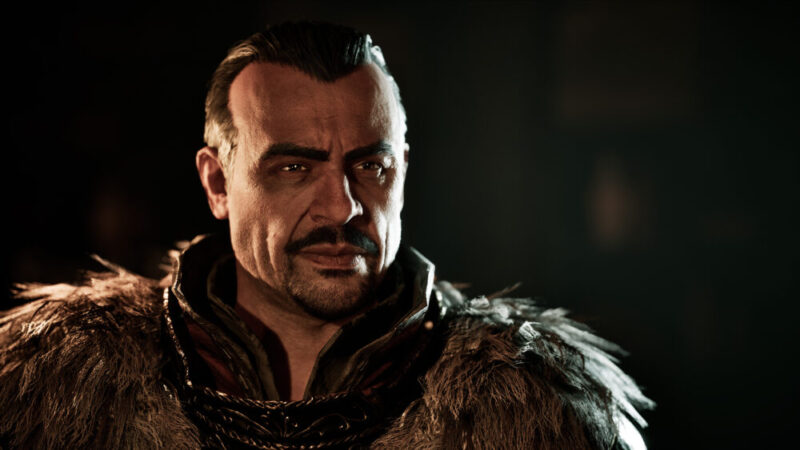
While it won’t ruin your experience, those expecting a flawless 2026 AAA polish will notice the seams. It’s not a complete gamebreaker; it puts it in the same lens as Oblivion, great games to reflect on and really push your limits as a gamer.
Audio & Immersion
Where Gothic 1 Remake truly shines is in its audio design and dialogue. The writing and voice work are raw, honest, and gritty. Characters talk down to you constantly, using foul, grimy language that fits the harsh reality of a convict colony perfectly.
The orchestral score is equally magnificent. Reaching a new location and hearing its atmospheric theme swell feels like a return to classic game design—where music builds a sense of personal discovery rather than acting purely as a cinematic movie score. Playing with a good headset enhances the atmospheric spatial audio significantly, making every trek through the wilderness feel grounded and weighty.
Final Thoughts
Gothic 1 Remake successfully revives a cult-classic franchise by preserving the uncompromising friction that made it famous. Fans of The Elder Scrolls or Kingdom Come: Deliverance will appreciate seeing the foundational mechanics that helped inspire those series.
The lack of hand-holding and presence of minor technical jank mean it won’t be for everyone, and searching for obscure NPCs can occasionally test your patience. However, give this game the time it demands, and it delivers a richly rewarding 40- to 50-hour RPG campaign that shows with the right care and restoration, any classic game can feel new again.


FOUR STARS (OUT OF FIVE)
Highlights: Atmospheric world-building; Fantastic orchestral score and gritty dialogue; Highly rewarding sense of progression
Lowlights: Minor technical pop-in on PS5; Deliberate lack of quest markers can occasionally lead to tedious searching
Developer: Alkimia Interactive
Publisher: THQ Nordic
Platforms: PlayStation 5, Xbox Series X|S, PC
Available: Now
Review conducted on PlayStation 5 Pro with a code provided by the publisher.
Featured header image also provided by the publisher.
