

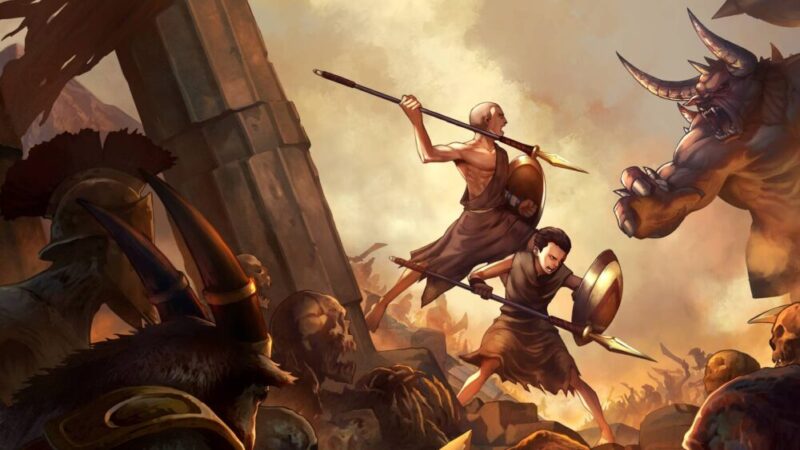
I began my gaming journey long before the God of War franchise launched in 2005, but since that very first game, I’ve felt it’s been an incredible and important staple, with many entries ranking among my favourite games of all time. Be it the setting, the storytelling, the memorable characters, or the gory action, it will never take much to draw me back into this world.
God of War Sons of Sparta was indeed a surprise, despite various unofficial rumours that had been circulating in recent months, regarding a new 2D God of War game. It’s a prequel nobody had really expected, but a shadow drop probably amplified the excitement at PlayStation’s most recent State of Play.
In many ways, God of War Sons of Sparta does its best to pay homage to the earlier chapters of the Greek-inspired franchise, with functional combat, an engaging story and plenty of exploration, even if it’s relying on pre-existing tropes to do so.
Blood Brothers
If you had played previous God of War games like Ghost of Sparta or Chains of Olympus, you might remember a few of the main players in Sons of Sparta. To kick things off, we actually get the original Kratos voice actor, TC Crason, to voice an adult version of Kratos, as he tells his daughter Calliope the tales of his upbringing and training with his brother Deimos at his side.
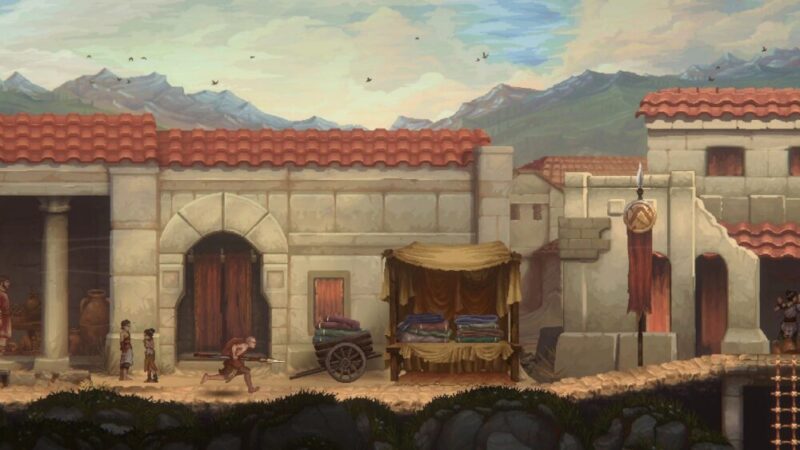
The story generally follows a young Kratos and Deimos as they set off to find a missing student of the Agoge, otherwise described as the vigorous training that Spartans go through, starting from a very young age.
The story itself is generally fine, but I wish it spent a little more time in its earlier hours developing and strengthening the connection between the brothers, as the relationship really takes a back seat until the second half of the story. It does get much better and is more emotionally dense and rewarding, I just wish it were a little more balanced.
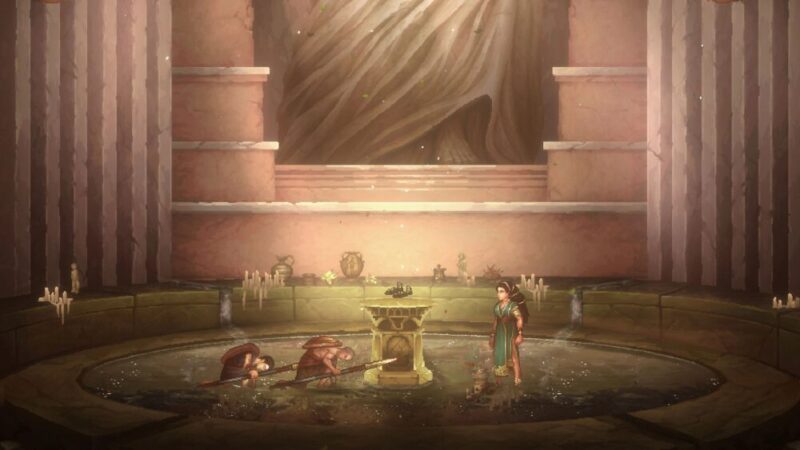
The story itself is relatively focused, although you are able to take on certain side missions and hunt for collectables, which help you earn new abilities for both Kratos and his equipment. You’ll get the chance to experience most of the map this way, and it’s relatively diverse, complete with various types of environments that generally require you to round out your unlockable abilities in order to proceed, in classic Metroid–Vania style.
The only real gripe I had with the story, apart from the overall narration from an adult version of Kratos, is that these characters don’t really feel like the ones we will come to love in the original God of War games. Kratos is disciplined and focused, but ultimately kind and thoughtful, even in his conversations with Calliope. Without the pale, ashy skin and those red, tattooed scars, the detachment feels inevitable, with only things like character names, familiar menus and a Kartos’ voice to help us feel connected to the franchise.
Ready Your Spear
From a gameplay perspective, Sons of Sparta is definitely functional, and at times, plenty of fun. Initially, you’re armed with your trusty spear and shield, which is generally enough to get the job done. Your spear can be upgraded by collecting various materials, which can enhance its effectiveness in combat.
The shield can also be upgraded, although it bears mainly defensive abilities to block and parry enemy attacks. Beyond this, Kratos can also roll around to dodge attacks or simply gain advantageous positions behind enemies. You’ll generally need to rely on this too, as some enemies dish out attacks that can’t be blocked or parried.
Kratos will have access to not only regular attacks, but special Spirit Attacks, made possible thanks to a Spirit gauge. These attacks deal more damage to stronger enemies and will also increase their stun metre, making them susceptible to a finishing attack. It’s a solid balance between the familiar prompt from the original God of War games, with the more in-depth health bars above enemies from the newer 2018 reboot.
Either way, you’ll need to find and smash various crates and vases, open chests, and smash rock-like pillars to top up your Spirit gauge, adding depth to exploration.
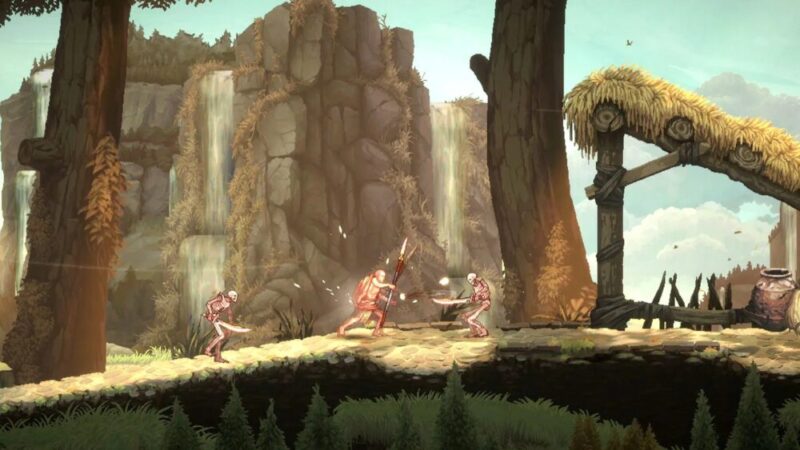
Combat does feel a little too straightforward in the opening hours, but I’ll give Sons of Sparta credit here, as most of the noticeable improvements come from upgrading the head, grip and base of Kratos’ spear, which each add to their own effectiveness against enemies. The head of the spear can cause certain passive or elemental damage to enemies while you spam attacks, while the grip of the spear allows you to unlock new finishers.
The base of the spear, however, will give you access to entirely new moves in addition to your standard moves. The game doesn’t really highlight it initially, but actually acquiring these upgrades as you find campfires, which also allow you to save your progress, is incredibly important.
Other unlockable abilities and upgrades do impact broader gameplay in significant ways, usually for the better. You’ll find these abilities simply by progressing through the game, beating bosses and completing missions. They’re all relatively straightforward, but I do question how long it takes to get them, or wonder if there’s any real order to obtaining them.
The Celestial Step ability, for example, which acts as the game’s basic double jump ability, was granted much later than I would have expected for a platforming game such as this. It was so much later, in fact, that I thought the game was just planning to leave it out altogether.
Keep in mind, however, that certain abilities like these will drain your Magic gauge, which must also be managed, like your Spirit gauge, by gaining Magic Orbs from fallen enemies or by attacking special rock-like structures that hold them.
Finally, players can collect Blood Orbs, which will feel familiar to fans of the original God of War games. These orbs act as currency to help unlock new core abilities, which help bolster offensive and defensive combat.
For example, unlocking the Vanguard II skill will increase the force of your attacks, which push enemies further away and create space between attacks to enable more efficient blocks, parries, and dodges. They feel minimal at first, but as they compound over the game’s 15-20 hours, they do feel incredibly important and useful.
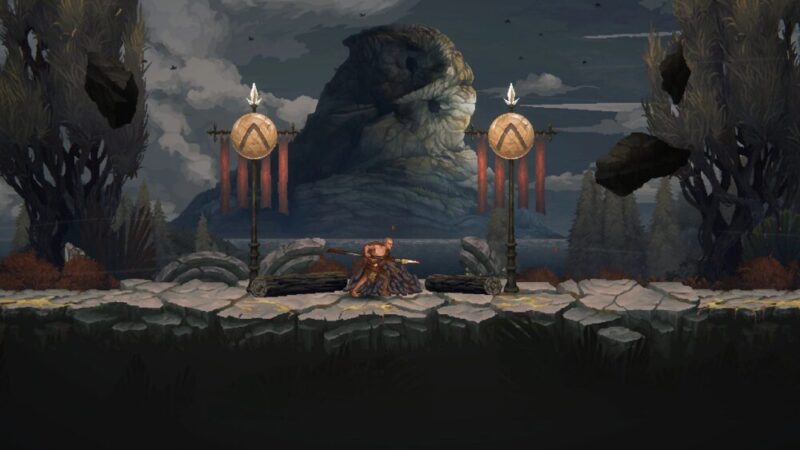
An issue with broader combat, though, stems from two main issues. Firstly, the lack of both heavy and light attacks makes combat feel a little too repetitive, particularly in the game’s earlier hours. There’s something so satisfying about the original game’s massive combo lists, and how the systems encourage you to utilise both types of attacks until you can finish off an enemy.
Secondly, I personally found it annoying how enemies don’t really telegraph attacks for Kratos to parry. Attacks definitely can be parried, and it’s certainly satisfying to do so, but as enemies glow a certain colour like blue or red when attacks can’t be blocked or evaded, it makes me wonder why there’s no standard colour for parries. It’s particularly annoying when characters overlap, blocking these attack animations, which can be hard to see in the first place.
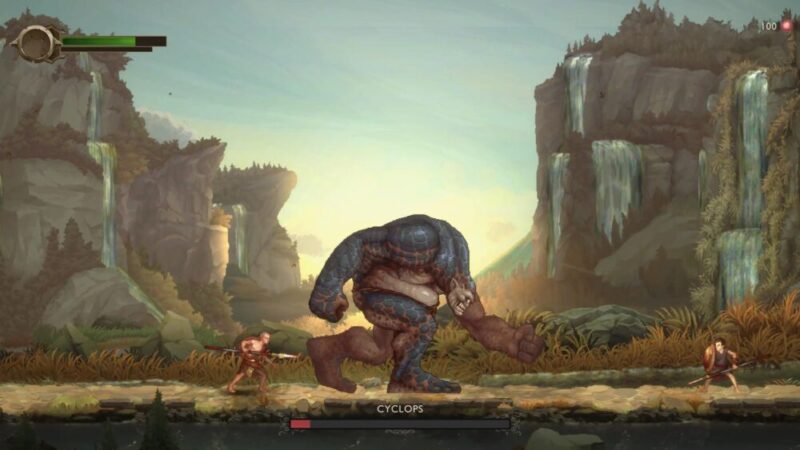
Overall, there’s a fair amount of abilities and mechanics at play here, complete with a certain amount of exploitation to help utilise them all.
The only issue here, if you see it that way, is that Sons of Sparta is building with these existing blocks, in such a way that makes them feel almost too familiar, and then unfairly compared to the age old greats, like Castlevania: Symphony of the Night, or even modern favoriutes like Metroid Dread or Prince of Persia: The Lost Crown.
These games simply added more of their own flair to the equation, which made them feel a little more inspired as a result.
Look the Part
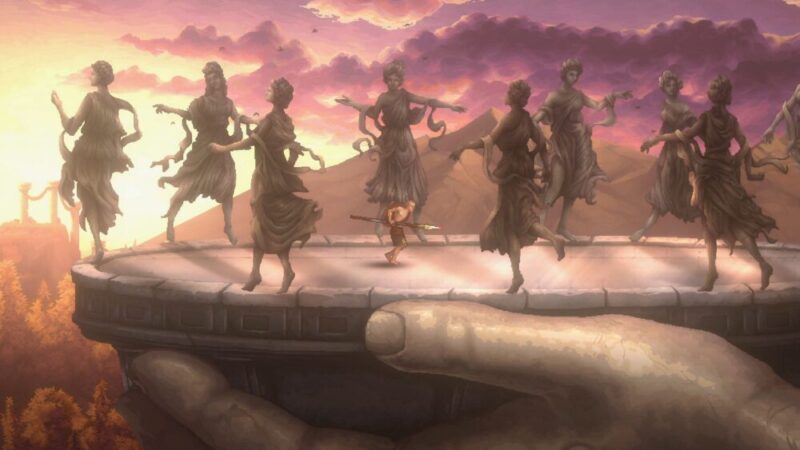
I like the way Sons of Sparta looks for the most part, even if the pixel art style bears no real resemblance to other games in the franchise, unless we’re counting the 2007 mobile game, God of War: Betrayal. It’s clean enough, even if the colour palettes, at times, feel a little flat. Given there are so many cool and unique environments to explore, it makes some of the more consistent environments like Sparta feel a little lifeless.
Most backgrounds, though, are incredibly detailed and add depth to most of these locations, which is definitely a huge plus.
The soundtrack is also just okay, and I’m a fan of the more epic instrumental beats, but I was ultimately puzzled over the more retro-infused segments that make the entire arrangement feel off balance. Make no mistake, this has been composed by Bear McCreary, who composed 2018’s God of War and God of War Ragnarök. They are two of the finest and most awesome video game scores you can subject your ears to, and I just wish we got a little more of them here. I get that those scores were inspired by Norse mythology, but that doesn’t make them any less epic.
Sons of Sparta does remove all of its gore and violence, the series is known for, so I’m simply wondering if the pixel art style and retro-infused soundtrack were put together in an effort to make this more appealing and accessible to a wider audience.
It looks decent enough, but it just doesn’t look like the franchise it’s serving as a prequel to, and I think that’s really all there is to it.
Final Thoughts
I’m not trying to bash on God of War Sons of Sparta even if it might sound like it, because I really do believe there’s a decent game here. It’s incredibly functional, and its gameplay deepens with time, along with the story.
I just wish it were more in tune with all of the tropes that the franchise itself had utilised all those years ago, instead of pulling from pre-existing tropes from other Metroid-Vania experiences.
Even then, the God of War games are ingrained into modern gaming history, and the examples of what to adapt are essentially laid out across various generations and consoles; I just wish we got more of it here.


THREE STARS (OUT OF FIVE)
Highlights: Functional combat; Plenty of unlockable abilities; A decent story deepens over time; Clean visuals
Lowlights: Feels detached from the main franchise at times; Earlier hours of the story pale in comparison to its later hours; Retro-inspired soundtrack misses the mark
Developer: Mega Cat Studios, Santa Monica Studio
Publisher: Sony Interactive Entertainment
Platforms: PlayStation 5
Available: Now
Review conducted on PlayStation 5 Pro with a launch code provided by the publisher.
Featured header image also provided by the publisher.
