

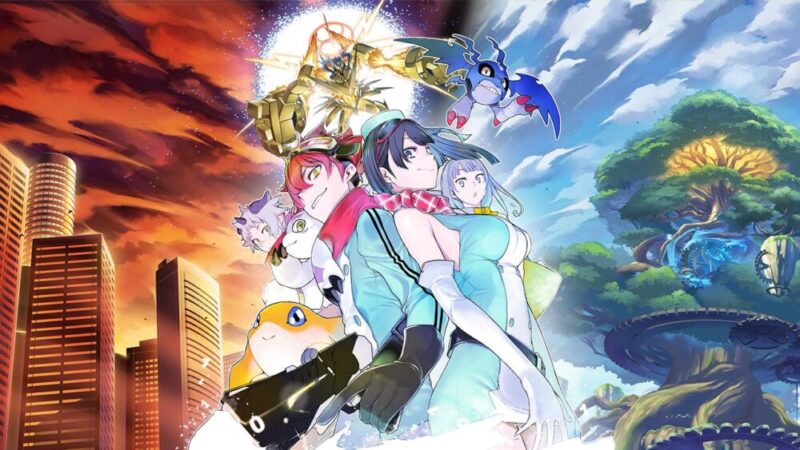
While both were prominent in the 90’s and early 2000’s while I was growing up, there’s no doubt that Pokémon and Digimon always went hand in hand. It’s not to say that one copied the other, and while Pokémon came out first, I felt as though I was always watching one anime show after the other each morning before school, playing with both Digimon and Pokémon toys after school, and playing both games on my PlayStation and Game Boy Colour in between.
Comparisons aside, it’s worth noting that I’ve actually fallen off Digimon in recent years, favouring the Pokémon games for that turn-based RPG fix. While I’m not a massive fan of the genre, I do believe that Digimon Story Time Stranger is a fantastic experience in its own right, maximising the effectiveness of existing tropes while nailing its own fresh spin and unique story.
While the game launched on PlayStation 5, Xbox Series X/S, and Windows PC back in 2025, it has only just been released on the Nintendo Switch and Nintendo Switch 2. We’ll be reviewing the Nintendo Switch 2 version specifically.
A Tale Through Time
Digimon Story Time Stranger seems confusing at first, but falls into a nice groove as the hours progress and the stakes get higher. You play as an agent of the secret organisation called ADAMS, named either Dan or Kanan, although you can briefly customise your character here too. Your story begins with a rather direct and packed introduction, which sees you taking your Digimon into battle as various anomalies, mainly the Shinjuku Inferno, wreak havoc on Japan.
After a hectic handful of battles that get you to grips with the concept of Digimon and the game’s basic mechanics, you are whisked away into the past. Having gone back eight years in time, you must weave between the real world and the new digital world of the Iliad (yes, the same Iliad as the one from Greek mythology), as you try to stop the same events from ever occurring.
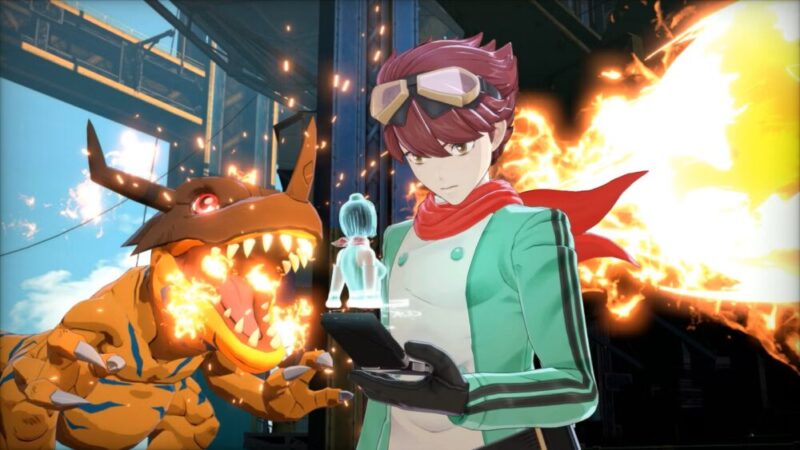
What follows is a largely winding tale that slowly reveals its layers, asks for a fair amount of patience, with some relatively satisfying payoff towards the end. Make no mistake, this is a massive story that clocks in at around 40 hours, and while the game’s pacing isn’t quite perfect near the beginning, it all feels worthwhile.
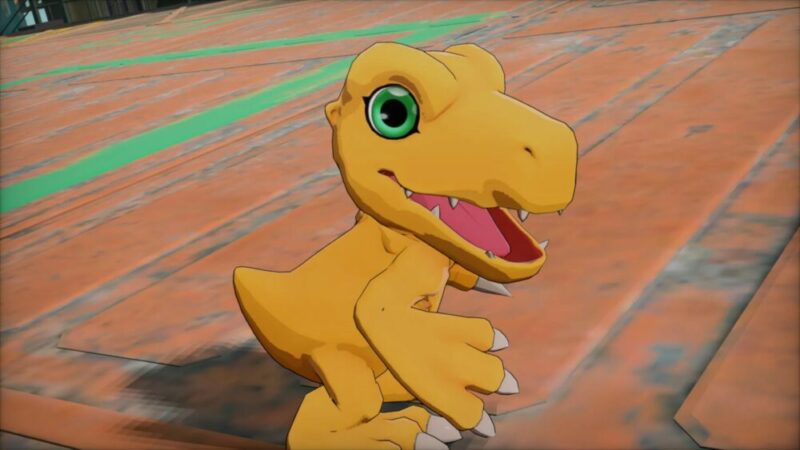
I had fun with the large cast of unique Digimon-focused supporting characters, but some certainly feel more important than others. You will certainly befriend an impressive amount of aforementioned Digimon (Patamon, you will always be my favourite), while the humans unfortunately feel slightly less interesting and bland; although, I had fun with Kosuke Misono’s bumbling personality early on.
But beyond all this, Digimon Story Time Stranger succeeds at building two unique worlds and raising the stakes adequately between each of them. While I would rather not spoil the story’s true motivation, I will say it’s one worth pursuing.
A Digital Age
General gameplay feels like any other turn-based game for the most part, but I would argue that’s not so much of a bad thing. You’ll be able to befriend and utilise a whopping 476 Digimon (although some are only available via DLC), which are dealt to you rather evenly throughout the course of the narrative.
You’ll encounter various Digimon in each environment, as running into them triggers a battle. You’ll then be able to use a standard Attack command, Guard to minimise the damage dealt by your enemies in the next turn, use specific Skills, each with their own strengths and weaknesses against certain Digimon, and the ability to Change between various Digimon in each battle, for managing other allies in reserve within your collection.
Like any good turn-based RPG, it’s the pursuit of finding and exploiting your enemies’ weaknesses to get the job done. In Digimon Story Time Stranger, you’ll also be able to use your Digivice to scan various Digimon, which, over time, will deal out additional information about that Digimon. This will include their preferred attacks, helping you defend against their onslaughts, as well as various strengths and weaknesses to gain the upper hand.
For the most part, I had fun finding and battling new Digimon for this very reason, as the Digivice does a great job of helping you learn as you go.
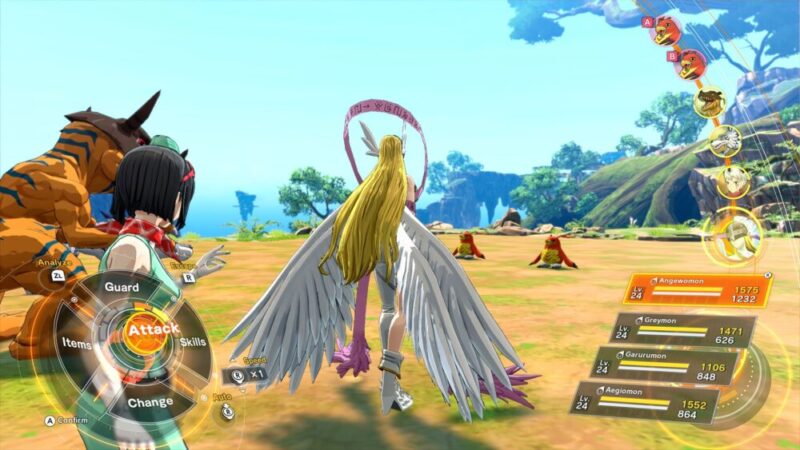
As Digimon are made up of physical matter as much as digital matter, the need to find and scan Digimon also enhances your Convert process, which essentially allows you to learn enough about them to the point where you can then create them and add them to your own collection. This makes most battles feel like multi-layered pursuits of discovery and survival.
Finally, your agent can also use their Cross Art move, a more powerful and sometimes devastating move that is gained as you accumulate CP points through each battle. These Cross Arts can do a range of things, including boosting your Digimon’s defences or attacks, and even healing or boosting all the stats of your allies for a certain number of turns. There’s an impressive skill tree here too, which allows you to unlock and interchange various Cross Arts as you progress through the narrative.
If that wasn’t enough, you’ll even gain Attachment Skills to assign to and help upgrade your Digimon. It’s a fantastic system that allows you to stick with your favourite Digimon as they evolve throughout, but also feels important enough to want to stack the right skills with the right Digimon for the best results. These can even affect your Digimon’s elemental attacks for advantages in battle. Equipment can also be assigned to various Digimon to boost their stats, which ultimately comes in handy.
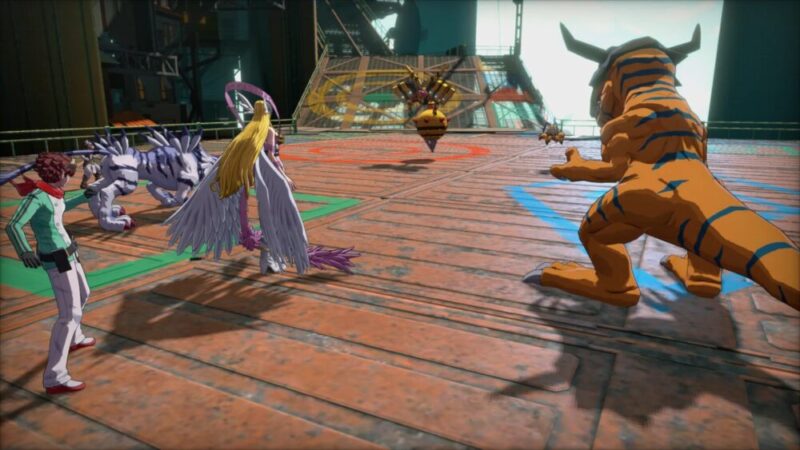
While none of this feels particularly new, it all comes together in such a way that feels consistently satisfying and rewarding, making each encounter one of many worthy of opportunities to develop your Digimon.
Look the Part
On the Nintendo Switch 2, Digimon Story Time Stranger looks great. I always aim to prioritise frame rate where possible, and thankfully, the experience gives you the choice. A Quality Mode will give you a 4K resolution at 30 FPS, while a Performance Mode will give you a 1080p resolution at 60 FPS. While the latter option is certainly the way to go in handheld mode, either option runs incredibly well when docked. As it’s a game not determined by crazy response times and moment-to-moment action, you could certainly get away with either setting.
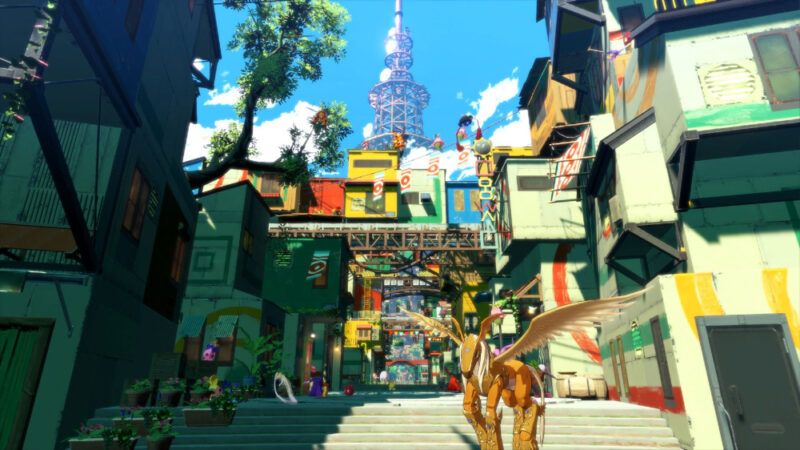
While docked, however, I can’t deny how good the Quality Mode does look. The anime style is friendly enough for the platform that it can bring out a significant amount of detail and even some impressive draw distances without ever compromising the performance. Iliad is also an incredibly dense and vibrant world, which is a huge talking point considering you’ll spend most of your time here.
Either way, I’m impressed with just how well the Nintendo Switch 2 handles both modes.
Final Thoughts
Overall, Digimon Story Time Stranger is a largely positive and satisfying experience that excels in telling a unique and complex story, while relying on certain gameplay tropes that only bolster its satisfying turn-based encounters.
Each battle feels important, as the story continues to ramp up throughout its runtime, making its slower opening hours an easy flaw to forgive.


FOUR STARS (OUT OF FIVE)
Highlights: Unique and complex narrative; Solid performance and visuals; Each encounter feels valuable and rewarding
Lowlights: Slower opening hours hurt the narrative’s pacing; Familiar turn-based gameplay won’t win over those who aren’t already fans of the genre
Developer: Media.Vision
Publisher: Bandai Namco Entertainment
Platforms: PlayStation 5, Xbox Series X/S, Windows PC, Nintendo Switch, Nintendo Switch 2
Available: Now
Review conducted on Nintendo Switch 2 with a code provided by the publisher.
Featured header image also provided by the publisher.
