
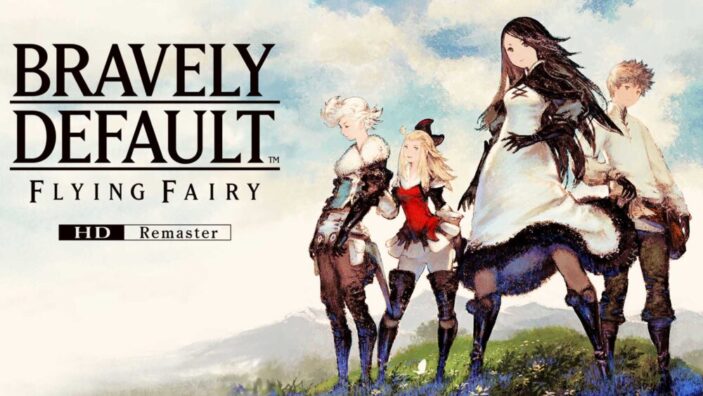
Nothing could have prepared me for the full weight of Bravely Default: Flying Fairy HD Remaster on Nintendo Switch 2. I knew going in that it was an enhanced re-release of a cult-favourite Square Enix RPG originally on the 3DS. I knew there would be tactical turn-based battles, branching strategies, and a Job system built to let you experiment endlessly. What I didn’t expect was just how much of an emotional and time-consuming epic I was stepping into.
Over my time with it, the game put me through a rollercoaster—moments of pure triumph, stretches of grinding frustration, and dozens of smaller victories that reminded me why I love this genre. By the end, I was impressed, exhausted, and convinced this is one of the most rewarding—yet demanding—JRPGs I’ve played in years.
A Familiar Story Told with Heart
The adventure unfolds in Luxendarc, a picturesque world overseen by the Crystal Orthodoxy, a religious order tasked with guarding four elemental crystals. When darkness engulfs these sacred relics, the duty of restoring them falls to Agnès Oblige, the Vestal of the Wind Crystal. She’s joined by Tiz Arrior, the lone survivor of a village wiped off the map; Ringabel, a roguish amnesiac with a flair for theatrics; and Edea Lee, a soldier who defects from her empire to fight for the greater good.
It’s a story steeped in classic Final Fantasy-style world-saving heroics—unsurprising, given that Bravely Default began development as a spiritual successor to Final Fantasy: The 4 Heroes of Light. What elevates it is how well its characters are written and voiced.
- Tiz is the moral compass, earnest and deeply human.
- Agnès is dutiful but stubborn, with a single-mindedness that often clashes with others.
- Ringabel is all pomp, flirtation, and hidden depth.
- Edea is blunt, pragmatic, and sharp-witted, shaped by her military upbringing.
Their group chemistry is the heart of the game. Banter during downtime adds warmth and humour, while dramatic moments carry genuine weight because you’ve come to know these people. And as the story unfolds, backstories deepen, relationships shift, and the stakes rise beyond simply “saving the crystals.”
Pacing: From Smooth Sailing to Heavy Grinding
The early chapters are a joy—Chapter 1 in particular strikes the perfect balance between introducing the mechanics, letting you explore, and giving you a taste of the high stakes. By Chapter 2, the game is in full swing, with steady plot reveals and boss fights that test but don’t overwhelm.
From Chapter 3 onwards, however, the pacing slows dramatically. Certain bosses are punishing enough that you’ll need to grind levels, hunt for specific Jobs, or unlock niche abilities before you stand a chance. It’s not unusual for JRPGs to demand a little grinding, but Bravely Default sometimes pushes this to the point where story momentum stalls for hours at a time. By the time the credits rolled, I felt the length more in my bones than in my save file.

Visuals: Nostalgia with Modern Polish
In both handheld and docked modes, Bravely Default is gorgeous. The pre-rendered backdrops—especially in major cities like Caldisla—evoke the painterly charm of PS1 classics like Final Fantasy VII or Resident Evil. Every street corner and cobblestone feels like part of a diorama, with an attention to lighting and texture that breathes life into the world.
That said, the character models tell a different story. While serviceable, they lack the fine detail you’d expect from a Switch 2 exclusive. Faces aren’t as expressive as they could be, and the models feel closer to a polished 3DS asset than a fully modern remake. It’s not a deal-breaker, but it does create an odd mismatch between the lush environments and the figures inhabiting them.
Voice Acting and Music: A Winning Combo
The voice acting here is top-tier. Each lead’s voice fits their personality like a glove—Tiz’s gentle sincerity, Agnès’ refined aristocracy, Ringabel’s flamboyant pomp, Edea’s clipped and commanding tone. The performances help sell the emotional beats, making even side conversations feel like meaningful interactions rather than filler.
The soundtrack is nothing short of spectacular. Echoes of Final Fantasy and Dragon Quest are woven into an identity that’s all its own. Exploration tracks are warm and inviting, carried by woodwinds and gentle percussion. Battle themes are propulsive, with urgent rhythms that make even minor fights feel tense. And the boss themes? They’re heavier, darker, and pulse with a sense of real danger. This is one of those JRPG soundtracks that you’ll want to revisit long after the credits roll.
Combat: Brave, Default, Conquer
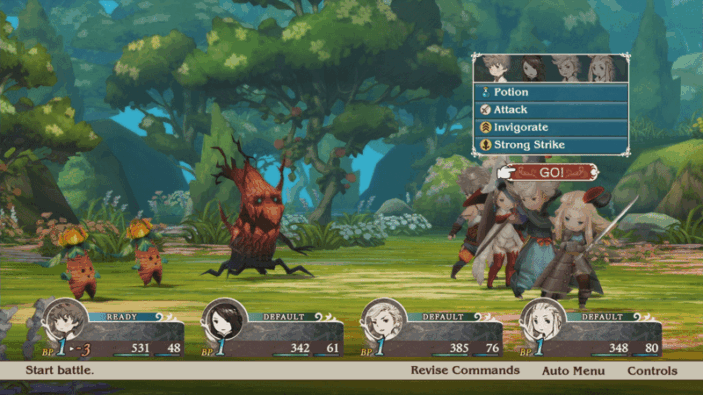
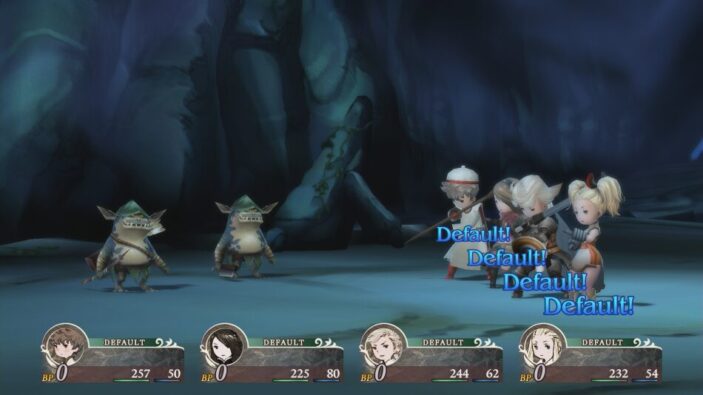
At its core, Bravely Default is a turn-based RPG, but its Brave/Default mechanic is a masterstroke of design.
- Default lets you defend for a turn, taking reduced damage and banking a Brave Point (BP).
- Brave lets you spend BP to chain multiple actions in a single turn.
You can gamble BP you don’t have for early bursts of offense, but doing so leaves you unable to act for multiple turns—a risk that can cost you dearly. It’s a beautifully balanced push-pull system that rewards foresight and punishes recklessness.
Layered over this is the Job system, which offers a buffet of combat styles. Black Mages rain elemental fury, Hunters pick off enemies from range, and countless other Jobs bring unique perks and skills. As Jobs level up, they unlock support abilities that can be equipped across roles—stacking bonuses, resistances, and special effects to suit your playstyle. The experimentation this encourages is one of the game’s biggest strengths.
Items and special attacks add further layers. Certain consumables can devastate enemies with the right elemental weaknesses, while weapon-based special moves require fulfilling specific conditions—like Defaulting a set number of times—before unleashing them. You can even modify specials to target particular enemy types, letting you prepare surgical strikes against late-game threats.
Switch 2 Extras and Mini-Games
This HD Remaster adds a couple of light-hearted diversions unique to the Switch 2.
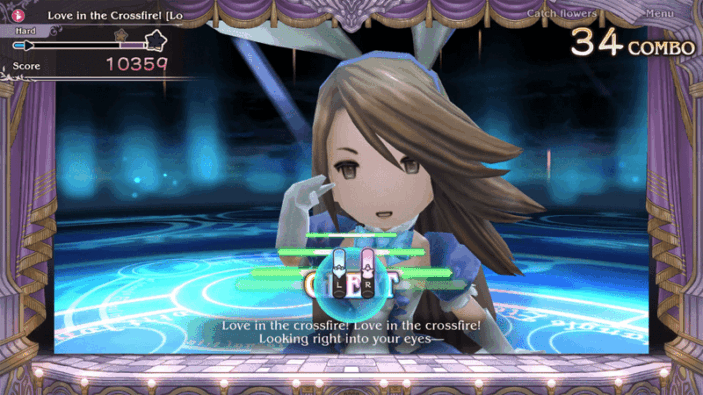
- Luxencheer Rhythm Catch: A Joy-Con-controlled rhythm challenge where you hit cues in time with the music.
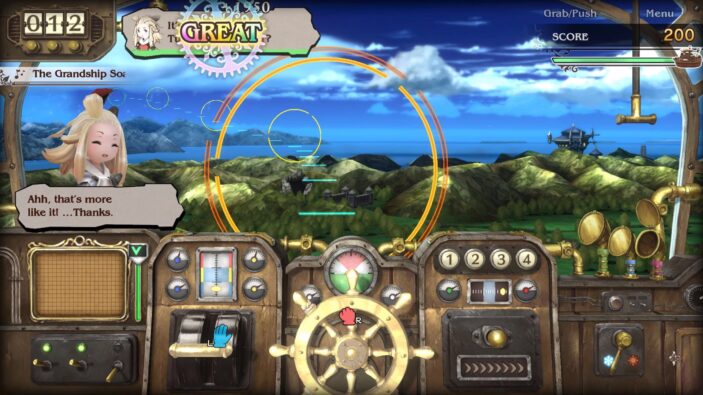
- Ringabel’s Panic Cruise: An on-rails airship sequence that feels like a nod to Star Fox 64, with enemies to shoot, valves to fix, and altitude to manage.
Neither mini-game is a showstopper, but they’re a welcome change of pace, offering moments of levity between the heavier beats of the main quest.
Where It Falters
Two main issues hold Bravely Default back from outright greatness:
- The Grind – Progression in later chapters can feel like an endurance test. When a boss demands a specific Job’s skill set and that Job is locked behind a side quest, you’re looking at hours of detour before you can even attempt the fight again.
- Dated Character Models – The environments are beautiful, but the character models lag behind in detail, robbing some emotional scenes of their full impact.
Final Thoughts
Bravely Default: Flying Fairy HD Remaster is a lovingly crafted return to a style of RPG we don’t see often enough—thoughtful, strategic, and unafraid to demand patience from its players. The combat is deep and satisfying, the characters memorable, and the soundtrack destined for genre-classic status.
Its pacing stumbles, especially in the grind-heavy later chapters, and its visuals don’t always push the Switch 2 to its limits. But for those willing to invest the time, the rewards are immense.
At $59.95 in Australia, it’s a generous package brimming with content. If you’re craving a JRPG that respects old-school sensibilities while adding modern conveniences, this one’s worth the commitment.


FOUR STARS (OUT OF FIVE)
Highlights: Fantastic narrative and voice performances; Gorgeous visuals; Addictive gameplay.
Lowlights: Grinding for hours can be loborious, Character models feel a little outdated still.
Developer: Silicon Studio/Cattle Call
Publisher: Square Enix
Platforms: Nintendo Switch 2
Available: Now
Review conducted on Switch with a release code provided by the publisher.
