

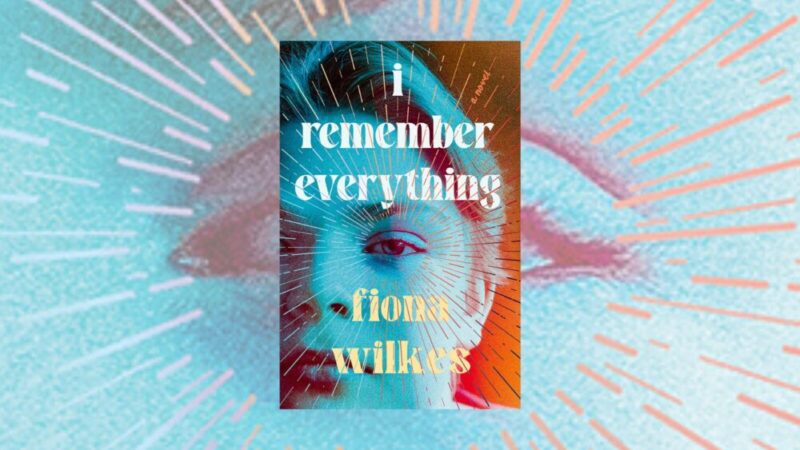
It is a surprise that I Remember Everything is WA writer and researcher Fiona Wilkes’ debut novel – it is, after all, a tale told with so much skill, passion, and delicacy. Shortlisted for the 2024 City of Fremantle Hungerford Award, it is a bittersweet story of love and loss, religion and forgiveness. It is rich with emotion, vibrant prose and complex characters.
Though I Remember Everything is fiction, it is told in the manner of a memoir. Our protagonist, Billie, is an older woman – happily married to a woman, with a teenage child and a successful career. But, in her younger years, what many would consider the prime of her life, she saw death and tragedy. She saw the AIDS crisis, saw it rip through her once inseparable group of friends until she was one of the few that remained. Now, as the COVID-19 pandemic brings all those terrible memories back to the surface, she resolves to sit down and finally put them all down in a memoir – all the bad moments, and all the good.
The majority of this tale is set in the past – Billie’s childhood and departure from her hometown for the big city, the firm friendships with the people she makes there and the wild parties she holds with them, and then, all of a sudden, the arrival of the AIDS crisis. The slow deaths of those same friends. Interspersed within these tales are visions of the future, but beyond them there is a reflective quality to the story, a constant sense of looking back. Even those first moments of happiness are haunted by a knowledge of what is yet to come, and acknowledgement that this joy is fleeting. And all too soon, it ends.
The novel is tragic, yes. In keeping with the very real experiences it is based on, it is filled with tales of needless death, of young people taken before their time or abandoned by their families for being who they are. There are times when it is a hard read, where the weight of all that emotion feels too much. But this novel is also strangely reassuring. Even victorious at times, despite it all. While it delves into the trauma of the AIDS crisis and its lasting impact, it does not wallow in despair. Instead, this is a story of recovery and of hope.
It is a reminder of the struggles that the queer community has gone through, but also a reminder of how far we have come. Those who we lost along the way, and those who are still here. It is a point of connection between those who came before us, and those who are yet to come.
Though what underpins I Remember Everything is a sweeping cross-generational story, what is laid upon this foundation is just as crucial, and it is in these details that the story succeeds. The drawn-out or surprisingly sudden deaths of our protagonist’s friends are neither sanitised nor sensationalised; sometimes they are messy, other times quiet, other times unseen entirely. It’s not a clean and tidy tale – it is one that explores all the little details of this disease not often talked about. The cleaning regimes, the dirty requirements of at-home care, even the at-times unkind frustrations and needs of the sole person left to care for those who are suffering.
It feels authentic, raw and bleeding. Though there are still some elements that feel a little too tidy or even on-the-nose, for the most part it is complex enough for these characters and their tale to feel compelling and real, while still remaining neat enough for the novel to feel satisfying.
Just as the title suggests, I Remember Everything is a book which is hard to truly forget.


FOUR STARS (OUT OF FIVE)
I Remember Everything by Fiona Wilkes is out now through Fremantle Press. Find a copy at your local bookstore HERE.
Header image supplied by Fremantle Press.
