
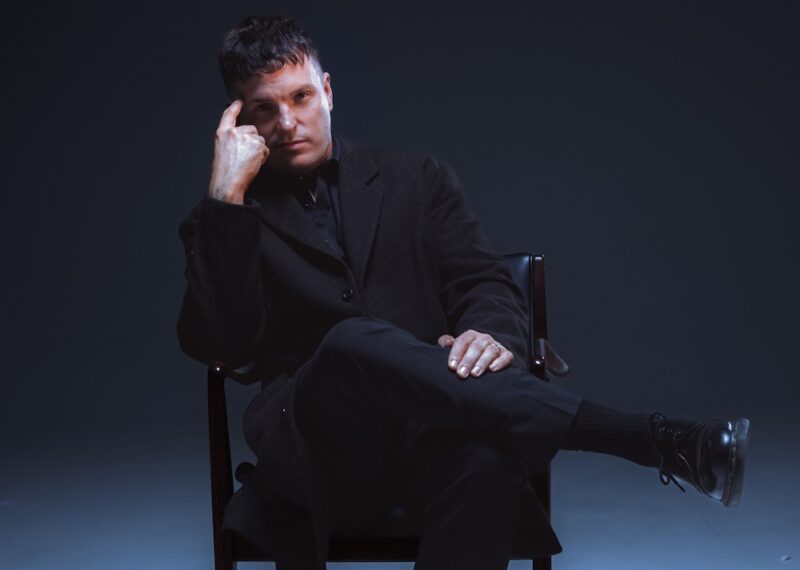
Matt Tarrant is a highly regarded magician, mentalist, producer, creator, and performer. He has recently taken the role of Chair of the Adelaide Fringe Foundation. We spoke to him about what the Foundation provides for artists and venues and how it fits into the Adelaide Fringe.
Congratulations on your appointment as the Adelaide Fringe Foundation chair. What does that involve, and what does that mean for you now?
The Foundation was set up a number of years ago, and it basically helps to raise funds as part of our philanthropic side of the Adelaide Fringe. Our aim is basically to raise as much money as we possibly can, either through gifts and wills or the Donor Circle. We also have a Giving Day throughout the Fringe as well, where we try to generate those one-off donations. All of those funds go to making this festival the most accessible it can be.
That’s done by three sorts of ways. We have Adelaide Fringe grants that support the artists themselves. There’s also a subset of marketing and digital marketing from that, and some mentorship. Then there’s an additional side where we support the community to actually go and see shows. We basically donate tickets to organisations and to families that might not be able to afford to go see shows. On top of that, there’s also the element of making the festival as accessible as it can be in regard to providing things like an Auslan interpreter.
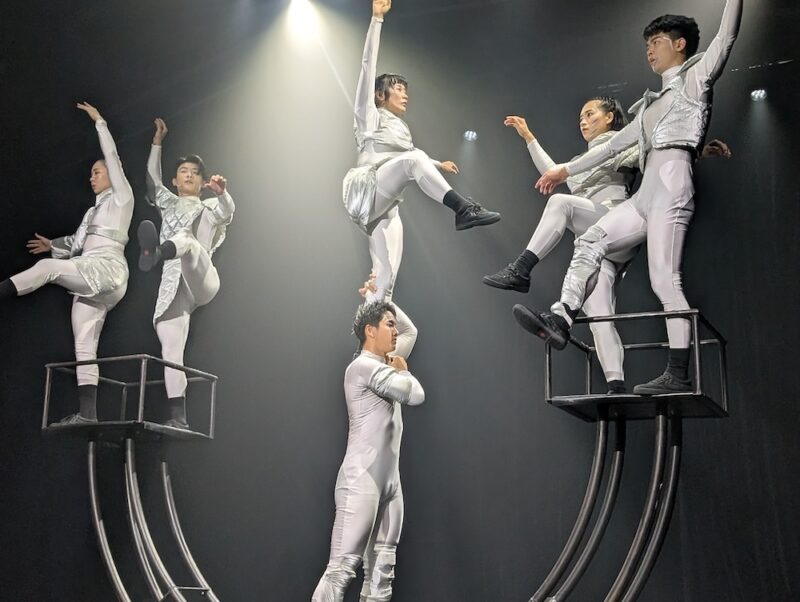
I think I’m pretty biased, but I think Adelaide Fringe Festival is one of the best festivals you could wish for.
I’m as biassed, and I feel like that’s one of the hopes of the Foundation, to make sure it stays that way. It’s always been a pretty accessible festival, but as the world is getting harder and harder for a lot of people, we’re wanting to ensure that it stays that way. The festival itself obviously does receive some funding; but it’s not for profit. It just allows us that extra additional funding that can really be hyper-focused on ensuring that we are accessible, and that upcoming artists aren’t impacted. They don’t have to say no to doing the fringe because they can’t afford to do it. We don’t want the financial side of things to get in the way of that decision.
How many artists would you be able to support in a year?
Well, this year, on the Fringe website, we have all of our 2026 grants. From memory, there’s around 200 or so, that includes both artists but also includes production companies. It does include some venues as well. It’s maybe a little bit over 200 in 2026 and that number’s been growing every year. Support can range anywhere from a digital marketing package of a few $1,000 to help to promote their show. It might be they get a producer for three to six months leading up to the festival on top of some cash to support their Fringe launch. It could be a $5000 to $10,000 grant, which is just kind of what you need to put your show in the venue. A venue might say, “Hey, we need our venue to be more accessible. We want to put together a ramp, and the ramp is going to cost us some amount of money,” and we can basically fund that.
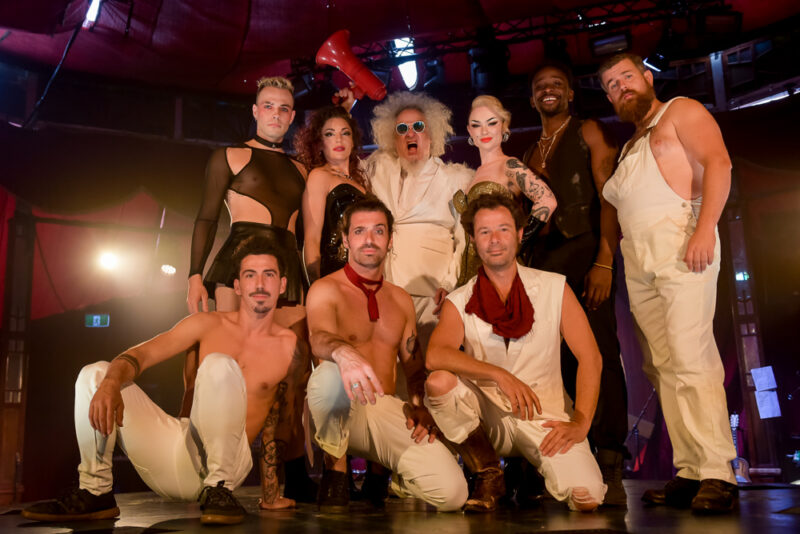
I know that the Fringe has just grown, and you sometimes hear people complaining that the Fringe has got too big. Is that a valid complaint?
I think it’s really hard thing to work on what the best solution for that is. I guess by definition of Fringe it’s open access and anyone can do
It. We’ve never wanted to put a limit on how many artists, how many shows, how many venues can do the Fringe, because that kind of goes against what the Fringe is. I think that there is a valid discussion in regard to some shows have maybe become too big for the Fringe, but then again, I always go back to that argument of there’s no definition of what success is. Like, once you sell a million dollars, you’re no longer able to do the festival. I don’t quite know how we would do that.
The festival just continues to be the most successful it can be, and to do that, we recognise that, like the Edinburgh Fringe, we need to grow outwards as well. South Australia and Adelaide support us, and we hope they always will, but we are going to have to look at increasing our audience numbers. We have to look at interstate; we do have to look overseas to see if we can bring those people in. When we do that, then the festival can grow, because the audience grows.
We can probably look over the last five years and see that the audience is growing, and we probably still do have room to grow within this state as well, getting people to go see to go see shows. It’s an ongoing balance, and there’s always going to be some people that will say that it’s getting too big and they’re having tough years. I think sadly, like any small business, there’s always going to be some shows that will have tough years and might not sell as well as they would like to.
One of the roles of the Foundation is to ensure that those shows, when that happens, are in a position where they haven’t had to financially stricken themselves to put on a show. A show that might be more challenging to an audience that maybe won’t be as mainstream commercial, they can still do a show and know that they’re not going to walk away and lose their house or the money they borrowed from their mum or whatever. That’s what we look to do through the mentorship, we have people that have had very unusual, strange shows that can help mentor these people. This is how I’ve made it work; I’ve made a show that was very unusual that is a success. Garry Starr is a great example of a show that’s very unusual, yet still financially makes money.
For yourself, having been a Fringe Award winner for many years, putting on your own shows, does that give you more sort of insight and empathy to what goes on behind the scenes?
Absolutely, but I think the one thing that I’ve always been very fortunate to have is a connection with a lot of artists from all different levels. I’ve done a lot of mentoring over the years, and I’ve done a lot of kind of free coffee catchups with artists, and kind of opened it up to whoever you are. Let’s get a coffee, and let’s chat about your show, and see if I can give you any advice to help. I’ve spoken to the biggest shows, I’ve spoken to the smallest by size shows, and I think that has really opened me up to the eyes and the ears of what challenges everyone is experiencing. It allows me at a board level now to explain those challenges as well.
We don’t want to have just the loudest voices being the ones that are necessarily the ones that are heard. We want to make sure that all the voices are being heard. I think the fact that I’ve been very fortunate to have a lot of voices at me over the years, and I’m still continuing to have those, I want that. It allows me that kind of extra experience to know that this is what some people might need.
Some of my favourite shows have been those little quirky ones in offbeat little side places. To me, is what Fringe is all about.
I remember I saw a guy who had, like, a basketball spinning on a little baby doll’s finger, looking at this going, is this a show, but it was great. It was probably that same year where we went and saw “A Boy with Tape on His Face”. Sam would have just been just starting that career in that role. Now to see him 20 years on doing a Vegas show, it’s just one of those things. We want to make sure that we can tell those stories in another 20 years’ time and have those same those new writers get that experience.
The good thing is that the Fringe seems to be expanding into the regional areas as well, although that must come with its own challenges.
Yeah, it does. I mean, we have been, for a number of years now, exploring, and wanting to grow as large as we can. Although we are the Adelaide Fringe, we are not just the two parks down the East End. There are other major hubs, there are other smaller hubs – Fool’s Paradise is a great hub, the Woodville Town Hall, Holden Street Theatre. This year one of our grant recipients for the venues was the Loxton Waikerie Council. So, we’re expanding and making sure that the rest of the state can experience the Fringe as well.
That is another thing, accessibility does come from the regions, and it would be a challenge for a lot of families in those regions to go and see a Fringe show, not just due to the cost, but also logistically. So, bringing shows to them is a really great way to do that. I think we’ll continue to that as years go by. We’ve done a lot of great things in Mount Gambier over the years. I’ve personally done shows there in the past, and it’s super, super fun. We even did my show “London Calling”, up in the Barossa last year. It’s a beautiful theatre in the middle of the Barossa that none of us Adelaideans would have ever had a clue existed. And there was 1000 people from the Barossa region attended the show. It’s a cool opportunity it is to give those regions that opportunity to go see a cool show.
Each year I hear artists complaining that the show didn’t sell enough tickets, and this and that. How do artists get to know that there’s help and support for them?
As part of the registration process they all get access to the grants. There is literally a pop up that comes up to say the grants that are available to you. It is kind of pushed in their face a little bit. We don’t try to hide it. If they follow on any of the social pages on any of the Fringe pages we constantly promote there as well.
I think probably the one thing that I’ve found over the years with grants, a lot of people have been like, I’ve never applied because it’s just too hard. When you look at the list of people that have received grants in 2026 alone, there’s a large number of shows that have got grants. We do look to get as much support as we can, as wide as we can, to these artists, so we’re not like just picking the shows. There’s 200 or so, and it’s going to hopefully increase the more funds we get. The process actually isn’t that long.
When it comes to other external grant processes, you’re literally having to write documentation and really detailed reporting and stuff for a couple of weeks. It’s bizarre, you just go, I’ve spent 40 hours putting together this proposal, to get like $2,000. I could have just gone and delivered pamphlets and probably done similar. So, we want to make sure that process is quite quick. It’s not an absolutely crazy process to put it together. A lot of the things you have to do, like coming up with budgets and stuff, are good skill sets that the artists should be doing anyway. So, when you register, you will get access to everything, and the process is pretty simple, and the Fringe team are always there to guide people to put their processes through as well.
I sometimes wonder if people coming from outside of Adelaide, that aren’t familiar with the Fringe are maybe overwhelmed by how big and diverse and such a thing, it is. Finding these small venues, is probably the hard thing. Maybe it’s a wake-up call that, wow, I can’t just advertise a show and expect it to sell out.
I think that’s been a wake-up call that a lot of people do get. We, and by we, I mean the Fringe, but also even the venues themselves are getting really good now at educating their acts. Like, this is what you’re going to need to do, and it is not as simple as you have a show, and therefore it’s going to be successful. The festival is more competitive now, is getting bigger, so you do kind of need to do a bit more to sell, and I guess that is something that all festivals all around the world are experiencing. If you look over in Perth and in Edinburgh, they’re getting massive. It’s not as simple as rocking up and doing a show that’s special enough that people will come to see it. The Adelaide Fringe is doing some really good things in regard to providing marketing support, budgeting advice, and just general advice in regard to what you should be doing.
There’s a lot of group sessions and stuff that are all done in the lead up, not just during the festival. Obviously at the point of March, it’s too late to be making a lot of changes. It certainly is overwhelming, and I don’t really know how to not make it overwhelming, because the life of a self-produced show is by itself overwhelming.
I know people that put-on shows, and you just go, “Wow, you know that’s a lot of work for such a short run”.
It’s a small business that becomes many different small businesses. Basically, you’re an artist and a performer, and then you have the technical side of the show, the marketing side of the show, and then you have to be a financial expert. It is a challenge, but I would say that the best that the festival does is to equip a new performer with the skill sets to do those things. The artist magazines and guides, the procedures and the calls that people can get access to are really, really useful, and the minds and the support that we give people are better than you’ll get anywhere else. It is going to be overwhelming, but it’s the best place to be overwhelmed, because you’ll have that support.
Thanks for taking the time to explain what the Fringe Foundation is all about.
It’s about finding people that love the fringe and are in a position to be able to help support as well and make sure that we can continue moving forward. That’s one of the things that we’ll be looking to push a little bit more over the coming years. The more money we can get, the more support we can provide. So, we’re looking for people to join our Donor Circle, but also people that maybe aren’t in a position currently to donate, to look at leaving a gift in their will, and all those types of things. Any way people can support, we are absolutely appreciative for, and it goes to a really good place.
Adelaide Fringe is a world-renowned, annual arts festival that celebrates culture, place and artists from across the globe. Bringing 8,000+ independent artists far and wide to South Australia, Adelaide Fringe is a destination for culture seekers in search for a hive of activity.
Image supplied
