
Meet Nathan Alexander, one of the brilliant minds (alongside Amy Johnson) behind Realscape Productions. These creative producers are all about pushing boundaries and delivering work that’s both mind-bending and emotionally charged. They’ve got a knack for blending different genres, from sci-fi dance in “Future Cargo” to psychological thrillers in “Ghost Stories.” And let’s not forget their intimate one-on-one storytelling in “Mummy’s Milk.” Realscape knows how to create an atmosphere that’s both unexpected and unforgettable, leaving audiences spellbound and changed by what they’ve just experienced in the dark. We chatted to Nathan about what to expect from the “Darkfield” experiences at the upcoming Adelaide Fringe.
Hi Nathan, can we start with how “Darkfield” come about, who first came up with the idea?
“Darkfield” originated with the creators, David Rosenberg and Glen Neath. They’d been working in immersive theatre in the early 90s, using sound as a way of being able to push the story. By using binaural sound and playing with different kind of aspects of telling the story, they developed the idea from that.
The shows have travelled all around the world, from London to SXSW. So, it’s obviously something that resonates with people.
Yes, it’s definitely something. So the one thing we found, particularly as we’ve developed how we promote the shows and what the audience is, particularly with performing art centres, (especially in the US, where we produce the shows as well), is that a lot of the theatres that bring in the Broadway shows are subscription service model. They have a lot of older patrons who can afford $300- $400 for a ticket. But these shows bring in a younger demographic, which helps bringing in a new audience, as they would call it, “new to file” people. Because it’s in complete darkness, audio is much more of an important thing. And now, whether it’s gaming or VR, there’s a very big Tik Toc and Instagram instruction of ASMR. The technology has been around; it’s not a new thing. Obviously, as the technology progresses, and how we use technology, it becomes more of a big thing.
Coming to Adelaide Fringe are three experiences: Seance, Invisible and Flight. What could audiences expect – maybe start with Seance.
So Seance was the first “Darkfield” show, which opened originally in 2017. The concept and theme, as the name suggests, is a communicating with the spirits. The concept really is not necessarily whether or not you believe in ghosts. It’s more about whether or not you believe what you’re hearing is real. Is the medium in the room? Are they there? Are they walking on the table? Do you believe on what is happening, rather than do you believe that you’re about to summon the spirit?
I’ve seen videos of people after these shows, and in general, it feels like they’re excited but scared at the same time.
We tried to never say the shows are scary, because everyone’s scared. Scared as in, I’m terrified of spiders but other people are not terrified of spiders. The fear is subjective. We do say intense because it generally is intense, but even though we do play into the fears and anxieties of things, that’s not the goal of trying to scare people. I think the great thing about the shows is that you’re bringing your own thoughts and opinions and kind of fears into it. So, your brain is actually doing more and making it more of a thing than it ends up being. Which is a really good thing. Obviously, if people believe in ghosts, then you’re going to relate to it in a certain way. Or with Flight, if you’re have a fear of flying, then there’s themes and topics that we kind of hit there.
All of them take place in complete darkness and follow the same kind of model with the audio. However, the themes are all different. One of the big problem we had, (a good problem to have) with social media was everyone going, “Oh, it’s a scary plane crash simulator”. It’s completely not that. And obviously Timeout and the big broadsheet media use that for a good clickbait. It’s a good problem to have, but it’s actually more sci fi with parallel universes and Schoedinger’s Cat – we use the plane as the kind of the basis of the location for the actual themes around it. And it’s more abstract with the actual setting of where you are.
Invisible also looks interesting; people are saying that they feel like there’s someone in the room, standing right next to them.
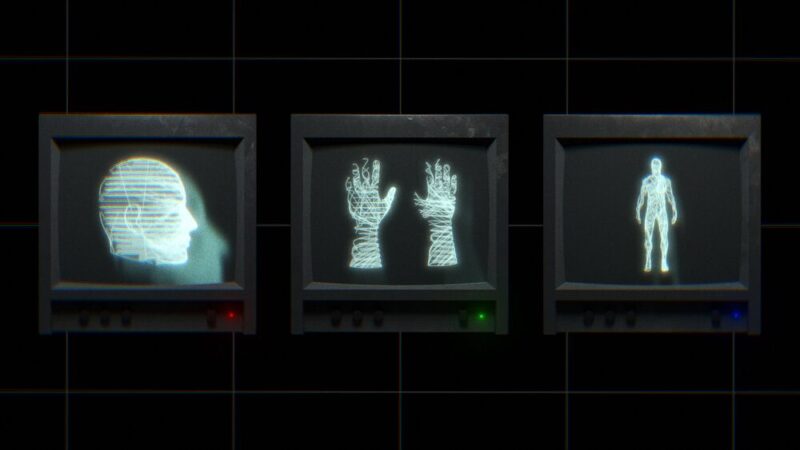
So Invisible was originally made for Universal Studios for the launch of the Invisible Man film. Then it kind of got parked after the launch in the States. We’ve never really done anything with it. So we’ve reworked it, and it works very well in the Fringe because the setting of it is a sideshow. You come to this little theatre which we’ve set up, and the Invisible Man teaches you, as the audience, the skill and the secret of how to become invisible. Now that you know that, do you use that for good or for bad? There’s a history of the Invisible Man and creepiness, and a lot of people are saying it’s a creepier one just because of the tones that he has. Obviously, we’ve based it on the themes of the films. It’s probably a little bit darker than the other shows, but it’s also a great one because the lights come back on, but the Invisible Man could still be there and can still see you.
In my mind, it’s a bit like when someone is blind, their senses become more acute. Is that the case with this, using sound as a sense full sensory experience?
Because you can’t see anything, your brain is hearing all these sounds, and so everything is heightened. What might seem quite a very 2D sound in normal light, as soon as you take the sight out where you can’t picture where that is, or have an actual focal point, it’s amplified.
I guess at the same time, it must be controlled in a way. You don’t have people running out of the room, screaming in fear or anything like that?
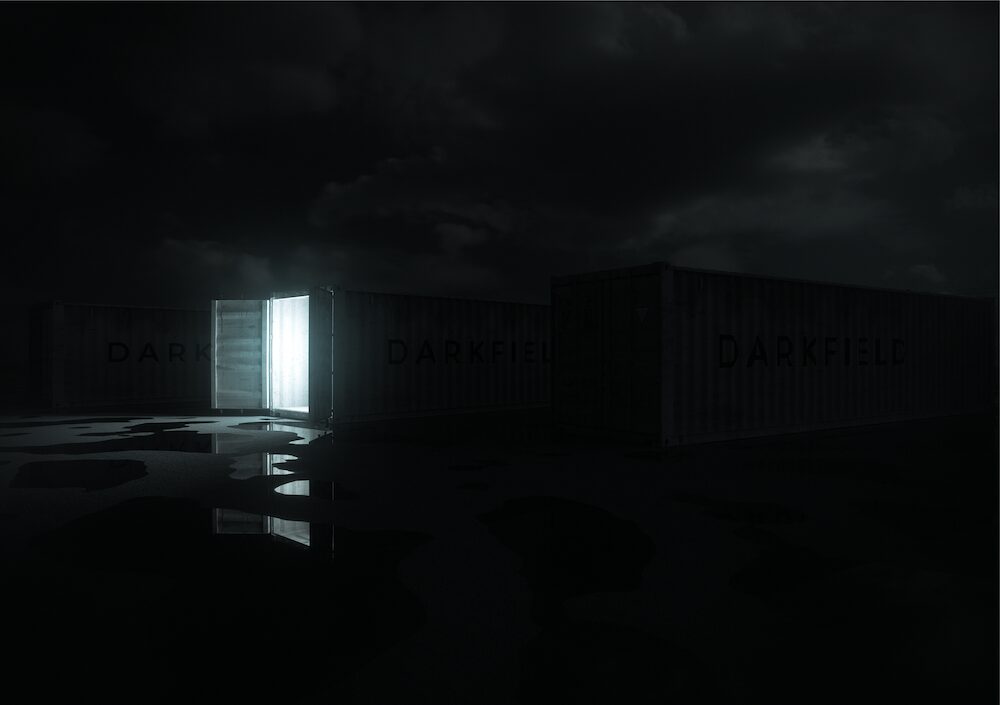
Generally, the people who are scared are the ones who are claustrophobic. They’ll get into the container, have one look at it and relax. We have very rigorous warnings and messaging before going in. There’s an opportunity for you when the lights will go out, so you get a chance to actually see how dark it is. Then the lights come back up, and there’s an opportunity for you to leave. So generally, we’ve never really had anybody kind of scared. We always also say, you take your headphones off, you’re then just in a shipping container.
On your website, you’ve got quite a number of these alternate experiences. Is the team constantly creating new ideas?
The UK team are the ones behind creating the new shows. Right now, we have six different narratives. There are lots more other narratives as well, which in the not-too-distant future, will make its way over to Australia as well.
For someone going to the Adelaide Fringe, would you recommend them seeing one after another, or maybe space them out?
It’s an interesting one. We do have the people who want to do them all. Sometimes it’s good to do one and then a second one and then maybe do a third one another day. Also, a lot of people hype themselves up, so they miss a lot of the things in the first time then do it again a second time. The order which we always like people to do is go to Seance first, the first one, and then you get an idea of the concept. And obviously, as every show was made, the technology gets bigger and Seance is a great one. It’s our first one and it’s a good starter.
It seems like the type of show that would sit with you long after you’ve been in it; you leave and you’d reflect on it coming days after.
It’s one of the great things, watching people come out and seeing everybody talking and listening to what everybody’s saying. When they come out first, they all have the same kind of look of “What just happened”, and then as they come back to grasp everything, you hear all these buzzing conversations and chatter about it.
DARKFIELD’s fan-favourite SÉANCE — explores the psychology of a group of people who have been bombarded with suggestible material, and asks that they believe in what might be conjured up into the room with them.
Transforming a shipping container into a Victorian séance room, SÉANCE makes audiences question not just their beliefs, but also their own senses using complete darkness and binaural 360 degree sound.
DARKFIELD’s SÉANCE, FLIGHT
Images supplied – credit Alex Purcell
