

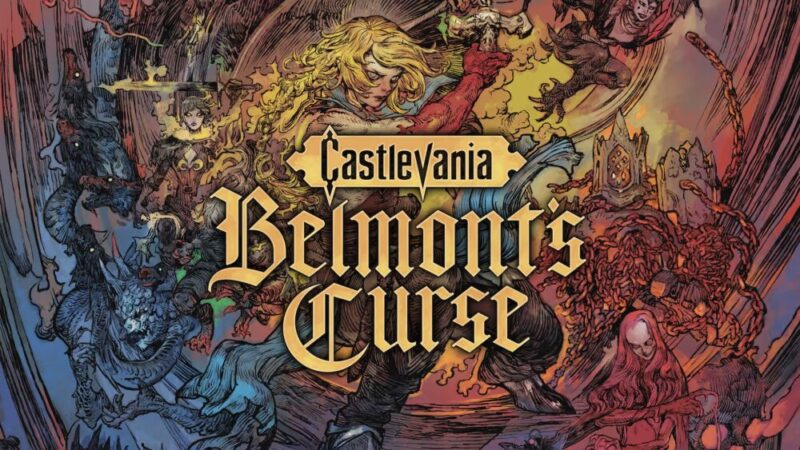
Castlevania has been driving stakes into the hearts of players for 40 years. Konami’s gothic saga debuted in 1986 and became a cornerstone of the NES era as Simon Belmont stormed Dracula’s castle, before 1997’s Symphony of the Night redefined what side-scrolling adventure games could be and gave the entire Metroidvania genre its name.
More recently, Netflix’s animated adaptation – four acclaimed seasons between 2017 and 2021, plus the spin-off Nocturne following Richter Belmont – introduced the Belmont bloodline to a whole new audience and helped bring the vampire hunters back into the mainstream.
A Belmont Before Simon
The timeline of Castlevania jumps around a bit. In the original game and the sequel, Simon’s Quest, we played as Simon Belmont. In Dracula’s Curse, we went back to Trevor Belmont – Simon’s ancestor – and from there the series has cycled through all sorts of protagonists, from Alucard to Soma Cruz. Here, we play as Rose Belmont, well before Simon came into the picture. Her father is Trevor, to be fair, and he acts as mentor and guide throughout the game.
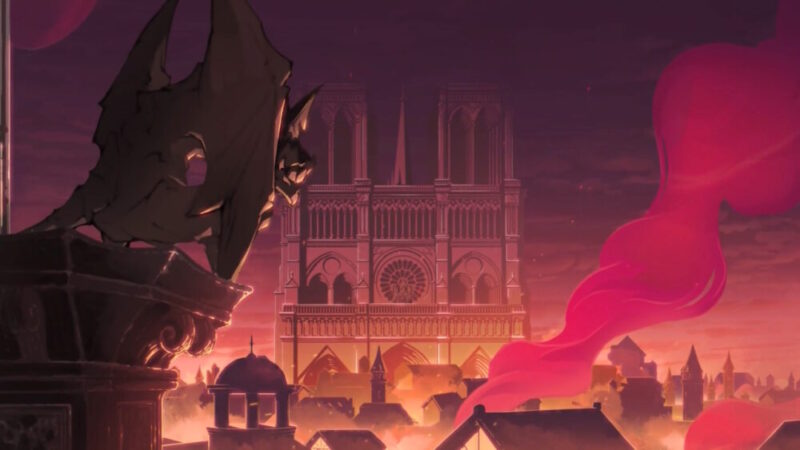
With the gorgeous Paris burning in the background, Rose sets off to stop the monsters causing all the damage. The cutscenes are stylised and 2D, with strong narration despite some genuinely cheesy lines, and they never overstay their welcome – you’re quickly into the gameplay as intended: fast, and ready to fail.
Whips, Parries and Brass Knuckles
The early areas double as a tutorial for attacking and moving, with enemies existing purely so you can practice your swings and power moves. A boss arrives early to put those skills to the test, though you’re remarkably barebones at that stage. Soon enough you’ll have the series staples: a parry, a whip for grabbing coloured rings and swinging across chasms and a rotating stable of weapons and perks to slot in.
The drip-feed of new weapons is where the game earns its depth. Your magic can be powered up for more damage, and there are slots for boosts such as healing every time you open a chest. I ran with the brass knuckles for nearly half the game, but a throwable spear? I’m in. Dual rapiers? Let me at ’em. A giant, slow sword that packs a punch? Sure thing. I almost always reverted to my, but trial and error is the key to finding your groove, and never once did I feel overwhelmed – outside of the frustrations I blamed on the controller.
Bosses With a Reason to Exist
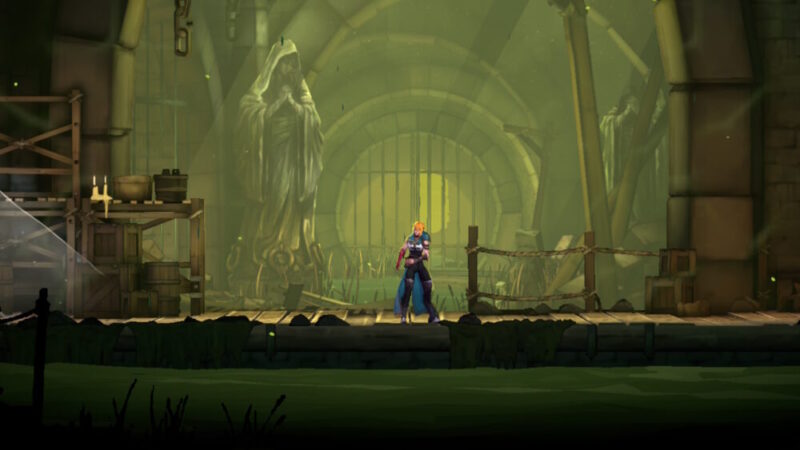
No Castlevania is worth its weight without boss fights, and without venturing into spoiler territory, the first three before the catacombs are spectacular. They have an even balance of difficulty with intrigue, and beating a boss and seeing how that victory threaded into the narrative worked beautifully – they chatter away in your ear, each with their own reasons for holding their post. Rather than plonking down a giant monster to slay, there’s purpose here, and they’re recognisable figures from history and fiction.
And boy, are they tough. The first is a breeze, but the second and especially the third demand you swing and climb across the arena, waiting for your moment. To those worried about difficulty, let it be known: this game has a HEAP of accessibility options. At the very end of the scale, you can turn off death entirely and just see the sights above and below Paris.
Otherwise, you can remove boss runbacks, raise or lower damage given and received, or boost your XP and level faster. There are no barriers here. Naturally, I chose to punish myself, because the game assured me punishment was the intended experience.
Gothic Eye Candy and an Epic Score to Match
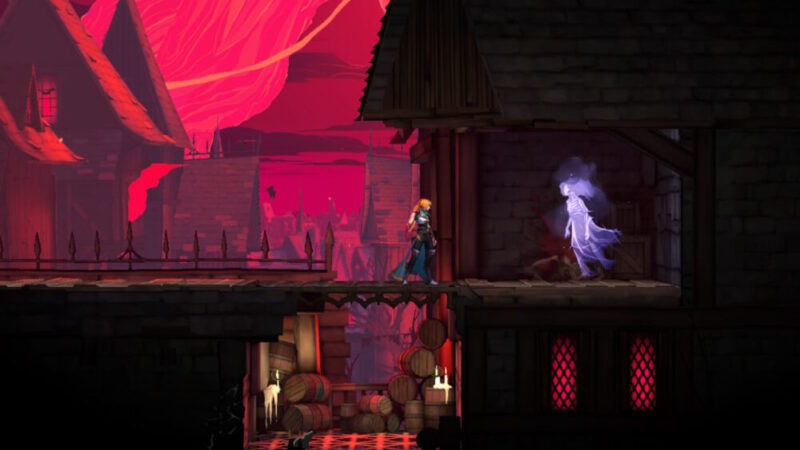
Outside of bosses, the enemy design is deliciously gothic – this is the perfect Halloween game. Medusa heads, skeletons, bats and all manner of horrors beset cemeteries, cathedrals, sewers and catacombs, and new areas always meant a new roster of creatures to dissect. Blowing up a full row of enemies with a flame attack is thrilling, and their death animations are a joy.
Then there’s the music; hearing those revamped jingles soar through a full orchestral arrangement genuinely was incredible. I rarely pump the music up in a game, but this was one I couldn’t wait to align with an art style that absolutely pops and smooth performance throughout, and this is one for the artsy folk. I’ve heard some players report control issues, but I found the error was on my behalf – the game can move fast, and some puzzles demand precision threading through the smallest of openings.
Final Thoughts
Castlevania: Belmont’s Curse is an absolute whirlwind of a fun ride traversing through a ravaged Paris, led by the threat of the great Dracula himself. With gorgeous art, challenging platforming and bosses that test everything you’ve learned, all the ingredients of a great Metroidvania are here, and they shine through beautifully.
The combat is intense and fast, and the build options are genuinely deep. It stands out as one of my favourites of 2026, coming in late in the year, but like all things, sometimes the wait is definitely worth it.


FOUR AND A HALF STARS (OUT OF FIVE)
Highlights: Incredible score and music; Great accessibility options so anyone can jump in; Rich story and lore to keep you coming back for more.
Lowlights: Short campaign
Developer: Evil Empire, Konami
Publisher: Konami
Platforms: Nintendo Switch, Xbox Series X/S, PlayStation 5, Windows PC
Available: Now
Review conducted on Nintendo Switch 2 with a code provided by the publisher.
Featured header image provided by the publisher.
