
Recently, a growing number of musicians have talked openly about astrology. In interviews and public discussions, some artists have framed it as a way to think about identity, creativity, and personal experiences. What used to be the kind of thing you’d mention quietly to a close friend, “I’m such a Scorpio,” became something artists were weaving into album concepts, referencing in interviews, and posting about to millions of followers without much apparent concern for how it would be received.
Artists, including SZA and Kacey Musgraves, have publicly referenced astrology in interviews and songs, showing how visible the topic has become among some musicians.
For musicians, astrology can act as a vocabulary for emotions and recurring patterns that are hard to put into plain language. It offers a way to discuss personality, conflict, ambition, and creative rhythms without flattening them into a single label.
Creative work also tends to involve more ambiguity than many other professions. A lawyer can often measure success through cases won, and an engineer through systems that work or fail. Musicians spend much of their time navigating subjective questions about inspiration, identity, audience response, and direction. Some observers say such ambiguity makes symbolic systems like astrology appealing as reflective tools.
For professionals focused on articulating emotional experience, astrology can serve as a reflective framework. Some artists describe astrology as a language that helps them map emotions and recurring patterns. It lets artists describe parts of themselves in ways that feel nuanced rather than reductive. For a songwriter wondering why they respond to conflict a certain way, or why creative periods alternate between rich and dry, astrology provides a starting vocabulary.
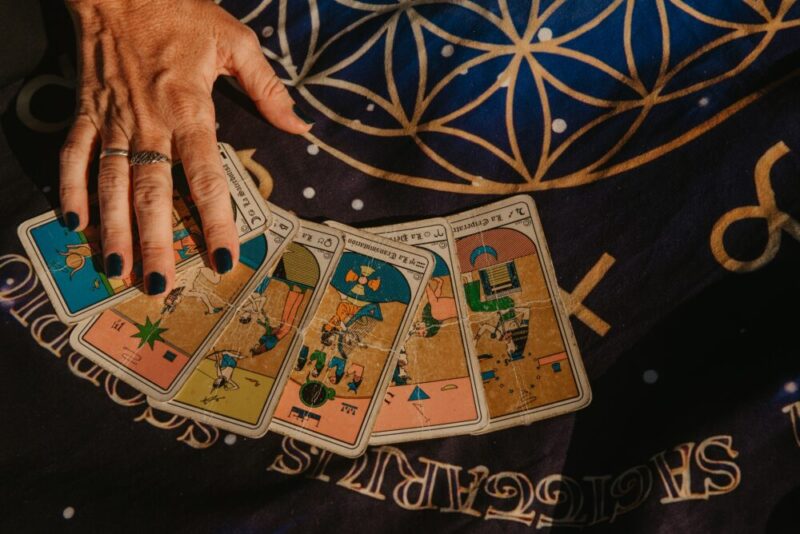
Astrology apps, websites, and online communities are growing fast — people are clearly looking for more personalized ways to reflect, reset, and find clarity. For a while, AskNebula gained strong traction in the US, bringing people together around astrology, tarot, and intuitive guidance. These services often resonate most when someone is navigating changes in their work or personal life and wants a little more insight into what they’re feeling — and what to do next.
The creative life makes these systems more appealing than in other professions. Musicians work in cycles that don’t match conventional timelines. Albums take years, and tours are disorienting. Effort and outcome are non-linear: long, exhaustive work can go unnoticed, while a quickly made song might suddenly resonate widely.
In that kind of environment, some people naturally look for frameworks that help them interpret periods of success, uncertainty, or creative change. Astrology offers a set of patterns. Some artists appear to use it alongside therapy, journaling, and other reflective practices. for the same fundamental purpose: making sense of what’s happening internally when the external circumstances are constantly shifting.
The comfort level seems stronger among younger, internet-native musicians, who often treat astrology less as a strict belief system and more as a flexible language for identity and self-understanding. They grew up in a culture where self-help, wellness, and spirituality often overlap online, so it is not unusual to move between therapy, journaling, astrology, and other forms of reflection.
It’s accessible without being prescriptive and personal without requiring you to buy into an entire belief system wholesale. You can take what’s useful and leave what isn’t, which is the relationship most younger people have with spiritual frameworks. Many younger audiences appear more comfortable treating astrology as a cultural or reflective practice without feeling compelled to either fully embrace or fully reject it.
One visible change is that astrology now carries less social embarrassment than it did decades ago, especially in conversations that already center on therapy, wellness, and self-knowledge. That does not mean everyone believes it, only that more people feel comfortable mentioning it without expecting immediate ridicule.
The skeptical case hasn’t gone away. There are still plenty of people who will tell you that astrology is unfalsifiable nonsense and that anyone who uses it is engaged in elaborate self-deception. Critics argue that astrology lacks scientific evidence and relies heavily on subjective interpretation. Some observers argue that creative professions are often more comfortable with symbolic systems and subjective forms of meaning-making than professions focused primarily on measurement or prediction.
If a birth chart helps someone understand their creative blocks, their relationship patterns, and their emotional responses to pressure, and if that understanding produces better work and a more livable life, the question of whether the underlying cosmology is literally true starts to feel slightly beside the point.
Artists who engage with astrology in public spaces are generally not asserting it as literally true. Instead, they tend to treat it as a symbolic system, a metaphor, or a shared cultural language. Its increasing presence among musicians reflects a broader cultural shift in how creative individuals express identity, navigate uncertainty, and articulate self-understanding in public discourse.
