

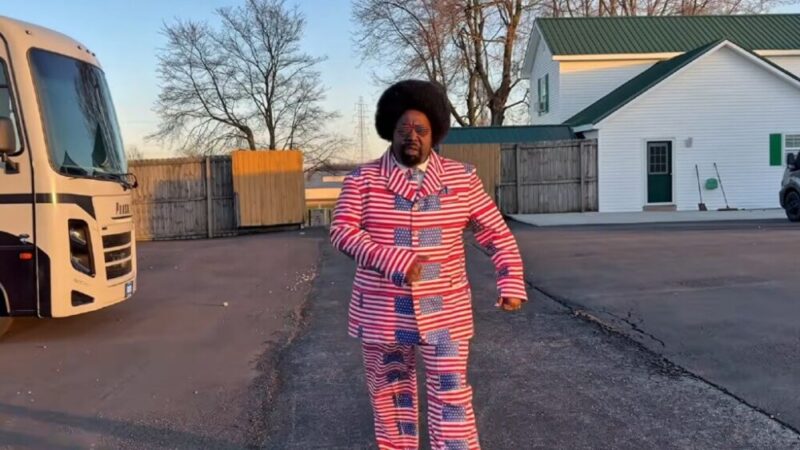
L.A. comedy rapper Afroman hasn’t been in the headlines since his 2001 hits “Because I Got High” and “Crazy Rap”, both of which were taken from the self-produced The Good Times, a surprisingly potent major label debut that netted him a Grammy nod. He hasn’t had a recognisable hit since.
And yet, this week, almost every major news outlet in the world is scrambling to remember (or find out) who he was, tripping over themselves to cover what just may be, in a darkly humorous way, the only thing that feels good on the internet right now.
Why is Afroman trending?
In 2022, seven Ohio sheriff’s deputies carried out a raid at Afroman’s home in Adams County in response to an allegedly false tip-off that the rapper was involved in drug trafficking and kidnapping. The warrant netted no evidence, and no charges were made, yet the deputies explicitly damaged his property, even using a battering ram to break down the front door.
Afroman, who was reportedly performing a show at the time, managed to capture the raid with his surveillance system and promptly used footage to release a series of satirical, Biz Markie-style rap songs humiliating the officers individually and making all sorts of implications about them.
Songs like “Lemon Pound Cake” (inspired by the deputy eyeing the lemon pound cake that was sitting in Afroman’s kitchen at the time) and “Will You Help Repair My Door” went viral, resulting in a defamation lawsuit in which the deputies claimed that the music videos exposed them to ridicule and emotional distress.
Afroman won that three-day trial this month on First Amendment grounds, and the court footage is as hilarious as the music videos themselves. To celebrate, he released even more music videos mocking the deputies and warning “crooked cops” not to mess with him, lest they end up in a comedy song.
In his closing argument, Afroman’s defence lawyer, David Osborne, started clearly that “no reasonable person would expect a police officer not to be criticised. They’ve been called names before.”
Hilarious, but why does it matter right now?
I could write that the internet is not a nice place to be right now, but that would be redundant. It hasn’t been since 2023, three years after TikTok was firmly established as the new hub of cultural hegemony.
With EQ (well, affective empathy) becoming the new IQ, borderline psychotic moral posturing and emotional blackmail, and a whole heap of people completely dedicated to conspiracy theories (a nasty, world-changing hangover from Covid), the days of harmless-fun TikTok dance trends are sorely missed.
Ragebait has replaced clickbait; influencers are increasingly adept at manipulating other people’s emotions for engagement/reward (imagine what society will be like when they grow up); and the world is now dichotomised into the stunningly brave/morally certain, and the shockingly depraved/morally corrupt. Going to therapy became a cool TikTok trend and led to the overpathologisation of everything. Everyone’s an expertly trained behavioural psychologist, and people seem physically incapable of cognitive empathy unless it’s towards their own in-group.
Meanwhile, ex-reality TV stars and ex-UFC fighters have learned how to weaponise shame, without realising it causes what they claim to be against. Everyone has a podcast, whether they are qualified or even competent enough to shape people’s opinions and views, or not, and a templated society running on algorithms is teaching us that we need to be controversial and edgy to succeed.
To cap it all off, identity fusion, a long-established and well-researched concept in social psychology, seems to have turned us into all cult members of wildly different ideologies, morally sanctioned to aggressively defend “our” hyperbolic values as if we’re personally being attacked.
Yeah, terrible.
Gone are the days when we’d just send each other Moo Deng videos. And while Punch the Monkey flitted through our screens with collective awwwww-ness, we haven’t really had any mass-appeal humour go viral in what feels like years.
This feels like a breath of fresh air at a time when no one can breathe.
The return of Afroman
Afroman’s viral videos and recent court victory play into a growing disdain for authority, but do so with biting wit and sharp self-awareness. It’s unlikely this’ll spark a major return to music for the Californian rapper, but it has postured him as an unlikely symbol of free speech, human rights and police accountability. These are all hyper-relevant in today’s geopolitical landscape, and so the plight, and eventually the victory, of Joseph Edgar Foreman strikes a massive chord with all sides of the political spectrum.
It’s also just very funny to watch deputies breaking down in court because they were mocked via song.
For his most recent song, Afroman donned a red, white and blue USA suit – “to represent freedom” – and celebrated his victory with a tongue planted firmly in cheek. All of this while the USA is currently experiencing protests and mass disruption over the activities of ICE agents. You can start to see why it’s being seen as some sort of fun amidst a sea of bleakness.
