

Back in February, when I attended Nintendo’s Preview Event and spent just over an hour with Pokémon Pokopia, I called it “planting the seeds of something special.” Having now sunk well north of 50 hours into the full release, I can confirm: those seeds have grown into something truly extraordinary. Pokémon Pokopia is not just the best spin-off in the franchise’s 30-year history – it might just be the most important game Pokémon has ever released.
That’s a bold claim, I know. But stay with me.
Developed by Omega Force, the Koei Tecmo team behind the Dragon Quest Builders series, Pokémon Pokopia drops you into a hauntingly desolate version of Kanto, the beloved region from the original Red and Blue, which is stripped of its humans and left to quietly crumble.
Pokémon Centres lie broken. Waterways are blocked. The whole world feels like it’s been exhaling a long, sad breath for years. And into this ruin wanders you: a Ditto who has transformed into a vaguely uncanny, human-shaped creature, desperately trying to mimic the trainer they once loved, in the hope that if they rebuild the world those humans left behind, they might one day come home.
It’s bleak. It’s beautiful. And it hooks you from the very first moment. These moments do fluctuate as you uncover more, and some Pokémon do offer insights into what has happened and their longing for humans to return.
Block by Glorious Block
At its core, Pokémon Pokopia is a cozy town-building life sim that draws liberally from Dragon Quest Builders 2, Animal Crossing, and Stardew Valley without feeling like a straight-up copy-and-paste job of any of them. As Ditto, you collect materials, craft furniture and habitat structures, and tailor environments to attract specific Pokémon back to a world they thought was lost.
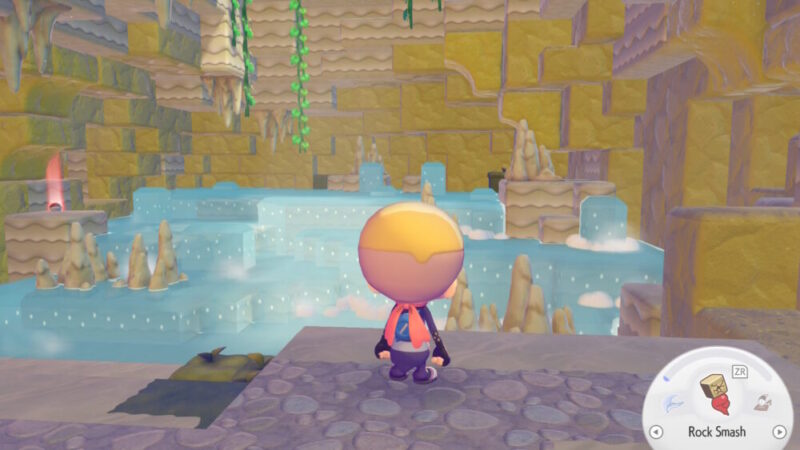
The clever stroke here is using Ditto as the player character. As you befriend Pokémon, you can copy their abilities – Water Gun from Squirtle to revive crops, Cut from Scyther to clear trees, and Rock Smash to break through terrain. It’s a natural, diegetic way of evolving your toolset across the game’s four distinct maps, and it gives each new encounter with a Pokémon a genuine sense of purpose beyond ticking a Pokedex entry.
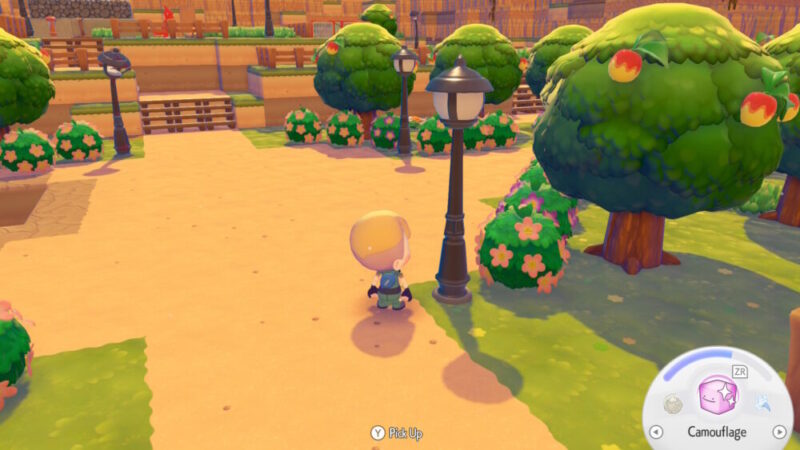
When you recruit Pokémon in a habitat, you build a house and move each one in, accommodating each Pokémon’s daily request to improve their comfort levels, which in turn updates the environment level.
The building system itself is intuitive and deeply satisfying. Crafting at a workbench is as simple as placing storage boxes nearby and picking what you want to make. beds, toys, decorative items and furniture. It rarely overwhelms, and the gradual introduction of systems ensures you’re never paralysed by decision-making. That said, managing your inventory across multiple maps does become a mild headache later on.
Remembering which storage box holds which material, and on which island, is genuinely less fun than everything else the game is doing. I spent a good 35 mins jumping between maps and houses, desperately trying to find my dream cloud glasses. It is something that more organised people will have a way to keep track of; I, however, do not fall into that category of gamer.
There is also some story-gating progress that can halt the momentum. Waiting a full in-game day for a key building to complete feels unnecessarily sluggish in an otherwise breezy experience. While the game doesn’t feel too much like Animal Crossing, having to waste your Pokémon and have them out of action for a whole day just to complete a building seems wasteful. After some experimentation, my best advice is to wait and do this right before you finish playing for the day.
What truly elevates Pokémon Pokopia beyond its cozy life-sim contemporaries is the emotional weight beneath its pastel surface. This is a game about grief, about the peculiar comfort of keeping someone’s memory alive through the objects they left behind. Each Pokémon you recruit brings its own quiet sadness to the rebuilding project: Chef Dente the Greedent, who keeps cooking in honour of her missing trainer; Professor Tangrowth, wearing glasses and a makeshift head mirror to honour the professor who once saved him.
Even the humble request from a Piplup for an alarm clock – something it has absolutely no use for – hits with unexpected force when you realise it just wants the world to feel like home again.
These small, wordless moments accumulate into something genuinely moving. I caught myself stopping mid-build more than once to just sit with the game’s particular kind of quiet sadness. A Pokémon title rarely makes you feel something beyond nostalgia, and Pokopia does it over and over again.
The story itself is parcelled out through diary entries, newspaper clippings, and environmental details scattered throughout each biome. It doesn’t hand-hold you through its mysteries, and it’s all the better for it. What happened to the humans? That question lingers across every ruined building and overgrown path.
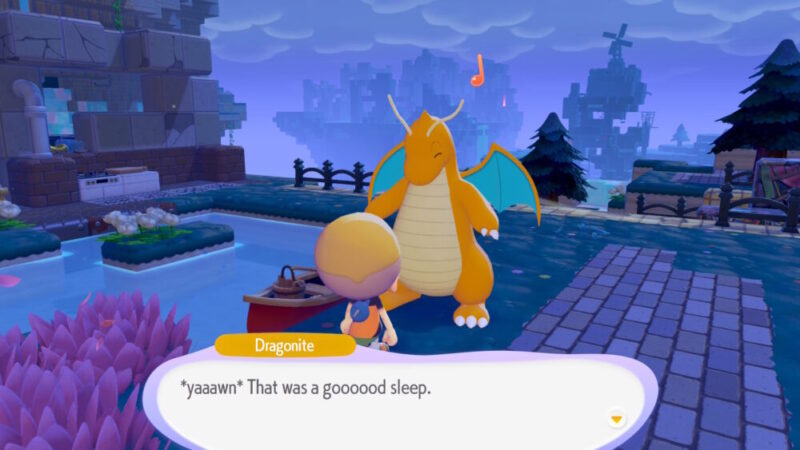
Following that thread is as compelling as any open-world narrative I’ve experienced in years. When you do start to piece together what has happened in the end-game here, it fuels you to keep playing and to further unravel its mysteries and make the world habitable again for humans so they can return and keep the Pokémon happy.
Pokémon Like You’ve Never Seen Them
One of Pokopia’s most quietly radical achievements is what it does for Pokémon you’d long since written off. Timburr, the veiny little construction guy, leads building efforts with unexpected gravitas. Magmar, previously best known for looking a bit useless, becomes your go-to smelter for ingots. Vespiquen shows up uninvited to a field of flowers you built on a whim and announces her happiness with an enormous, loud buzz.
These moments of accidental discovery are joyful in a way that feels genuinely fresh for the franchise. The genuine surprise was Piplup, the cute little penguin Pokémon who is the key to creating your own waterfalls, rivers and hot springs, his attachment and eagerness to help rid the world of the sludgey mud that pollutes it, along with his over attachment to Ditto (well at least in my playthrough) saw me growing a major soft spot for this little guy.
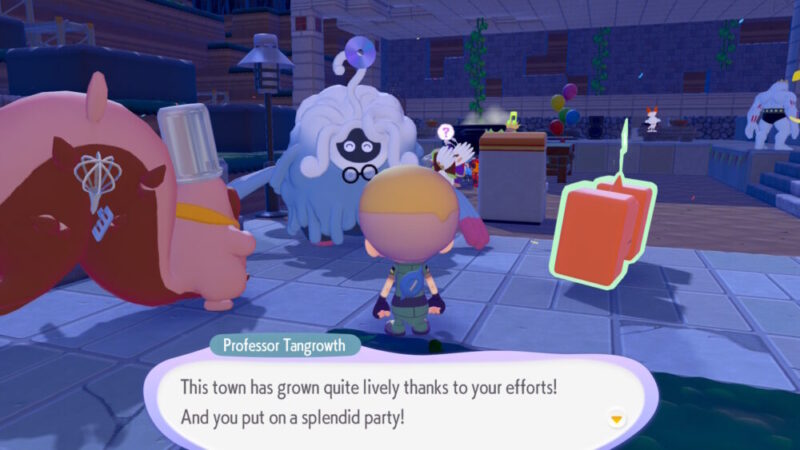
Each character has these intimate moments, these special dialogues that not only reveal more about the Pokémon and the current state of the world, but they can also unlock special abilities and give you access to things you weren’t expecting. With hundreds of Pokémon waiting to be found and housed across the game’s four maps, you could sink weeks into this world and still be uncovering something new.
The post-credits content alone is substantial enough to double your play time, with new furniture recipes, upgraded tools, and building projects to dive back into. There are massive empty island spaces just waiting to be filled with original creations that can honestly keep you coming back for a very long time, post the game’s end credits.
Look the Part
Played on Nintendo Switch 2, Pokémon Pokopia is a delight. The clean, toy-like art style is charming in screenshots and absolutely gorgeous in motion, running at a smooth 60fps in both handheld and docked modes. Given how much time you spend studying the world up close as you build, the level of detail in individual furniture objects like sofas, benches, and lamps is genuinely impressive. There are occasional frame rate dips on the blank creative island, but nothing that disrupts the experience in any meaningful way.
The Pokémon themselves are beautifully detailed, and their interaction animations both between each other and with your Ditto genuinely evoke a sense of nostalgia that is a key stand-out in this game.
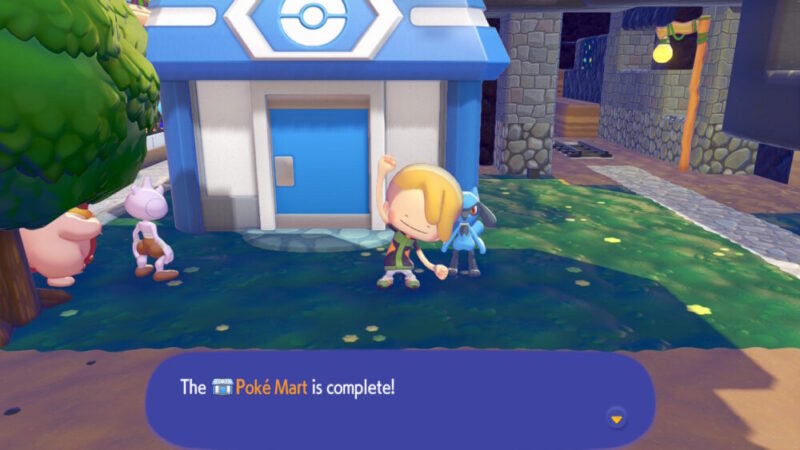
Mouse Mode, introduced via the Switch 2’s Joy-Con functionality, makes fine-detail building noticeably easier and is well worth using when precision matters. This is most notable when selecting the right block to demolish. While it’s not a huge issue to just suck up the matter and redo the block again, it will save you some time here.
Final Thoughts
Pokémon Pokopia proves the franchise has far more to say when it steps outside its own formula. Omega Force has delivered something that feels both deeply familiar and utterly unlike anything Pokémon has attempted before: a cozy, endlessly moreish town-builder with genuine emotional depth, hundreds of hours of content, and a poignant story about love, loss, and the quiet persistence of hope.
It has a few rough edges, there are some pacing issues, some inventory management headaches, and one notoriously finicky move. But after 50-plus hours, I was watching the credits with something uncomfortably close to tears, thinking about these poor Pokémon left alone on a scorched planet to fend for themselves.
After a rough few years for the franchise, Pokémon Pokopia is an extraordinary step forward. I haven’t had this much fun with a Pokémon game in a very long time, and I know there is more to come.


FOUR AND A HALF STARS (OUT OF FIVE)
Highlights: Deeply emotional and surprisingly poignant narrative; Endlessly satisfying building loop with genuine creative freedom; Brings beloved Pokémon to life in brand new ways; Stunning art style and rock-solid Switch 2 performance; Enormous amount of content.
Lowlights: Story-gating progression slows things down at key moments; Inventory management across multiple maps becomes unwieldy; Rock Smash aiming could use some polish.
Developer: Omega Force / The Pokémon Company
Publisher: Nintendo
Platforms: Nintendo Switch 2
Available: Now
Review conducted on Nintendo Switch 2 with a release code provided by the publisher.
Featured header image also provided by the publisher.
