

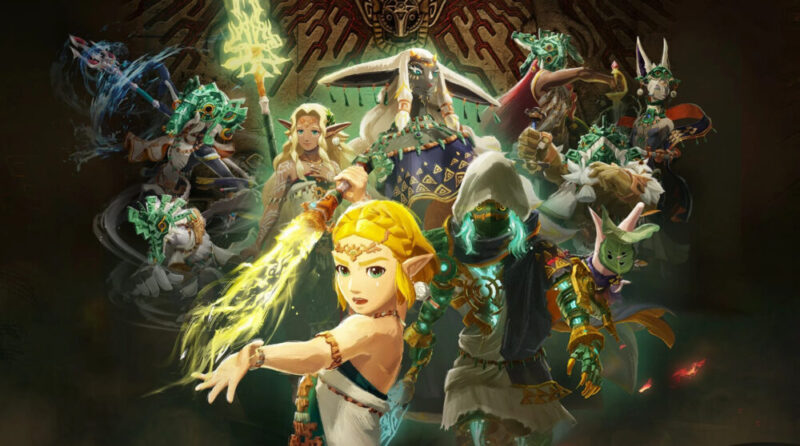
The Hyrule Warriors series has made a decent impact on the Nintendo Switch as a formidable, Dynasty Warriors-infused Musou experience that builds on the lore of its existing mainline Zelda titles.
While those previous titles lacked the performance required to handle multiple enemies on screen at any given time, Hyrule Warriors: Age of Imprisonment finally bucks that trend on the new hardware, delivering solid performance and even better action.
While it lacks a memorable narrative, its many battles and abilities make it one of the best in the series.
Where Art Thou, Zelda?
While Hyrule Warriors: Age of Calamity told its prequel story within an alternate timeline, Hyrule Warriors: Age of Imprisonment feels more like a direct entry in the sense that it takes place prior to the events of The Legend of Zelda: Tears of the Kingdom.
Here, we find out what happened to Zelda during the events of the Imprisoning War, where she is essentially teleported back in time to take on Ganandorf, with King Rauru and Queen Sonia, the first rulers of Hyrule, by her side.
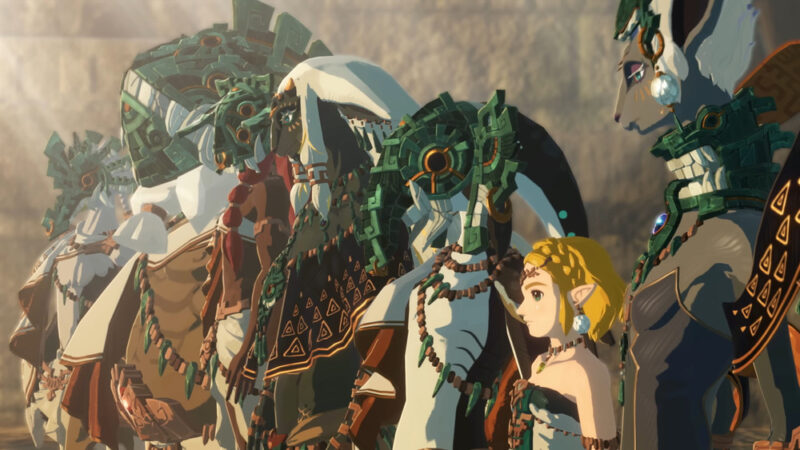
I like how this blends into Tears of the Kingdom as far as the lore is concerned, but I felt the 30-or-so-hour story while laced with plenty of conversations and cutscenes, lacks any real emotional punch or high stakes, considering it leans so heavily into the a finale that ultimately becomes the story that we know to be Tears of the Kingdom.
Zelda does befriend a character known as the Mysterious Construct, and while that does lend a few cool moments as to the identity and purpose of this character, can’t pad out enough to make the entire story as engaging. It’s far from terrible, but definitely feels like it takes a back seat to the action.
The Tides of War
Hyrule Warriors: Age of Imprisonment certainly ramps up the action, and the series is all the better for it. You’ll still be able to mash the Y and X buttons to come up with various combinations of light and heavy attacks, all of which feel consistently satisfying, packing a meaty punch behind them.
In line with Tears of the Kingdom, Zelda and other playable characters like Rauru and Sonia can also utilise Zonai Devices to help turn the tides in combat. These devices can provide players with helpful attacks, usually to exploit an enemy weakness. Some will cover enemies in fire, some will freeze them, some will launch projectiles, and all can be powered by finding Zonai batteries out in the environment.
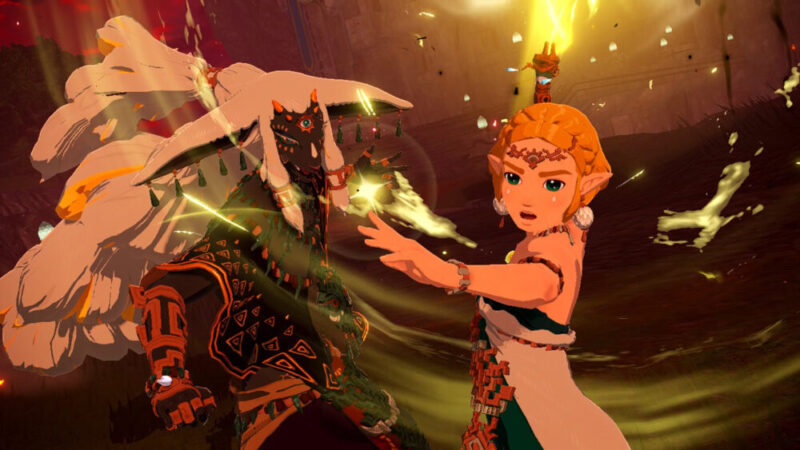
It’s a nice touch and helps depend combat while tying the experience a little more closely with Tears of the Kingdom, but only when it applies to combat. For better of worse, these devices are used for attacks, and not necessarily for things like puzzle solving or traversal, which Age of Imprisonment doesn’t really make time for.
The gameplay loop is still satisfying and packed with things to see and do, but it definitely relies on that pre-existing formula. You’ll explore battlefields to take out enemy forces and bosses, upgrading your weapons and characters along the way. There are a few missions to choose from, and certain missions also require you to donate certain resources along the way.
The best thing that Age of Imprisonment does is keep you on your toes with each chapter, presenting new enemy types with new weaknesses, prompting you to experiment with and mix up your usage of Zonai Devices. Up to three characters can take the battlefield at any time, and it’s a pleasure switching between each character on the fly, each with their own weapons and abilities.
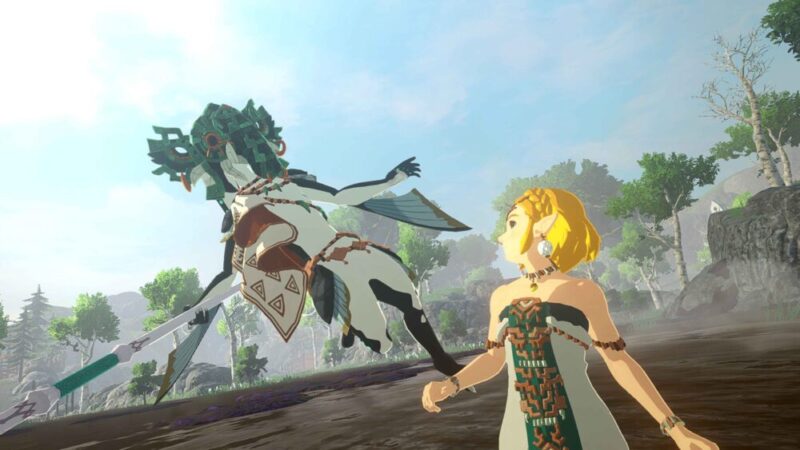
King Rauru is a highlight for his mix of range and speed, and it’s worth nothing that all characters can build up their Sync Strike Gauge to combine forces and deal out a devastating attack to most enemies. Players will also be prior opted to quickly switch to certain characters at any given moment, when enemies are dealing out an attack that only they can counter.
Combat is generally fast-paced and consistently fun, and along with the new Zonai Devices, playable characters, upgrade able weapons and Sync Strikes, keeps you on your toes without ever feeling tired or repetitive.
Look the Part
While we’ve always wanted the previous Hyrule Warriors games to run a little better on the ageing hardware, the Nintendo Switch 2 feels like a revelation for Age of Imprisonment.
For the most part, the game maintains a solid 60 FPS in docked and handheld modes during single-player gameplay, complete with some gorgeous landscapes and polished visuals.
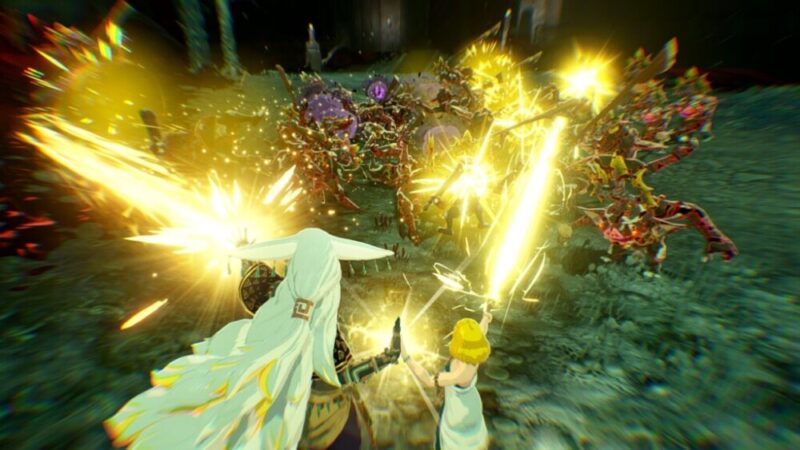
Split-screen cooperatively play is a different story however, as the gameplay noticeably drops to 30 FPS, and stutters rather regularly beyond that. It’s not unplayable, but feels noticeably more unpredictable as a result.
Overall, it’s a much smoother experience that you would have found on the original Nintendo Switch, so we’re counting this a a win.
Final Thoughts
Hyrule Warriors: Age of Imprisonment is a solid sequel that builds on its commitment to chaotic action. While it lacks an engaging narrative, it does do a great job at running you through its 30 hours with new enemies to fight and Zonai Devices to mess around with.
Its single-player experience is also a much smoother one of the Nintendo Switch 2, and while we wish local split-screen cooperatively play play followed suit, must say that this runs better overall.
It’s a game you may feel you’ve played before in previous Hyrule Warriors titles, but it’s still one worth diving into for its refined combat alone.


FOUR STARS (OUT OF FIVE)
Highlights: Solid combat; New enemy types and playable characters; Great single-player performance
Lowlights: Lacklustre narrative; Performance dips during local split-screen cooperative play
Developer: Koei Tecmo, AAA Games Studio
Publisher: Nintendo, Koei Tecmo
Platforms: Nintendo Switch 2
Available: Now
Review conducted on Nintendo Switch 2 with a launch code provided by the publisher.
Featured header image also provided by the publisher.
