

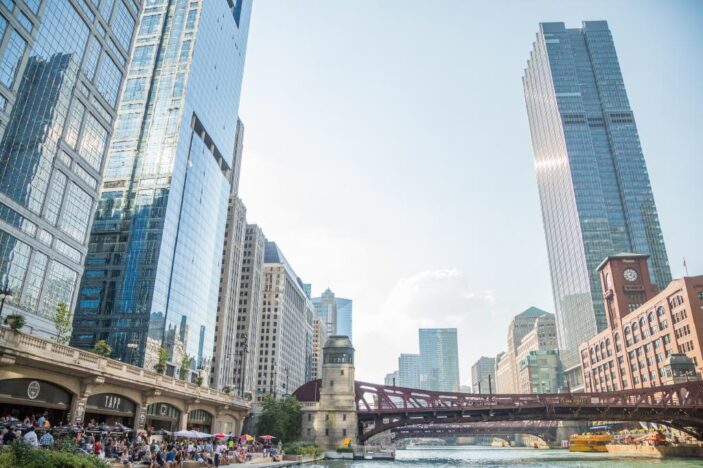
Chicago neighbourhoods are just as diverse as New York neighbourhoods.
“Think of Chicago as New York City, but just the right size.”
That’s how the city was described to me when I first arrived at O’Hare. I was 22 back then, wide-eyed and full of energy, looking forward to my first overseas trip as an adult.
I’ve been to Chicago four times since. New York eight. These two monstrously large cities each have their own special place in my heart. They share much more DNA than just impossibly large and wondrous skyscrapers.
Whoever threw that pointed descriptor at me is right.
The Art Institute of Chicago, for example, is just as impressive as The Met, but it’s not so overwhelmingly large; you can do-and-dust in a day. The Field Museum pitches a similar scale, dwarfed by the American Museum of Natural History but hosting some of the world’s most important artefacts, including the largest Tyrannosaurus rex specimen discovered.
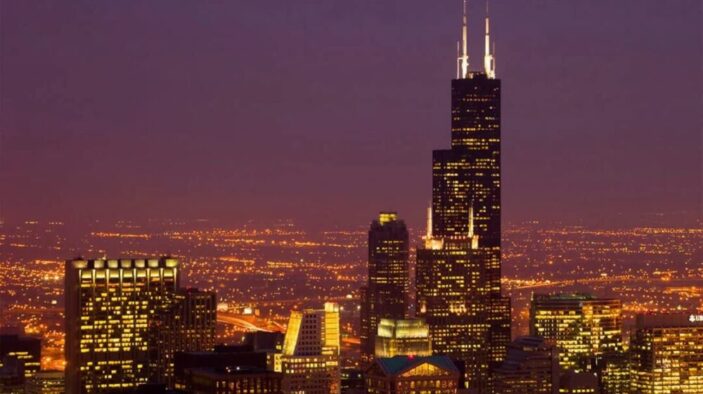
Climb to the top of Willis Tower and you’ll see that the cityscape is every bit as inspiring: skyscrapers framing sunlight while the gorgeously unswimmable Chicago River churns by some of the world’s most important architectural achievements, broken up by definitive bascule bridges that swing upwards when required.
It’s one of the busiest urban waterways in the world, caked with colour throughout the day with all sorts of boats and kayaks (and, seasonally, floating hot tubs) trudging up and down, passing by underground marinas and adding a bit of action to the gorgeous River Walk. Here, life is framed by iconic buildings like the fat-bottomed Merchandise Mart and Neo-Gothic Tribune Tower, never letting you forget just how mighty Chicago’s architectural spread really is.
The similarities with New York City are numerous, but a major throughline is variety; pluralism. Queens, Brooklyn and Manhattan wouldn’t be quite as exciting without their distinctive neighbourhoods, each offering something completely different from the other and each holding onto a strong sense of identity. Chicago is similar in that it’s structured into 77 community areas, each with their own unique flavour.
I want to highlight just five of those in this piece. There are far more, like the Gold Coast, with its ritzy greystone houses and mansions, and Little Village, with its colourful Latinx vibes, and Oak Park, with its pleasant architecture and Frank Lloyd Wright’s studio. But these are the ones that pull me back every time I land in this big, beautiful, perennially award-winning city.
1. Hyde Park
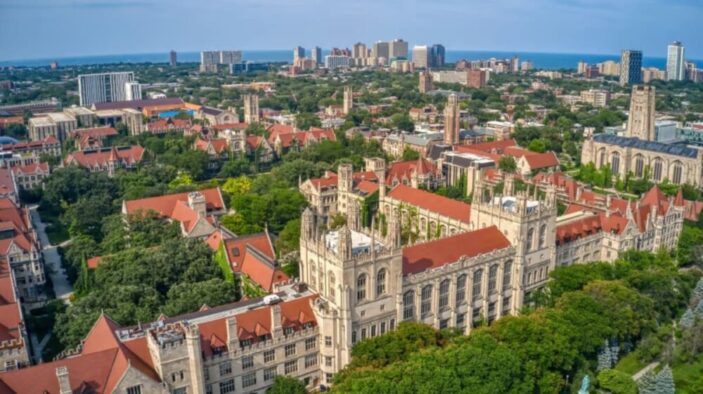
Chicago’s South Side doesn’t get the best rep in the media. And yeah, there are some parts you should steer clear of, but the main area, around E 53rd St and S Harper Avenue, is completely fine. As is the University of Chicago campus with its time-capsule architecture and Savannah-like overgrowths. The spot where the Obama Presidential Centre is being built (it’ll open sometime in 2026) is also going to bring a lot of vibrancy to this historic neighbourhood.
The gorgeous leafy streets, strong sense of community and increasingly modern restaurants are all strong reasons to visit Hyde Park.
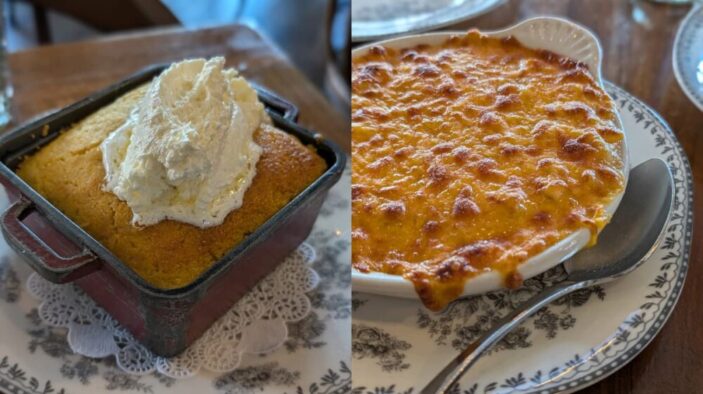
For me, the biggest pull is Erick Williams’ Virtue. I’ve visited twice now, and it’s quickly become one of my favourite restaurants in the country, serving up authentic Southern cuisine that’s all catfish, mac ‘n cheese and grits; classics clearly elevated by exacting recipes and the kind of snub-nosed consistency that keeps Chicago’s food scene in the upper echelon for serious gourmands.
The thing about Chicago’s food scene is that even the simplest side dishes are unforgettable. Virtue’s cornbread seems to be a standard recipe, but the texturally perfect staple is moreish and essential, served hot with whipped butter dripping into the grains. Service is another key reason to come here: attentive, warm and enthusiastic. My two visits were over a year apart, and my server greeted me like an old friend.
Beyond Virtue, Hyde Park’s food scene is a mix of classics and contemporaries. Valois (Obama’s go-to breakfast spot) still slings its cafeteria-style eggs, pancakes and hash browns at unbeatable prices. And if you want something more modern, you’ll find it in the growing number of cafés and bakeries tucked along 53rd Street, where students and locals mingle over cold brew and conversation.
Williams runs a new agave bar, Cantina Rosa, with a hold on strong, unique flavours and a design I’ve never seen before. There’s a middle island striped along the stylish interior, offering bar-style seating without actually being at the bar. “Some people want the middle-ground,” Erick told me when I visited a few months ago. You’ve got that bar stool seating that
What’s immediately striking about Hyde Park is how effortlessly it balances its academic gravitas with a neighbourhood’s warmth. The University of Chicago’s neo-Gothic spires and manicured quads lend an almost Oxfordian atmosphere, while the Museum of Science and Industry — one of the largest of its kind in the world — anchors the area with its family-friendly appeal and striking Beaux-Arts design.
2. Pilsen
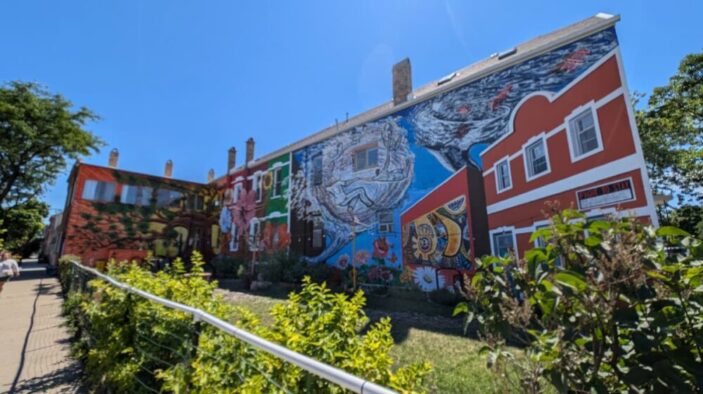
Pilsen is best recognised as the heart of Mexican culture in Chicago. Located on the Lower West Side, just beneath Little Italy, it’s marked by the city’s most stunning large-scale murals. Life and colour define the sides of buildings here, begging comparisons to San Francisco’s The Mission, but holding its own identity with an uncompromising dedication to authenticity.
Some of the country’s best Mexican hot chocolate, tacos, and chicharron can be found just by walking a few metres from the train station. Café Jumping Bean, a local institution since the ’90s, remains a creative hub for artists and writers, while newer spots like La Luna blend traditional Mexican flavours with contemporary flair. This is where you go if you want affordable food that punches well above its price tag.
Pilsen’s deep artistic merit is what visitors typically remember. The murals tell stories of the neighbourhood and a fiercely proud community. Nearly every block holds a history lesson: political struggle, community pride, and cultural resilience, expressed in colour and form. The National Museum of Mexican Art is the anchor for all of this, offering one of the most significant collections of Mexican art in the country. For free.
I can only imagine just how alive this area feels during the Dia de los Muertos celebrations, which apparently fill the streets with colourful parades, makeshift altars and music.
3. River North
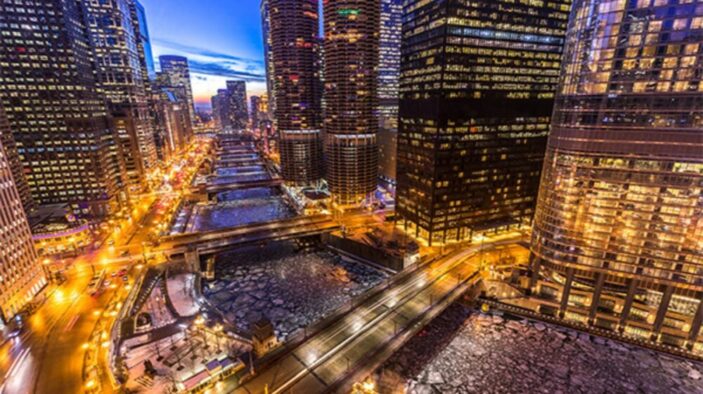
River North is big and busy. It’s slightly tucked away from the River Walk, so you step behind the bombastic buildings to find latticed streets teeming with after-work drinks and noisy group dinners. It’s the city’s playground, conveniently located just a few blocks from the shop-till-you-drop splendour of the Magnificent Mile.
Every time I’ve visited Chicago, my first night drops me into the middle of this slightly chaotic and noisy district, where high-end galleries are squashed between glossy dining rooms that hum with suited-up professionals looking to unwind. It’s the kind of neighbourhood that feels perpetually ready for a night out, with the Chicago River catching the glow of restaurants like a mirror.
The best way to play in River North is a good old-fashioned bar crawl, before or after you’ve seen the flashing lights of Art on The Mart, Chicago’s nightly projection show that dances across the facade of Merchandise Mart (once the world’s tallest building).
River North isn’t exactly Chicago’s CBD, but it feels like it. Dining here is all power lunches by day and special occasions at night. It’s much more upscale than the casual West Loop, from Rick Bayless staples like Frontera Grill and Topolobampo (the celebrity chef basically runs this neighbourhood) to my personal favourite, José Sosa’s UMMO – an industrial Italian with innovation at its heart. Think rich, indulgent pastas and hearty dishes like a seven-layer spinach lasagne.
Award-winning mod-Tiki bar Three Dots and a Dash is hidden down an unmarked alleyway and is an essential stop on any River North bar crawl. Just make sure you hit up the smaller, more concept-driven Bamboo Room. You’ll find some of the weirdest, most theatrical cocktails in the city here, and they’re all handled with a firm sense of balance.
4. West Loop
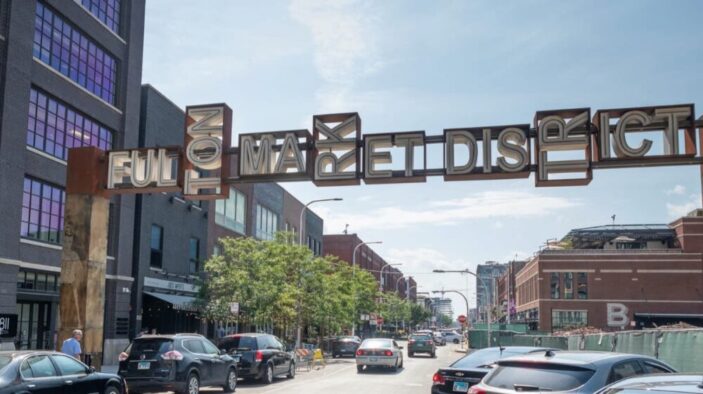
Once a gritty industrial zone filled with meatpacking warehouses, West Loop has transformed into Chicago’s culinary and creative powerhouse. It’s where chefs, designers and tech start-ups coexist in repurposed brick buildings, giving the neighbourhood that rare mix of grit and glamour that feels unmistakably modern Chicago.
The well-heeled hide away in fussy fine diners like Ever and Oriole, but most of the life is reserved for Randolph Street. It’s called “Restaurant Row” for good reason, packed with dining icons like Stephanie Izard’s excellent Girl & The Goat (if you’re solo, get a seat at the kitchen counter; it’s like watching The Bear) and Au Cheval, which I still think does the single best burger in the country.
There’s late-night fun too. Good Night, John Boy has cheap-as-chips drinks and a colourful Pulp Fiction-style dancefloor, then you can head over to the Euro-styled Gin Alley with its cobblestones and outdoor drinking. Parlor Pizza is a favourite for big groups, and there are about a dozen bars around that are built on table games (a massive trend you’ll notice all across Chicago).
Street parties are common here, so consider this the Lower Manhattan of Chicago. It’s neither like the West Village nor the East Village in feel, but you’ll get the same type of variety around the area.
5. Wicker Park
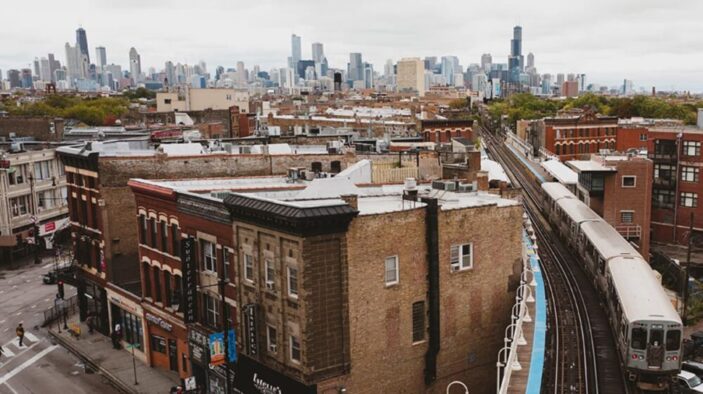
Wicker Park, Bucktown and Logan Square are all chained together, connected by Chicago’s own version of New York’s High Line, The 606. Consider this the Brooklyn of New York, full of hip, trendy cafes and restaurants, a few scattered boutique hotels like The Robey, and flagships from some big-name fashion and design brands.
Wicker Park is my favourite of the three. With the main cross-section shaped like a triangle, it’s got a unique look and feel. You can tell it used to have a gritty, punkish edge, which still shows in the rusted shopfronts. A slow change has brought in more cocktail bars to wedge between the vintage stores and record shops, maintaining that independent charm that I don’t see washing away anytime soon.
The main drag, Milwaukee Avenue, hums with small businesses. The Flat Iron Arts Building remains a relic of the area’s bohemian past, filled with studios and galleries where artists still open their doors for weekend wanderers.
Around the corner, you’ll find restaurants that capture the neighbourhood’s mix of grit and grace; think Dove’s Luncheonette for Tex-Mex comfort food or The Violet Hour, a speakeasy hidden behind a nondescript façade pouring some of the city’s best cocktails.
Big Star’s taco window is practically a local landmark, its outdoor patio filling fast whenever the sun’s out. But my main reason for catching the Blue line out to here is almost always Mindy’s Bakery. Mindy Segal is one of the star pastry chefs of Cook County, and her busy bakery sticks out like a sore thumb.
Innovative pastries fly out the door fairly fast, so you’ll need to show up early if you want the signatures. I always end up spending at least $100 on the shop’s takeaway hot chocolate and stuffing it into my suitcase. I can’t get enough, and ordering one of her sweet, thick iced chocolates on a hot day is a swift reminder that it’s not just food Chicago does so remarkably well.
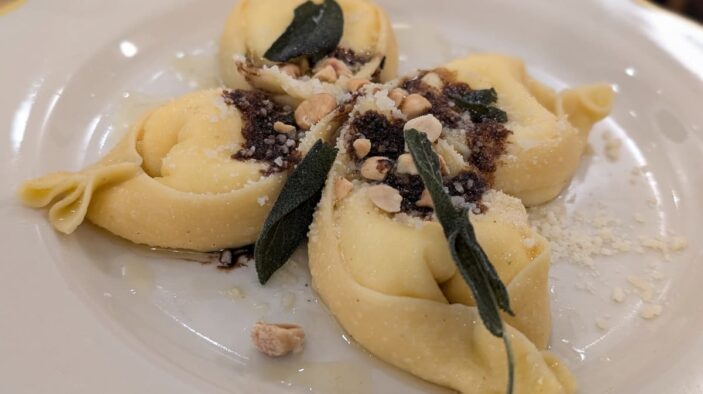
Make sure to pop by Division Street, which is like a mini-West Loop. Tortello has some of the best handmade pasta I’ve had in the country. And you’ll find a similar scene on Ashland Avenue, where fast-favourite Mott St does up perfect mod-Asian and one of the most unique burgers in Chicago.
The burger is so popular, in fact, that the dining room stops serving it at a certain time just so customers aren’t tempted away from the rest of the menu (you can still get it at the bar, whenever you want, though).
Want to know where you should eat in Chicago? Check out this food guide I wrote over at International Traveller.
Feature image: Choose Chicago / Alice Achterhof.
