


“Your videography is getting so good,” I’ve heard multiple times over the past year. “Thanks,” I reply sheepishly. I do admit that I’m getting much better at shooting content, but these apparent skills wouldn’t exist without the proper tools.
Yes, there’s intuition and a journalist’s eye, but those things are learned through trial and error. I’m still learning them and am far behind seasoned videographers and photographers. But you need the right tool to really push you down paths that may even profoundly change the way you view life.
For me, that tool has been the Google Pixel 9 Pro.
Now, it’s not enough to say this phone has a great camera for both photos and videos. Most of them do nowadays. Apple has been particularly impressive in how far the iPhone has come, closing the gap with Android for computational photography and video.
This basically means the software helps lift your results. You can now shoot photos on the latest smartphones that are no discernibly different from something you’d take on a DSLR. I mean, big chunks of blockbuster movies are being filmed on these things nowadays.
But Google’s dialled in what I feel is the perfect mode for videography. At least when we’re talking about off-the-cuff shooting.
Cinematic Pan mode is something that’s much more refined and sophisticated in the Pixel 9 series than I’ve found in any other phone. It’s been around for a few generations, but I feel that the company has really heightened its quality with this current generation, which makes me very curious to get my hands on the Pixel 10 Pro.
How it’s changed how I travel
I’ve been reviewing phones for years, so it might be a bit odd to know that I’ve never really used it for this purpose. The most common purpose nowadays, creating content.
I take photos and videos when I travel all the time for my personal Instagram channel. Only now have I started really thinking about how to make things look great for social media, with Pan mode making it so easy.
IG Reels and TikTok are all about movement. How you move your camera, your pace, your control, what the subjects are doing and how you frame it all. Timing matters too, and so being able to shoot literally off the cuff is important.
Pan mode basically films like normal, but cuts the time in half. And so once you get used to it, you have more range of movement than you would usually. Plus, it takes less effort to get a good, stable video. It’s not quite slow motion, but things move in a more methodical, cinematic way. It’s helped me find a certain style that I think has changed the way I view travel.

Maybe it’s even changed my life.
I was raised a Buddhist, so I understand how important it is to do as much as you can to live in the present. To pay attention to here and now. I never took on those messages because kids don’t really place value on the body-mind connection. And so perhaps that’s why I’ve grown up with an incredibly overwhelming melancholy that flares up at times.
The past three years have taken that tendency towards sadness and magnified it torturously. Travelling for work was the only joy in my life at the time, and I’m only now starting to recover from what I now understand is complete nervous system dysregulation (take note: you can’t think yourself out of a body problem).
Looking at everything as potential content helps bring you into the present and constantly think of the magic in the mundane. That I feel is the most profound way to channel content creation; to force you to pay more attention to life.
I enjoy looking at things as content now, because Pan mode at least makes me feel like I’m good at it. I’m shooting constantly when I’m travelling, finding ways to make even mundane things look great. I’m running around cobbling together videos and then making them dance to music; I wanted to be a music video director while growing up, so this helps keep me engaged and gives me an outlet.
I cannot stand the likes/comments mentality that has decimated society. I feel it’s ruined a lot of the travel experience and turned people into anxious wrecks. But I wanted to see if channelling that mentality could help pull me out of whatever funk I was in. It hasn’t, but it’s helped a lot.
TikTok, Instagram – all these tools that are fundamentally designed to streamline creativity and help people find their voice – they get such a bad rep nowadays. Understandably. But if you find a balanced way to incorporate more content creation into your day, then it, in some lateral way, can be a form of mindfulness.
Use tech to find your voice
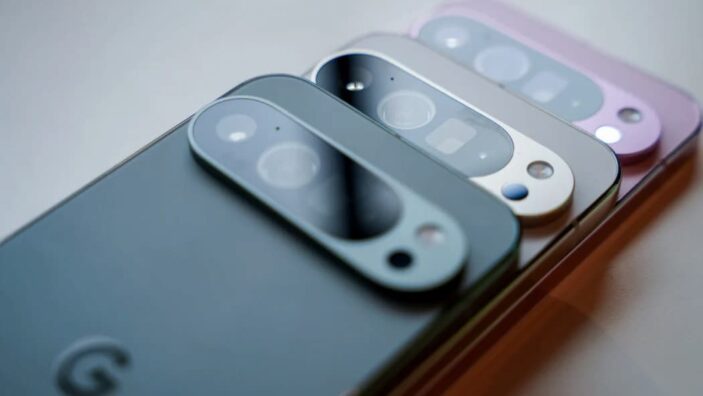
And it starts with the right tool. For me, that’s the Google Pixel 9 Pro more than any other phone I have used before.
I should qualify that: I own both an iPhone (16 Pro) and the Pixel 9 Pro. I’ve used Android before, but I find the iOS experience so much smoother, more approachable and intuitive. I use the iPhone as my phone, and the Pixel 9 Pro as my content hub.
This has a few problems. It is infinitely easier to edit video on the iPhone, still. Pixel may be closing the gap, but there are many apps, including Instagram, that just aren’t optimised well enough. With the iPhone, for example, you can easily shorten videos when you’re uploading to Instagram. With the Pixel, you have to open the camera app, find the video, edit it, and then upload it. Having those extra steps in a process that should be quick and painless is quite painful.
The iPhone is also an absolute gun when it comes to shooting pro-quality cinematic movies, but these require heavy editing and playing around with settings. Google can achieve this with greater effort as well, although Google’s camera software is so much better.
Other things with the Google that work remarkably well compared to other smartphones I’ve tested: Portrait (always). The Pixel 9 Pro remains superior for capturing truly close, vivid, and crisp food photos that effectively pick up texture. Blur is also quite strong now. It’s essentially a video with a background blur; however, I’ve found that the processing can overshoot at times and blur some of the subject.
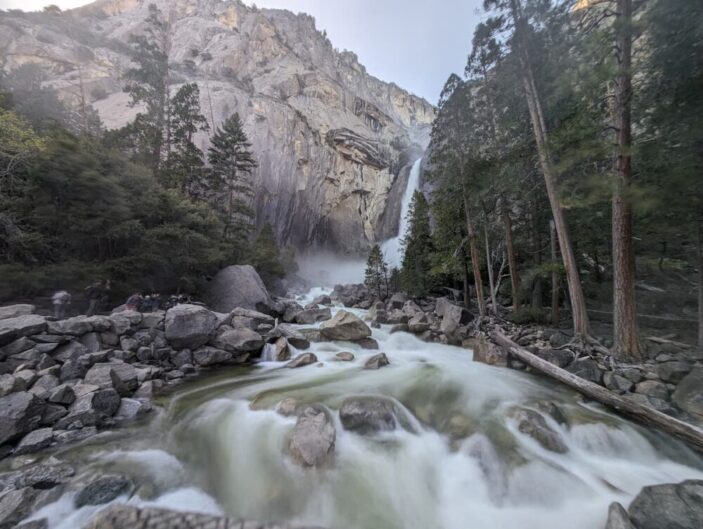
Then you’ve got Long Exposure, which I’ve spent months testing on waterfalls and fountains in the USA. I snapped this lovely shot in Yosemite that you can see if you scroll up.
Oh, and that wide-angle video? Perfect for hotel room walkthroughs. If you use wide-angle and pan mode and spin around fast like an idiot, the results are like a live-action panorama, and it’s a great way for showcasing spaces with intricate details.
It always comes back to content
I read a study last year that said 57% of Gen-Z want to be influencers. There have been more studies since, and the results are worrying. No one wants to be a doctor; everyone wants to be a YouTuber.
And so while phone manufacturers have been focusing on other things lately (sustainable design, power efficiency, battery life, audio recording), the hype of camera systems isn’t going anywhere. In fact, phone designers are finding new ways to have the phone mimic other external devices, such as a gimbal. With Pixel 9 Pro’s Pan mode, if you move fast enough and keep steady, you can even, ever-so-slightly, recreate a drone-style shot with the right angle and movement.
As we’re just weeks away from the two biggest phone launches of the year: the Pixel 10 series and the Apple 17 series, I feel it’s nice to remind people that these things can have a positive effect. Sometimes.
Content creation, it appears, can be just as therapeutic as forest bathing.
All photos taken by the author, aside from photos of the Pixel 9 Pro.
