

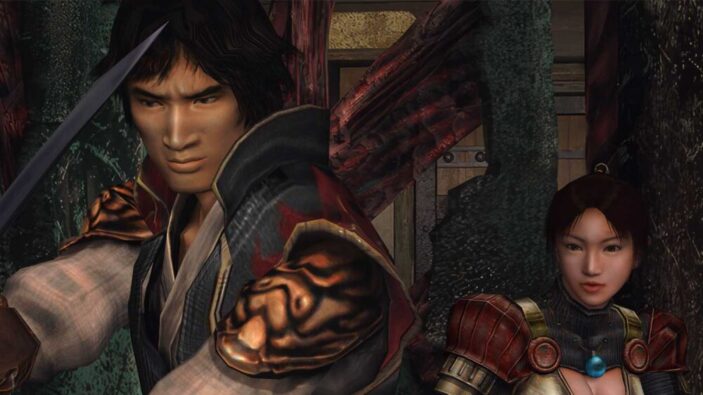
We previewed this remaster of Onimusha 2: Samurai’s Destiny just under a month ago, and have to say, most of our final sentiments still ring true, so we apologise if we referred to any old ground. You can check out our full preview of Onimusha 2: Samurai’s Destiny here.
This remaster of Onimusha 2: Samurai’s Destiny is very much the same game that was released back in 2002, but with a few neat and meaningful improvements that help both traversal and combat feel that much smoother. It’s also much cleaner visually, and while not undergoing the full remake treatment with a new engine and mechanics, it still holds up rather well in 2025 and on modern platforms.
A Welcome Return
Onimusha 2: Samurai’s Destiny centres around protagonist Jubei Yagyu, an accomplished samurai warrior who returns to his hometown village to find it has been overrun by the Genma army, a demonic force led by the villain Nobunaga Oda. Now on a path of revenge, Jubei is soon gifted with the powers of the Onimusha and tasked with gathering five Oni Orbs, which, along with his newfound powers, will help end the Genma army and Nobunaga once and for all.
The story is certainly passable and relatively straightforward. While that’s fine for the sake of pacing, as the game rarely overstays its welcome, it’s still a little short by today’s standards. While our preview only covered the opening 3 hours of the story, it’s almost over a third of the way, with the whole thing wrapping up at just under 10 hours. Even then, that’s with me taking my time.
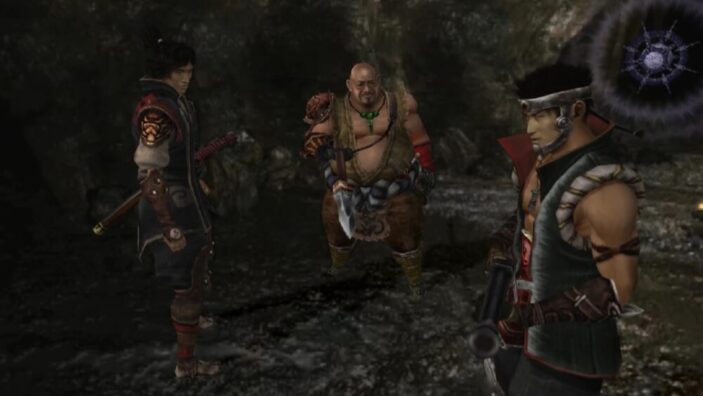
Along the way, Jubei will also befriend the game’s main supporting characters in Oyu, Ekei, Kotaru and Magoichi. They’re all incredibly charming and likable in their unique way, and can even show up in boss battles and custcens if you go out of your way to help them out throughout the narrative.
For a game released in 2002, it’s something the remastered touch hasn’t gotten its hands on. But in the same breath, I think it holds up just fine. It merely serves as a means to an end to get Jubei rolling on a path to revenge, and for the most part, wastes no time in doing so. It admittedly surprised me when the credits rolled, though, if I’m being honest.
Bring the Fight
Mechanically, Onimusha 2: Samurai’s Destiny hasn’t been given much of a facelift when it comes to combat. I think that’s also fine, as it was never bad to begin with, but it does feel a little thin by today’s standards. Players can slash with a basic attack, as well as dodge, block and even counter. Countering also utilises the same attack button; you only need to attack against an incoming strike at the last possible moment.
Jubei can also mix things up with certain magical abilities, which are gained early on and fueled by collecting souls. Unlike the original game, you can choose to hang onto special souls and activate your devastating Onimusha mode, as opposed to the original game, which would activate the mode as soon as you picked the souls up.
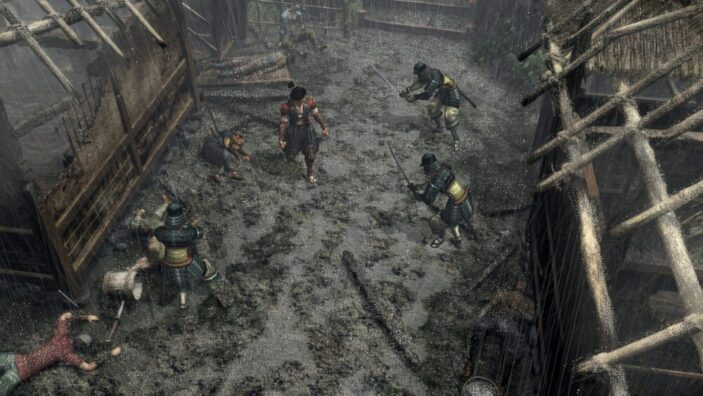
You can now even switch weapons on the fly by holding the shoulder button and pressing the directional buttons, a feature that was also unavailable in the original. But it’s when you immediately start the game that the most noticeable difference brings a sigh of relief. Tank controls, or the lack thereof. Jubei can now move in any direction with the left stick, which immediately makes the game feel smoother and picks up the pace. That being said, you can also use those clunky tank controls via the directional buttons if you prefer, I just don’t think I can ever look back.
There are a few issues with the overall gameplay that remain, though. For example, the fixed camera angles rarely help with keeping things feeling consistent, as you’re never aware of when the angle is going to change. If you get stuck in just the right spot, get ready for a headache as the camera range switches back and forth at rapid speeds as you do your best to fend off swarming waves of enemies.
The World Beyond
Onimusha 2: Samurai’s Destiny spends most of its time in a small central mining village before sending you off in various directions to grab each of the orbs. Here, you can chat with friends and run errands for them, and even collect and trade gear and gifts for special rewards. It can sometimes be unintentionally funny to trade the wrong gift with the wrong ally, as they comment on your strange choice, but it only adds to the game’s overall charm.
The world itself is relatively linear, and while there are the occasional tracks that lie off the beaten path for the sake of collectibles, they’re generally short-lived. But even then, the game’s relatively linear corridors and environments are still interesting to explore and navigate, with most corners presenting you with a challenge.
The only issue that springs from the game’s linearity is its insanely varying boss difficulties. Given the addition of the new Hell difficulty, which kills you after a single hit, I wouldn’t be surprised if players were stretching this game to upwards of 30 hours, although I feel like that would detract from the overall enjoyment of the core experience.
Look the Part
I’m going to bring our thoughts over from our preview piece, as I feel they still ring true here:
“For a remaster of a 23-year-old game, this also looks pretty good. The nicer resolution certainly helps, but the more detailed character models and pre-rendered backgrounds look and feel so much nicer, without sacrificing or changing the original aesthetic of the game.”
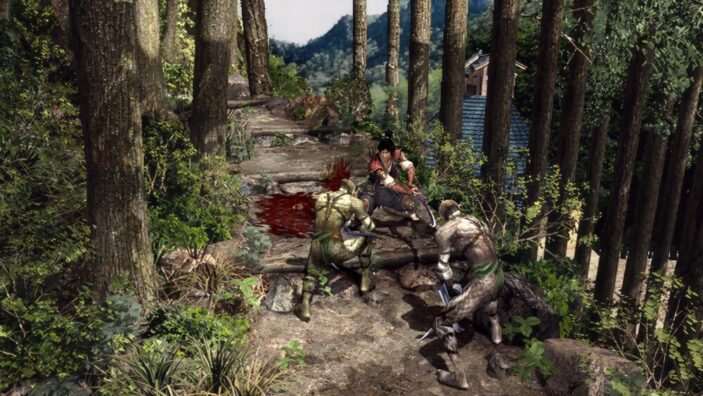
That applies to the overall performance, too. Nothing causes this game to drop its frames or chug in any way, and it only adds to the clean and smooth presentation that boosts the overall experience into another era that feels component and relevant even on newer platforms.
Final Thoughts
Onimusha 2: Samurai’s Destiny is a remake that improves upon the original game’s weaknesses, all while relying on and celebrating its strengths. Combat is certainly functional, but thanks to more fluid movement and instant weapon switching, it feels much more modern.
While the game’s relationships and side quests don’t add much to the overall length of the game, it’s still a trip worth taking over the course of a weekend or two, even in 2025.


THREE AND A HALF STARS (OUT OF FIVE)
Highlights: Engaging combat made even better; Charming side-characters; Slick visuals and performance
Lowlights: Overall length feels a little short by today’s standards; Fixed camera is frustrating in places
Developer: Capcom
Publisher: Capcom
Platforms: PlayStation 4, Xbox One, Windows PC, Nintendo Switch
Available: 23 May, 2025
Review conducted on Xbox Series X with a pre-release code provided by the publisher.
